
City break inSeville
Seville, the capital of Andalusia in southern Spain, is one of Europe's most atmospheric cities. Sitting on the banks of the Guadalquivir River, it blends Moorish, Gothic, and Baroque architecture into a cityscape that feels both ancient and alive. The Alcázar, a stunning royal palace with intricate tilework and lush gardens, the massive Gothic Cathedral housing Columbus's tomb, and the iconic Giralda tower form the historic core. Beyond the monuments, Seville rewards wandering: the Santa Cruz neighborhood offers a labyrinth of whitewashed lanes and orange-tree-lined plazas, while the Triana district across the river has a grittier, more local character rooted in flamenco culture. Seville is widely regarded as the home of flamenco, and catching a live performance here carries a weight of authenticity hard to find elsewhere. The city's tapas culture is equally serious, with dozens of traditional bars serving jamón, pescaíto frito, and local fino sherry. It is a city that rewards slow exploration on foot, with surprises around every corner.
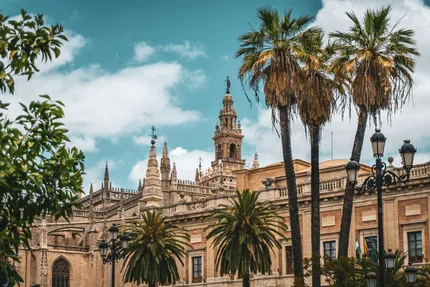
Seville Cathedral and La Giralda
The Seville Cathedral is the largest Gothic cathedral in the world and a UNESCO World Heritage Site. Built in the 15th century, it houses the tomb of Christopher Columbus. Attached to the cathedral is La Giralda, a 98-meter bell tower originally built as a minaret during Moorish rule. Visitors can climb its ramp to enjoy panoramic views over Seville's historic center.
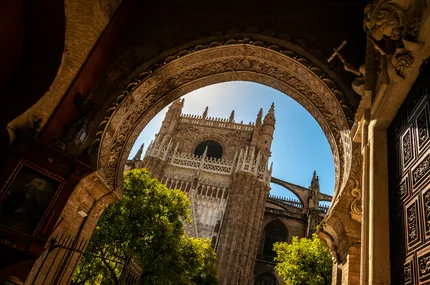
Real Alcázar of Seville
The Real Alcázar is a stunning royal palace complex in the heart of Seville, and one of the oldest royal palaces still in use in Europe. Originally a Moorish fort, it was later developed into an elaborate palace featuring ornate Mudejar architecture, lush gardens, and intricately decorated halls. It served as a royal residence for Spanish monarchs and remains a UNESCO World Heritage Site.
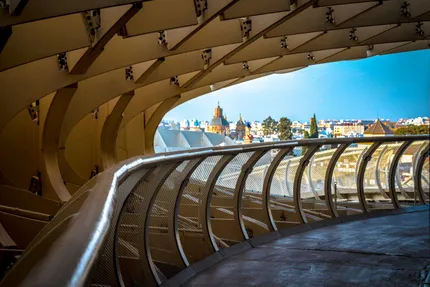
Metropol Parasol
The Metropol Parasol, locally known as Las Setas (the mushrooms), is a striking wooden structure in Plaza de la Encarnacion completed in 2011. Designed by German architect Jurgen Mayer, it claims to be the world's largest wooden structure. Visitors can walk along its undulating rooftop walkway for panoramic views of Seville. The base houses a market, restaurants, and a museum with Roman archaeological remains.
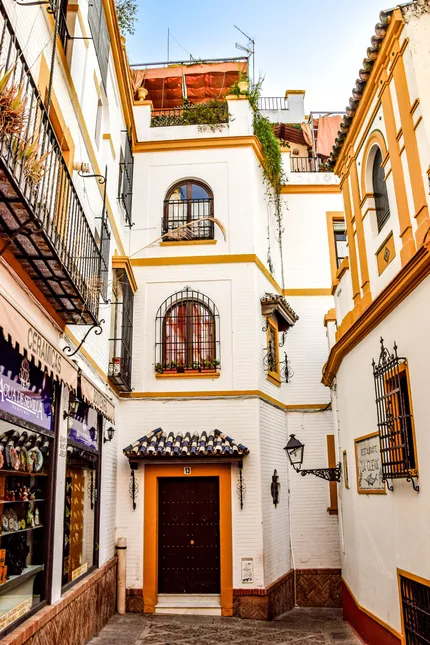
Barrio Santa Cruz
Barrio Santa Cruz is Seville's former Jewish quarter, a labyrinth of narrow whitewashed alleys, flower-filled patios, and small plazas. Located beside the Alcazar walls, the neighborhood is one of the city's most picturesque areas. Key landmarks include the Plaza de Doña Elvira and the Plaza de los Venerables. It's ideal for leisurely wandering, with plenty of tapas bars and restaurants tucked along its winding streets.
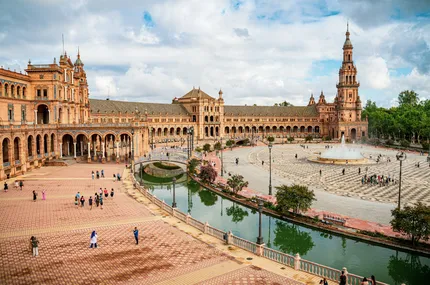
Plaza de España
Plaza de España is one of Seville's most iconic landmarks, built for the 1929 Ibero-American Exposition. The vast semicircular complex features a main building, two towers, and a decorative canal with small bridges. Its tiled alcoves represent each Spanish province with maps and historical scenes. Visitors can hire rowboats on the canal and enjoy views of the ornate Renaissance Revival and Moorish architecture.
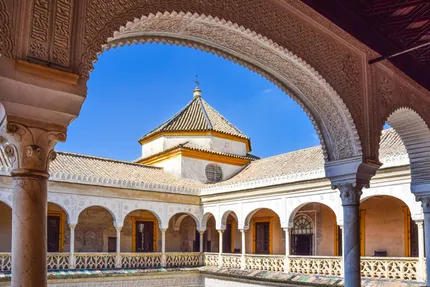
Casa de Pilatos
Casa de Pilatos is a stunning 16th-century palace blending Mudéjar, Gothic, and Renaissance styles. Serving as the residence of the Dukes of Medinaceli, it features beautifully decorated courtyards, ornate tilework, carved stucco, and impressive art collections. Named after a mistaken association with Pontius Pilate, it remains one of Seville's finest examples of Andalusian aristocratic architecture and is still partially inhabited by the ducal family today.
Seville Museum of Fine Arts
The Seville Museum of Fine Arts, housed in a former 17th-century convent, is considered one of Spain's most important art museums. Its collection spans medieval to modern works, with a strong focus on Spanish Baroque painting. Highlights include major works by Murillo, Zurbaran, and Valdez Leal. The building itself, with its elegant courtyards and ornate chapel, is as impressive as the art within.
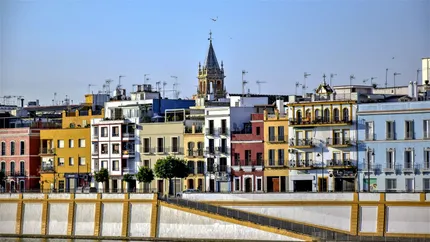
Triana District
Triana is a historic neighbourhood on the west bank of the Guadalquivir River, traditionally home to flamenco artists, bullfighters, and ceramics makers. Its colourful tiled facades, independent shops, and lively tapas bars give it a distinct character from the rest of Seville. The Mercado de Triana is a good starting point, and the riverside walkway offers pleasant views back toward the city centre.
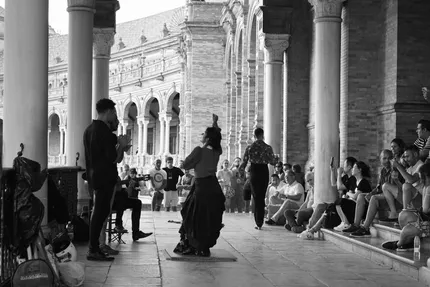
Flamenco Show
Seville is considered the birthplace of flamenco, making it one of the best places in the world to experience this passionate art form. Tablaos throughout the city offer nightly performances featuring skilled dancers, guitarists, and singers. For a more authentic experience, seek out smaller, intimate venues in the Triana neighborhood or Santa Cruz district, where performances feel raw and genuinely rooted in Andalusian culture.
Who should visit Seville
Seville is an excellent fit for travelers who are genuinely interested in history and architecture. The density of significant monuments within a walkable area, from the Alcázar and Cathedral to the Plaza de España and the old tobacco factory, makes it rewarding for those who want to engage with what they see rather than simply tick off sights. Food-focused travelers will find Seville one of Spain's most rewarding tapas destinations, with a strong local culture of bar-hopping through traditional establishments in neighborhoods like Alameda de Hércules or El Arenal. The city is particularly appealing to those with an interest in flamenco, not just as a performance to watch but as a living cultural tradition embedded in specific neighborhoods. Couples looking for a romantic short break will find the intimate plazas, candlelit restaurants, and atmospheric evening paseos well suited to that purpose. Seville is less ideal for travelers seeking nightlife comparable to Madrid or Barcelona, or for those who struggle in heat if visiting in summer. It is also not a beach destination, though the Atlantic coast at Cádiz is reachable within an hour and a half by train, which can appeal to travelers planning a broader Andalusian itinerary.

Best time to visit Seville
The best time to visit Seville is spring, particularly from mid-March to May. Temperatures are warm but comfortable, and the city hosts its most celebrated events: Semana Santa in late March or April draws enormous crowds with dramatic religious processions, while the Feria de Abril fills the city with flamenco dresses, horses, and festivity. Autumn, from September to November, is another solid choice with pleasant temperatures and fewer tourists. Summer should be avoided if possible, as Seville is one of Europe's hottest cities, regularly exceeding 40°C in July and August.
Three top reasons for a city trip to Seville
- Marvel at Seville's UNESCO wonders: Mudéjar Real Alcázar, Gothic Cathedral, and Giralda tower; wander Santa Cruz's flowered lanes, admire azulejos and orange trees, and enjoy sweeping city views from heights.
- Feel flamenco's soul where it thrives: Triana and Macarena neighborhoods, intimate tablaos and peñas, Museo del Baile Flamenco, late-night palmas, cante jondo, guitar and dance classes, spontaneous juergas over sherry.
- Experience Seville's legendary spring: solemn Semana Santa processions with pasos, costaleros and haunting saetas; then Feria de Abril's alumbrao, casetas, rebujito, horse carriages, sevillanas dancing, and rides at the Real.
Seville is renowned for its charming, narrow streets and vibrant atmosphere, making it a wonderfully walkable city. Central neighborhoods like Santa Cruz, Triana, and Arenal are best explored on foot, allowing you to soak in the Andalusian culture. Cycling is also popular, with many bike rental stations and dedicated lanes throughout the city. Public transportation is efficient, featuring buses and a metro system that connects various parts of Seville. While a car isn't necessary for getting around the central areas, it might be useful for exploring attractions outside the city or traveling through the broader Andalusian region. Seville's public transport with its comprehensive bus lines and tram services makes it easy to reach major sights comfortably and affordably, minimizing the need for a personal vehicle within the city limits.
This content was created with AI assistance and may contain inaccuracies.