
City break inNice
Nice, the unofficial capital of the French Riviera, combines Mediterranean scenery with a distinctly Italian-influenced old town and an easy, walkable city-trip rhythm. The Promenade des Anglais runs along a wide bay of pale pebbles, backed by Belle Époque hotels and palm-lined squares. In Vieux Nice, narrow lanes open onto baroque churches, small markets, and cafés serving socca and salade niçoise. The Cours Saleya market is a daily focal point for flowers, produce, and local specialties, while the city’s museums add depth: the Matisse Museum and the Marc Chagall National Museum are standouts.
For views, climb or take the lift up Castle Hill (Colline du Château) to look over the port, rooftops, and coastline. Nice also works well as a base for short rail trips to nearby Riviera towns, yet it has enough neighborhoods - Port, Cimiez, Libération - to feel like a real city rather than a resort strip.
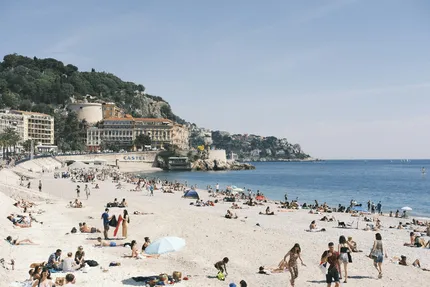
Promenade des Anglais
Promenade des Anglais is Nice’s main seafront boulevard, running along the Baie des Anges from near the airport toward the city center. It’s popular for walking, cycling, and skating, with views of the Mediterranean and access to public and private beaches. Notable sights include the Hôtel Negresco and nearby Old Town connections.
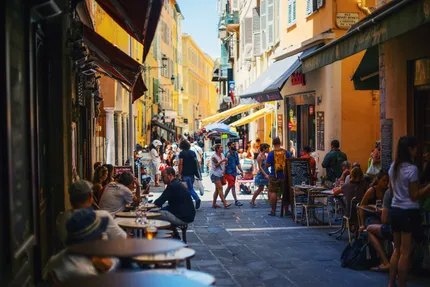
Vieille Ville (Old Town)
Nice’s Vieille Ville (Old Town) is a compact historic quarter between Place Masséna and the Port, known for narrow lanes, baroque churches, and lively squares. It’s a popular area for walking, shopping, and dining, with daily food and flower stalls at Cours Saleya. Key nearby sights include the Promenade des Anglais and Castle Hill viewpoints.
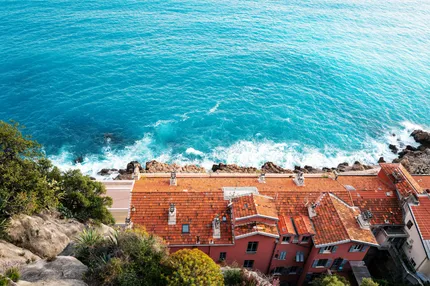
Colline du Château
Colline du Château (Castle Hill) is a park overlooking Nice’s Old Town and the Baie des Anges. Although the original castle no longer stands, the hill offers panoramic viewpoints, shaded paths, and a large artificial waterfall. You can reach the top by stairs, a free elevator, or a small tourist train from the seafront.
Musée Marc Chagall
The Musée National Marc Chagall in Nice is dedicated primarily to Chagall’s “Biblical Message” series, displayed in purpose-built galleries. It also presents paintings, drawings, stained glass, and mosaics, offering context on his themes and techniques. The museum includes a garden and hosts temporary exhibitions and cultural events. It’s located in central Nice.
Cours Saleya Market
Cours Saleya Market is a central open-air market in Nice’s Old Town, known for its flower stalls and seasonal produce. It typically runs in the mornings, with a separate antiques market on Mondays. The market sits along a pedestrian promenade lined with cafés, making it a convenient stop for local ingredients, snacks, and people-watching.
Nice Cathedral
Nice Cathedral (Cathédrale Sainte-Réparate) is a 17th-century Baroque cathedral in Nice’s Old Town (Vieux Nice), dedicated to Saint Reparata. It features an ornate façade, a richly decorated interior with side chapels, and a prominent dome. The cathedral sits on Place Rossetti, a lively square near shops, cafés, and other historic streets.
Place Masséna
Place Masséna is Nice’s central square, linking the Old Town to the modern city. It’s known for its red-ochre buildings, arcaded façades, and black-and-white paving. The square is pedestrian-friendly and often hosts events. Nearby are the Promenade du Paillon gardens and major shopping streets, making it a practical starting point for exploring.
Parc Phoenix
Parc Phoenix is a large botanical and zoological park near Nice Côte d’Azur Airport. It features themed gardens, a major tropical greenhouse with waterfalls and exotic plants, and enclosures for birds, reptiles, and small mammals. The park is family-friendly, with playgrounds, shaded paths, and seasonal events. It’s accessible by tram and bus.
Opera de Nice
Opéra de Nice (Opéra Nice Côte d’Azur) is the city’s main opera house, located near the Promenade des Anglais and the Old Town. It hosts opera, ballet, and classical concerts, with programming varying by season. Visitors can attend performances or join occasional guided tours when offered. Check the official schedule and ticketing in advance.
Who should visit Nice
Nice is a strong fit for travellers who want a compact city break that mixes culture, food, and coastal atmosphere without needing a car. It suits couples and friends who enjoy strolling neighborhoods, browsing markets, and building days around long lunches, aperitifs, and sunset walks on the Promenade des Anglais. Art-focused visitors will appreciate having major collections (Matisse and Chagall) within the city, plus smaller galleries and architecture that ranges from baroque to Belle Époque. It’s also well-suited to travellers who like short, simple day trips: the TER trains make it easy to reach places like Villefranche-sur-Mer, Monaco, or Antibes for a few hours and return for dinner in Nice.
Solo travellers who prefer an active but low-pressure itinerary tend to do well here because the center is navigable on foot and public transport is straightforward. Families can enjoy the beach, parks, and the Castle Hill viewpoint, though the pebbly shoreline is less ideal for very small children than sandy resorts. If you want nightlife on a large-club scale or a purely beach-resort stay, Nice may feel secondary; as a balanced Riviera city trip, it excels.

Best time to visit Nice
The best times to visit Nice are late spring (April to June) and early autumn (September to October). You’ll get warm, bright days suitable for seaside walks and outdoor dining, with fewer crowds than mid-summer and generally better value on accommodation. July and August bring the hottest weather and the busiest beaches, plus higher prices and a more congested center. Winter is mild compared with much of Europe and can be pleasant for museums, markets, and long promenades, but swimming conditions are limited and some coastal services run at a slower pace. If you want a lively cultural moment, the Nice Carnival in February is a major draw.
Three top reasons for a city trip to Nice
- Walk the Promenade des Anglais for sweeping Baie des Anges views, palm-lined paths, and Belle Époque façades; swim at Plage Beau Rivage or Castel, then watch sunset from Colline du Château.
- Explore Vieux Nice’s narrow lanes: shop Cours Saleya’s flower and food market, taste socca and pissaladière, visit Cathédrale Sainte-Réparate, and browse local boutiques around Place Rossetti.
- Enjoy Nice’s standout museums and architecture: Musée Matisse in Cimiez, Musée Marc Chagall, and MAMAC; admire Place Masséna’s arcades and fountains, then ride the scenic Port Lympia tram.
Nice features an excellent public transport system, with trams and buses covering most areas. The city is highly walkable, particularly in the Old Town and along the famous Promenade des Anglais, which is ideal for pedestrians and cyclists. Renting a bike through Vélo Bleu or using e-scooters can be convenient for short distances. While having a car is an option, it's not necessary unless you plan to explore the surrounding Côte d'Azur. Traffic can be dense, and finding parking can be challenging. Taxis and ride-sharing services like Uber are available. For further exploration, Nice's railway station offers access to neighboring cities like Cannes, Antibes, and Monaco. The convenient public transportation and pedestrian-friendly layout make getting around Nice manageable and pleasant without a car.
This content was created with AI assistance and may contain inaccuracies.