
3 days in Nice
FranceDay #1
Old Town, seaside promenade, sunset viewpoints
08:30
Breakfast at a café in Place Masséna
09:30
Stroll Avenue Jean Médecin and browse local shops
Avenue Jean Médecin is Nice’s main commercial boulevard, running from Place Masséna north toward the Nice-Ville train station. It’s lined with department stores, fashion chains, pharmacies, and cafés, and connects to side streets with smaller boutiques. You can also stop at the Basilica of Notre-Dame nearby and use the tram for easy access.
10:30
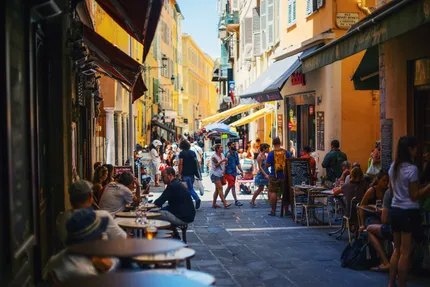
Explore Vieux Nice (Old Town) lanes and baroque façades
Vieux Nice is the historic Old Town between the Promenade des Anglais and Castle Hill. Explore its narrow lanes lined with tall, colorful buildings and baroque façades, especially around the Cathédrale Sainte-Réparate and Place Rossetti. The area is known for small shops, cafés, and daily markets such as Cours Saleya nearby.
11:30
Visit Cours Saleya market (flowers, produce, local specialties)
Cours Saleya is Nice’s main open-air market in the Old Town, known for its flower stalls, seasonal fruits and vegetables, and local foods. It runs most mornings, with a separate antiques market on Mondays. Go early for the best selection, or later for a quieter browse. Nearby cafés make it easy to combine with sightseeing.
12:30
Lunch in Old Town (try socca and salade niçoise)
14:00
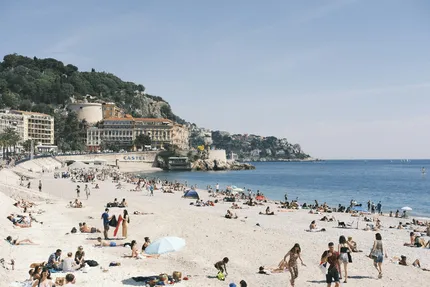
Walk the Promenade des Anglais along the seafront
The Promenade des Anglais is Nice’s iconic seafront boulevard running along the Baie des Anges. It’s popular for walking, cycling, and people-watching, with views over the Mediterranean and access to pebble beaches. The route links central Nice with the airport area, passing landmarks like the Hôtel Negresco and several public beach entrances.
15:30
Relax on the beach (Plage Beau Rivage area)
Plage Beau Rivage is a central beach area in Nice, near the Promenade des Anglais and close to Place Masséna. The shoreline is mostly smooth pebbles with clear water, so water shoes can help. Nearby you’ll find beach clubs, cafés, and restrooms. It’s an easy spot for sunbathing and swimming, with convenient access by foot or tram.
17:30
Climb to Colline du Château (Castle Hill) for panoramic views
Colline du Château (Castle Hill) is a park above Nice’s Old Town and Port, known for wide views over the Baie des Anges and the city. You can reach the top by stairs, a free elevator, or a short drive. The area includes shaded paths, viewpoints, and a small waterfall, making it popular at sunrise and sunset.
19:30
Dinner in Vieux Nice (seafood or Niçoise cuisine)
21:30
Evening gelato and a leisurely Old Town walk
In Nice, start your evening with gelato from one of the shops around Place Rossetti in Vieux Nice, then stroll the Old Town’s narrow streets lined with baroque facades, small boutiques, and lively cafés. Walk to Cours Saleya to see the flower market area after hours, and continue toward the Promenade des Anglais for sea views.
Day #2
Art museums, port, and coastal scenery
08:00
Breakfast near the Port of Nice (Port Lympia)
09:00
Visit Musée Matisse (Cimiez) and gardens
Musée Matisse in Cimiez, set in a 17th-century villa, presents Henri Matisse’s work through paintings, drawings, prints, sculptures, and cut-outs, plus archival photos and documents. It sits beside the Roman-era Cimiez site and the Jardin des Arènes, a public garden with olive trees and open lawns, ideal for a short walk after the visit.
10:30
Walk around Cimiez: olive groves and Roman ruins area
Cimiez is a hilltop neighborhood in Nice known for its Roman-era remains and quiet green spaces. You can walk through the Parc des Arènes de Cimiez, where olive trees surround the ruins of the Roman amphitheater and baths. Nearby are the Cimiez Monastery and its gardens, plus the Matisse Museum in a historic villa.
12:00
Lunch in the Libération neighborhood (bistros and bakeries)
13:30
Browse Marché de la Libération for local snacks and produce
Marché de la Libération is a popular open-air market in Nice, centered around Place du Général de Gaulle near the Libération tram stop. Vendors sell seasonal fruits and vegetables, olives, cheeses, bread, and other Provençal staples, making it a good place to sample local snacks and shop like residents. Go earlier for the best selection.
15:00
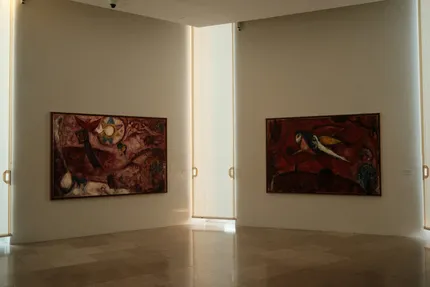
Visit Musée Marc Chagall
The Musée National Marc Chagall in Nice is dedicated to the artist’s work, with a focus on his biblical-themed paintings, including the “Message Biblique” series. The museum includes paintings, stained glass, tapestries, and preparatory sketches, plus a garden and temporary exhibitions. It’s located near the city center and is typically visited in 1–2 hours.
16:30
Head back to the harbor and stroll Quai des États-Unis/port area
From Nice’s Old Town, walk back toward the harbor and follow Quai des États-Unis along the seafront. This promenade runs beside the pebble beach and offers views over the Baie des Anges, passing landmarks like the Opéra de Nice and the edge of the Port Lympia area. It’s an easy, scenic route for a relaxed stroll.
18:00
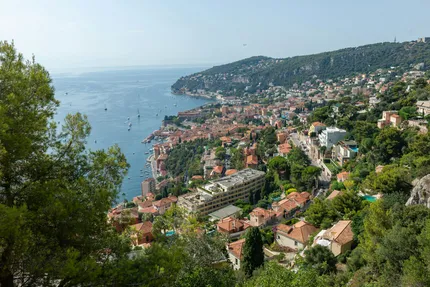
Coastal walk to Villefranche-sur-Mer viewpoint (short scenic stretch)
From Nice, a short scenic coastal walk leads toward Villefranche-sur-Mer with viewpoints over the Bay of Angels and the Cap Ferrat peninsula. A common route follows the seafront east from the Port of Nice toward Mont Boron, using paved paths and roadside sidewalks. Expect moderate inclines, limited shade, and frequent photo stops.
19:30
Dinner around the Port (Niçoise tapas or Mediterranean plates)
21:30
Drinks at a wine bar in the Port or Old Town
Day #3
Day trip to Monaco and Èze
07:30
Early breakfast near Nice-Ville or Jean Médecin
08:15
Train to Monaco-Monte-Carlo
From Nice, TER regional trains run frequently to Monaco–Monte-Carlo, taking about 20–25 minutes along the coast. Trains depart from Nice-Ville and also stop at Nice-Riquier. In Monaco, the station is underground; exits lead toward Monte-Carlo via elevators and escalators. Buy tickets at SNCF machines or online; validate paper tickets before boarding.
09:00
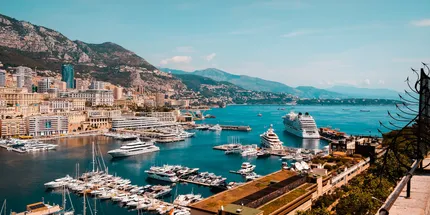
Walk Monaco-Ville: old streets and viewpoints
From Nice, you can take a short train or bus ride to Monaco and walk Monaco-Ville (the old town) on the Rock. Explore narrow pedestrian streets, small squares, and the area around the Prince’s Palace. Several terraces and paths offer views over Port Hercule and the Mediterranean. Wear comfortable shoes; the route includes uphill sections.
10:00
Visit the Prince’s Palace area (and watch the guards if timing fits)
From Nice, you can visit Monaco’s Prince’s Palace area on the Rock (Le Rocher), a historic hilltop district with viewpoints over the harbor. The palace exterior and surrounding old town streets are the main draw. If your timing fits, the daily Changing of the Guard takes place at 11:55 in the palace square (Place du Palais).
11:30
Visit the Oceanographic Museum (optional, time-permitting)
Nice does not have an Oceanographic Museum. The well-known Oceanographic Museum is in nearby Monaco (Monte Carlo), about 20–30 minutes away by train from Nice-Ville to Monaco–Monte-Carlo station, then a walk or bus uphill. It features marine science exhibits, aquariums, and Mediterranean-focused displays. Consider it if you have half a day.
13:00
Lunch in Monaco (harbor-side or old town cafés)
14:15
Head to Monte-Carlo: Casino Square and gardens
From Nice, you can take a day trip to Monte-Carlo (Monaco) to visit Casino Square (Place du Casino), the area around the Monte-Carlo Casino, Hôtel de Paris, and Café de Paris. Nearby, the Casino Gardens offer landscaped paths and views of the Belle Époque architecture. Access is easy by train to Monaco–Monte-Carlo station, then a walk uphill.
15:30
Train/bus to Èze Village
From Nice, reach Èze Village by taking the TER train to Èze-sur-Mer station (about 10–15 minutes) and then the local bus or a steep uphill walk to the medieval hilltop (around 45–60 minutes on foot). Alternatively, take the Lignes d’Azur bus directly from Nice to Èze Village. Check current timetables seasonally.
16:15
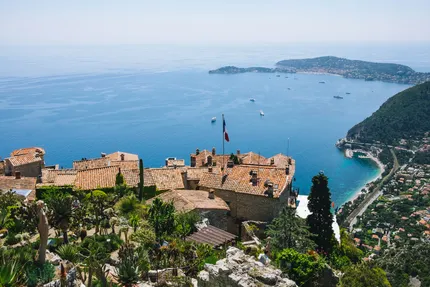
Explore Èze’s medieval lanes and artisan shops
From Nice, visit the hilltop village of Èze to wander its narrow medieval lanes lined with stone houses, small galleries, and artisan boutiques. You’ll find local crafts, perfumes, and souvenirs in compact shops along steep, winding passages. The village is pedestrian-friendly but involves stairs and inclines, so comfortable shoes help.
17:00
Visit Jardin Exotique d’Èze for sunset views
Jardin Exotique d’Èze sits in the hilltop village of Èze, about 30 minutes from Nice by car or bus. The small botanical garden features cacti and succulents and a high viewpoint over the Mediterranean, making it popular at sunset. Check seasonal opening hours and last entry times, and allow time for the walk up through the village.
18:30
Return to Nice
20:00
Farewell dinner in Nice (Cours Saleya area)
22:00
Evening promenade along the Promenade des Anglais
An evening walk along Nice’s Promenade des Anglais follows a wide seafront boulevard on the Baie des Anges. It’s popular for strolling, cycling, and people-watching, with views of the Mediterranean, palm-lined sidewalks, and Belle Époque hotels. You can pause at beach access points, look back toward the old town, and watch sunset light over the water.