
City break inMarseille
Marseille, France’s oldest city and a historical Mediterranean port, boasts a marvelous blend of vibrant multiculturalism and rich history. As the country's second-largest city, Marseille is nestled on the southeast coast, basking in over 300 days of sunshine annually. Its stunning Old Port area, Vieux-Port, is lined with yachts and bustling with waterfront cafes, offering a picturesque starting point for visitors. Further exploration reveals the charm of Le Panier, the oldest neighborhood with its colorful cobblestone streets, quaint boutiques, and charming Provençal atmosphere.
The iconic Notre-Dame de la Garde basilica towers over the city providing panoramic vistas of the terracotta rooftops, azure waters, and nearby Frioul islands. With its burgeoning arts scene, dynamic gastronomy spotlighting Provençal flavors fused with international influences, and access to dazzling coastal landscapes like the Calanques National Park, Marseille offers an engaging combination of modern vitality and storied past.
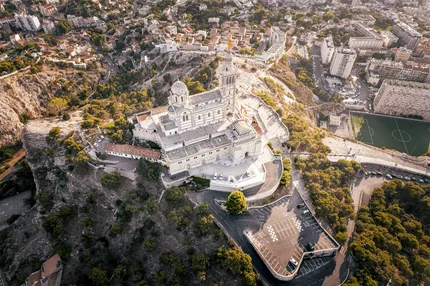
Basilique Notre-Dame de la Garde
Basilique Notre-Dame de la Garde, Marseille’s hilltop basilica, crowns La Garde with wide views over the city, Old Port, and Mediterranean. Built 1853–1864 in Romano-Byzantine style by Henri-Jacques Espérandieu, it features a gilded Madonna and Child atop its bell tower, mosaic interiors, ex-votos, model ships, and a lower crypt. Reachable by bus, petit train, or foot.
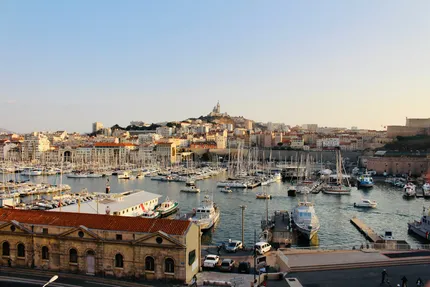
Vieux-Port
Marseille’s Vieux-Port is the historic Old Port, a lively marina and transport hub. Stroll the quays, see the morning fish market at Quai des Belges, and enjoy views of Notre‑Dame de la Garde. Boat trips depart for the Frioul Islands and Château d’If. Highlights include Fort Saint‑Jean, Fort Saint‑Nicolas, and the mirrored Ombrière canopy.
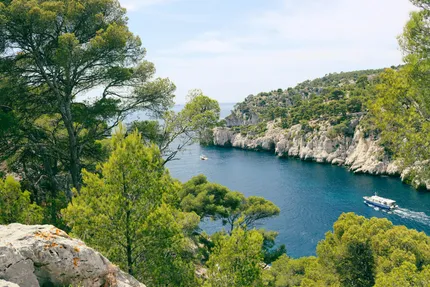
Calanques National Park
Calanques National Park, stretching from Marseille to Cassis, features steep limestone inlets, clear coves, and protected marine habitats. Popular for hiking, kayaking, climbing, swimming, and boat tours, many calanques are reached on rugged trails from Luminy or Callelongue. Summer access may be restricted due to fire risk; check official updates. Bring water, sun protection, and sturdy shoes.
Château d'If
Château d’If is a 16th-century fortress-turned-prison on Île d’If, just off Marseille. Reached by ferry from the Vieux-Port, it offers sweeping views of the city and Frioul islands. Visitors explore ramparts, cells, and exhibits on its military role and inmates, plus Alexandre Dumas’s Count of Monte Cristo connection. Sailings and opening hours vary with weather.
MuCEM
Marseille’s MuCEM (Museum of European and Mediterranean Civilisations) is a landmark on the J4 pier by the Vieux-Port. The 2013 cube by Rudy Ricciotti features a concrete lace facade and footbridges to Fort Saint-Jean. Exhibitions explore Mediterranean history, societies, and exchanges. Enjoy panoramic terraces and seafront views; some outdoor areas and ramparts are free.
Le Panier
Le Panier is Marseille’s oldest quarter, a hillside maze of narrow lanes, colorful facades and street art above the Vieux-Port. Explore artisan workshops, cafés and small squares, and visit La Vieille Charité, a 17th-century almshouse turned museum complex. The area is steep with many steps; wear comfortable shoes. Guided walks explain its World War II clearance and renewal.
La Canebière
La Canebière is Marseille’s historic main boulevard, running from the Vieux‑Port to the Église des Réformés. Laid out after the city’s 1666 expansion, its name reflects the area’s hemp and rope trade. Today it features 19th‑century facades, cafés, shops and access to the Noailles market, with tram and metro links making it a central thoroughfare.
Palais Longchamp
Palais Longchamp is a 19th-century monument celebrating the Canal de Marseille (inaugurated 1869), noted for its central Château d’Eau fountain, sweeping colonnades, and formal terraces in the 4th arrondissement. It houses the city’s Musée des Beaux-Arts and Natural History Museum. The adjacent Parc Longchamp offers shaded walks and viewpoints. Access via Cinq Avenues–Longchamp station.
Saint-Victor Abbey
Founded in the 5th century by John Cassian, Marseille's Saint-Victor Abbey is a fortified Romanesque church overlooking the Vieux-Port. Its atmospheric crypts preserve early Christian sarcophagi, chapels, and relics. The site remains a pilgrimage focus, notably at Candlemas, when locals honor the Black Madonna and buy 'navettes' biscuits from nearby bakeries.
Who should visit Marseille
Marseille is an excellent destination for travelers who crave sun-soaked coastal adventures intertwined with cultural and historical exploration. Ideal for history buffs, the city's ancient architecture, museums, and historical sites, like the Musée d'Histoire de Marseille, provide abundant context and stories of the past. Foodies will relish the variety of dining experiences showcasing local seafood delicacies such as bouillabaisse. Nature enthusiasts and outdoor lovers are catered for with activities like hiking in the Calanques, enjoying the stunning Mediterranean waters, or taking a boat trip to the Château d’If.
Art and culture aficionados will find the contemporary and traditional arts to their taste, with attractions like the MuCEM highlighting Marseille's standing as a dynamic cultural hub. While nightlife exists, the focus on Marseille is about immersion in local life, culinary delights, and proximity to nature rather than vibrant clubbing scenes, making it a more fitting destination for those seeking daytime exploration and relaxed evenings.

Best time to visit Marseille
The best time to visit Marseille is during spring (April to June) or fall (September to October) when the weather is pleasant, avoiding the peak summer heat and tourist crowds.
Three top reasons for a city trip to Marseille
- Stroll Marseille’s Vieux-Port and Le Panier: sunrise fish market, bouillabaisse institutions, ferry hops to Frioul, Notre-Dame de la Garde panoramas, centuries-old alleys, and aperitifs bustling quayside alive with Provençal chatter.
- Hike, kayak, or swim in Calanques National Park’s limestone fjords between Marseille and Cassis—turquoise coves like Sormiou, Morgiou, and En-Vau, garrigue, dramatic cliffs, and crystalline waters minutes from the city.
- Immerse in Marseille’s culture: Mucem and Fort Saint-Jean, street art in Cours Julien, Noailles spice markets, Savon de Marseille workshops, OM fervor at the Vélodrome, and ferries to Château d’If.
Marseille is a vibrant city with diverse modes of transport to get around. Public transport, managed by RTM, includes metro lines, buses, and trams, providing extensive coverage across the city. The metro is efficient for reaching key locations swiftly. Despite being a large city, specific areas like the Vieux-Port and Le Panier are pedestrian-friendly and well-suited for exploration by foot. Additionally, the city's bike-sharing system, Le Vélo, offers a sustainable option for getting around, with numerous stations throughout the city. While Marseille's layout can make driving less efficient due to traffic congestion, having a car can be beneficial if you plan to explore the broader Provence region. Taxis and ride-sharing services are also readily available, complementing the public transport network. Overall, Marseille provides a mix of transport options that suit various traveler preferences and needs.
This content was created with AI assistance and may contain inaccuracies.