
City break inBrussels
Brussels pairs grand history with a lived‑in, cosmopolitan feel. Start at the UNESCO‑listed Grand Place, whose ornate guildhalls and Town Hall anchor a compact center of cobbled lanes, cafés, and chocolatiers. Steps away, the Galeries Royales Saint‑Hubert, one of Europe’s oldest covered arcades, leads to theaters and specialty boutiques. The city’s creative streak runs from Art Nouveau showpieces by Victor Horta to surrealism at the Magritte Museum, while comics spill onto murals and the Belgian Comic Strip Center. In the upper town, the Mont des Arts links royal museums, the Royal Palace, and a skyline view. Neighborhoods like Sablon, Marolles, Ixelles, and Saint‑Gilles add antique markets, Sunday flea finds, and multicultural dining.
Green space is ample, from Parc de Bruxelles and Cinquantenaire to the Bois de la Cambre. The Atomium and Mini‑Europe sit a quick metro ride away. Brussels rewards grazing: pralines, waffles, frites, mussels, and a deep beer culture, including traditional lambic. Multilingual and well connected by tram, metro, and rail, it’s easy to navigate yet full of surprises.
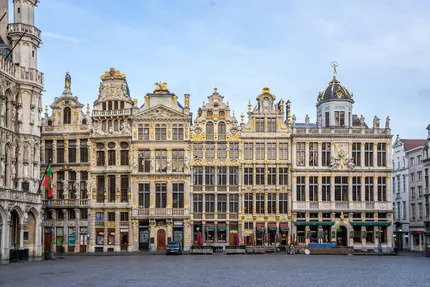
Grand Place
Grand Place (Grote Markt) is Brussels' central square and a UNESCO World Heritage site, framed by opulent 17th-century guildhalls, the Gothic Town Hall, and the Maison du Roi/Broodhuis. It hosts the biennial Flower Carpet, seasonal light shows, and Christmas festivities. Easily reached from Brussels-Central, it's a lively hub for architecture, cafes, and city events.
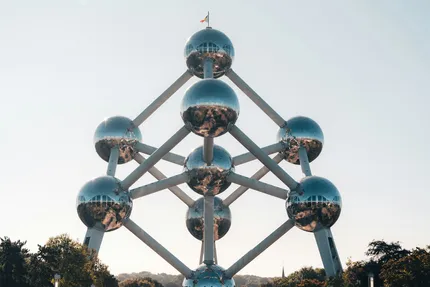
Atomium
Brussels’ Atomium is a 102‑meter landmark from Expo 58, depicting an iron crystal magnified 165 billion times. Its nine stainless‑steel spheres host permanent and temporary exhibitions and a top‑sphere restaurant. Ride escalators and tubes between spheres to reach the panorama for 360‑degree city views. Located on the Heysel/Heizel plateau, accessible by metro.
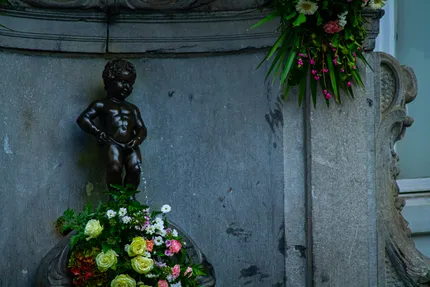
Manneken Pis
Manneken Pis is Brussels' emblematic 17th-century bronze fountain of a urinating boy, created in 1619 by Jérôme Duquesnoy the Elder. Just a short walk from Grand Place at Rue de l'Étuve/Rue du Chêne, the 61-cm statue is free to view and is frequently dressed in themed costumes; his wardrobe is displayed nearby.
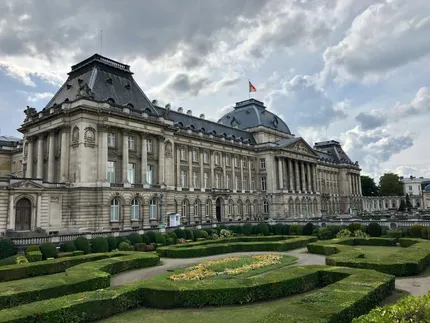
Royal Palace of Brussels
The Royal Palace of Brussels is the Belgian monarch’s official workplace, opposite Brussels Park on Place des Palais. Although the royal family lives at Laeken, this neoclassical palace hosts ceremonies and state functions. It opens to the public for visits in summer, showcasing grand reception rooms and exhibitions on the monarchy, art, and science.
Magritte Museum
Part of the Royal Museums of Fine Arts of Belgium, the Magritte Museum showcases an extensive collection of René Magritte’s works and archives. Across multiple floors, it traces his career chronologically, with paintings, gouaches, drawings, photographs, films, and letters. Located on Place Royale/Mont des Arts, it offers clear context for Belgian Surrealism and Magritte’s themes.
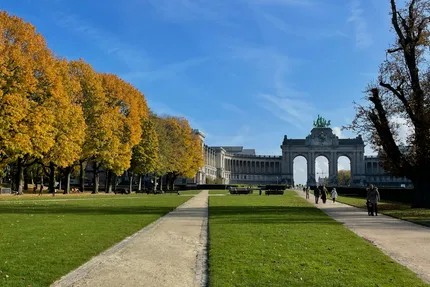
Parc du Cinquantenaire
Parc du Cinquantenaire (Jubelpark) is a grand 19th-century park in Brussels' European Quarter, dominated by a monumental triumphal arch. Commissioned by Leopold II to mark Belgium's 50th anniversary, it houses the Art & History Museum, AutoWorld, and the Royal Military Museum. Visitors enjoy formal gardens, fountains, jogging paths, and occasional arch-top viewpoints; Merode/Schuman metro nearby.
Sablon District
Brussels' Sablon District sits between Grand-Place and the Royal Quarter, noted for antiques, art galleries, and renowned chocolatiers. See the Gothic Church of Notre-Dame du Sablon, Petit Sablon garden, and the weekend antiques market on Place du Grand Sablon. Cafes, boutiques, and nearby museums make it a compact cultural stop.
Brussels Comic Strip Center
The Brussels Comic Strip Center (Centre Belge de la Bande Dessinée) celebrates Belgium’s comics heritage in a 1906 Art Nouveau building by Victor Horta. Explore permanent and temporary exhibitions on Tintin, the Smurfs, Lucky Luke, and more, featuring original artwork and the creative process, plus a reading room, shop, and café. Centrally located; admission fee.
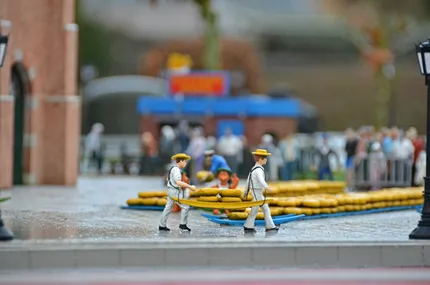
Mini-Europe
Mini-Europe, at the foot of the Atomium in Brussels’ Heysel area, is an outdoor miniature park featuring 1:25 scale models of famous European landmarks. Expect moving trains, boats, and interactive animations. It’s family-friendly and best in dry weather. Reachable by Heysel/Heizel metro. Allow 1–2 hours; opening times are seasonal. Check ahead for schedules.
Halle Gate
Halle Gate (Porte de Hal) is the last surviving gate of Brussels' 14th-century second city walls. Restored in the 19th century by Henri Beyaert, it now houses a museum (Royal Museums of Art and History) on fortifications and medieval life. Climb the tower for panoramic views; displays include arms, maps, and scale models of Brussels.
Who should visit Brussels
Brussels suits travelers who like dense culture and food within easy walking distance. Museum‑goers can fill a weekend with the Royal Museums of Fine Arts, the Magritte Museum, the Museum of Musical Instruments, and Train World in Schaerbeek; add the Parlamentarium or House of European History if EU affairs interest you. Architecture fans will find standout Art Nouveau at the Horta Museum and along Avenue Louise and Ixelles, plus mid‑century icons like the Atomium and grand 19th‑century avenues around Parc du Cinquantenaire. Food‑motivated visitors will enjoy focused tastings: bean‑to‑bar chocolate in Sablon, traditional frites stands, shellfish at brasseries, and a wide beer scene from historic cafés to lambic at Cantillon Brewery in Anderlecht.
Shoppers can browse designer stores on Avenue Louise, antiques around Sablon, and bargain‑hunt at the daily flea market on Place du Jeu de Balle in the Marolles. Families benefit from compact sights such as Mini‑Europe, Autoworld, the Comic Strip Center, and ample parks for breaks. Night owls will gravitate to Saint‑Géry, Sainte‑Catherine, and Ixelles for bars and casual dining. With fast trains at Brussels‑Midi and an airport only a short rail ride from the center, it’s ideal for a two‑to‑three‑day city break. If you want big‑city variety without frantic pace, Brussels delivers a manageable, tasty, and art‑rich escape. Solo travelers will appreciate the safe, well‑lit core and clear transit maps.

Best time to visit Brussels
The sweetest window is late spring (May–June) and early autumn (September), when temperatures are mild, daylight is long, café terraces bustle, and hotel rates are steadier than peak summer. Expect occasional showers year‑round, so pack a light rain layer. Summer (July–August) brings festivals and outdoor events but also more visitors; highlights include Belgian National Day and, biennially in mid‑August, the Flower Carpet on Grand Place. Early September’s Belgian Beer Weekend is festive without midsummer crowds. For a winter mood, late November to December’s Winter Wonders market, lights, and ice rink are atmospheric, though days are short and it can be chilly.
Three top reasons for a city trip to Brussels
- Marvel at Grand Place, UNESCO listed square with ornate guildhalls, Gothic Town Hall, illuminations, and biennial Flower Carpet; then wander Galeries Royales Saint Hubert, see Manneken Pis, and explore lanes.
- Savor Brussels gastronomy: moules frites at Sainte Catherine, waffles at Maison Dandoy, pralines in Sablon, frites at Maison Antoine, lambic tasting at Cantillon Brewery, and Belgian beer at Delirium Café.
- Immerse in culture: Magritte Museum at Royal Museums of Fine Arts, Horta Museum and Art Nouveau icons, comic murals and Comic Strip Center, plus Atomium and Mini Europe at Heysel.
Brussels is a fairly walkable city with many attractions conveniently located within the central areas. The public transportation system is efficient and comprehensive, consisting of metro, trams, and buses operated by STIB/MIVB. This makes it easy to access various neighborhoods and sites. The metro is often the fastest way to cover longer distances within the city. Brussels is also cycling-friendly, with dedicated bike lanes and those interested can also rent bikes via the Villo! bike-sharing program. Taxis are available, but ridesharing services like Uber are also popular. While renting a car is an option, it's not necessary because of the robust public transport system. Drivers might find parking and navigating narrow streets challenging, especially in busy areas. Overall, public transportation combined with walking or cycling is the best way to explore Brussels.
This content was created with AI assistance and may contain inaccuracies.