
City break inAntwerp
Antwerp pairs a medieval core with cutting-edge design and Europe’s second‑largest port. Start on the Grote Markt, where ornate guild houses and the Brabo fountain frame the Gothic Cathedral of Our Lady, home to masterworks by Peter Paul Rubens. A short walk leads to the atmospheric lanes of the old town and the Meir’s 19th‑century shopping arcades. Culture runs deep: the UNESCO‑listed Museum Plantin‑Moretus traces five centuries of printing, MoMu spotlights avant‑garde fashion, and MAS in the docklands explores the city’s maritime story with a free rooftop panorama. The Centraal Station—often called a railway cathedral—anchors a cosmopolitan area that includes the Diamond District and the historic Antwerp Zoo.
Along the Scheldt, redeveloped quays invite riverside strolls and sunset views toward the striking Port House by Zaha Hadid. Eat well on Belgian classics, from frites to stews, alongside local specialities like Antwerpse Handjes and a Bolleke of De Koninck beer. With an efficient tram network, bike lanes, and compact neighborhoods, Antwerp is easy to navigate and rewards unhurried weekend wandering. Art Nouveau gems in Zurenborg and galleries in Het Zuid round out the mix.
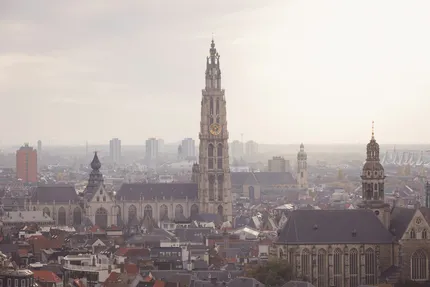
Cathedral of Our Lady
Antwerp’s Cathedral of Our Lady (Onze-Lieve-Vrouwekathedraal) is a Gothic landmark begun in 1352 and largely completed in 1521. Its 123-meter spire dominates the skyline; the second tower remains unfinished. Inside, see Rubens’ Raising of the Cross and Descent from the Cross. The belfry is a UNESCO World Heritage Site; hours and ticketed entry vary with services.
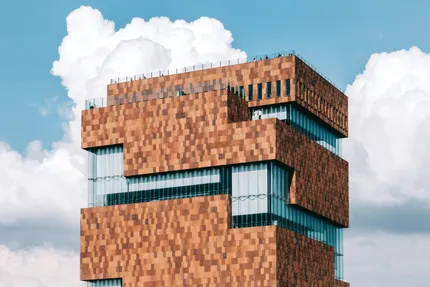
MAS Museum
MAS (Museum aan de Stroom) is Antwerp’s landmark museum in the Eilandje docks district. Its stacked red sandstone and glass tower by Neutelings Riedijk houses collections on the city, its port, global trade, and migration, with changing exhibitions and visible storage. A spiraling escalator boulevard leads to a panoramic rooftop with sweeping views over the river and docks.
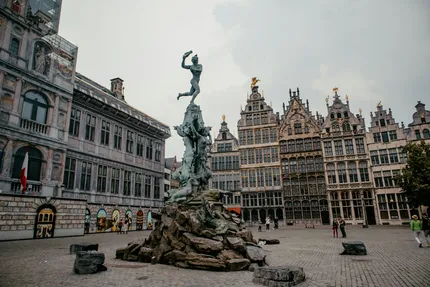
Grote Markt
Antwerp’s Grote Markt is the historic central square in the old town, framed by ornate guildhalls and the Renaissance City Hall (Stadhuis). At its center stands the Brabo Fountain, depicting the city’s founding legend. The square hosts markets and seasonal events, and is ringed by cafes, making it a prime spot for architecture, photos, and people-watching.
Antwerp Zoo
Founded in 1843 beside Antwerp-Central station, Antwerp Zoo is one of Europe’s oldest city zoos. Its protected 19th‑century gardens and Art Nouveau buildings house diverse species in updated habitats, including an aquarium and a reptile house. The zoo is noted for conservation and breeding programs, notably for the okapi, and offers a compact, walkable visit.
Red Star Line Museum
Red Star Line Museum in Antwerp’s Eilandje district occupies the shipping company’s restored warehouses where around two million Europeans began transatlantic journeys between 1873 and 1934. Exhibits trace the emigration process—from medical checks and ticketing to life aboard—through personal stories, photos, and multimedia. The museum links Antwerp to Ellis Island history and contemporary migration themes.
Rubens House
Rubens House (Rubenshuis) is the former home and studio of Baroque painter Peter Paul Rubens in central Antwerp. The museum reveals his life, workshop practice, and domestic world through period rooms, historic studio spaces, and a serene garden. Rubens’s Italian-inspired architecture, including his portico and garden pavilion, reflects Antwerp’s 17th-century prosperity and the artist’s international stature.
Antwerp Central Station
Antwerp Central Station, dubbed the "railway cathedral," is a grand terminus (1905) with an ornate stone hall, vast iron-and-glass train shed, and central dome. A major renovation (1998-2007) added multi-level platforms for high-speed services. It adjoins Antwerp Zoo and the Diamond District, and offers shops, eateries, and frequent national and international train connections.
Plantin-Moretus Museum
A UNESCO World Heritage Site, the Plantin-Moretus Museum preserves the 16th-century home and printing works of Christophe Plantin and Jan Moretus. Explore the world’s oldest surviving printing presses, typesetting rooms, and richly stocked library, alongside the family residence and courtyard garden. Highlights include portraits by Rubens and extensive type, punches, and archival records.
Het Steen Castle
Het Steen is Antwerp’s oldest surviving building, a small medieval fortress on the Scheldt. Rebuilt under Charles V around 1520, it later served as a prison and museum. Today, it houses the Antwerp Story visitor center and cruise terminal, offering exhibits on city history, tourist information, and riverfront views near the historic city center.
Who should visit Antwerp
Antwerp suits travelers with focused interests rather than box‑ticking. Art lovers will find depth: the Cathedral of Our Lady displays major Rubens altarpieces, the Royal Museum of Fine Arts Antwerp (KMSKA) mixes Flemish masters with modern Belgian works, and Museum Plantin‑Moretus reveals the craft of printing in its original 16th‑century rooms. Design‑minded visitors and fashion shoppers should base themselves around Nationalestraat and MoMu, then browse independent boutiques in the surrounding streets and concept stores on Kammenstraat and De Wilde Zee. Architecture and photography fans can pair Gothic and Baroque facades on the Grote Markt with Art Nouveau townhouses in Zurenborg, the monumental Centraal Station, MAS’s stacked pavilions, and the Port House’s dramatic silhouette.
Families have plenty within easy walking distances: the historic Antwerp Zoo beside the station, hands‑on storytelling at the Red Star Line Museum, panoramic rooftops at MAS, and a ride on the wooden escalators into the pedestrian Sint‑Anna tunnel for skyline views from Linkeroever. Food‑motivated weekenders can plan around the Saturday Exotic Market on Theaterplein, brewery visits at De Koninck, praline tastings, and cafes pouring local Bolleke. Night owls will appreciate classic beer cafés and compact bar districts in Het Zuid and around the old town.
Thanks to frequent trains and an efficient tram network, Antwerp works well for car‑free travelers and short, two‑to‑three‑night stays that balance museums, shopping, and neighborhood wandering without rushing.

Best time to visit Antwerp
Late spring (May–June) and early autumn (September) are the sweet spots for Antwerp. Expect mild temperatures, long daylight, and outdoor terraces buzzing without peak‑season congestion. These months suit open‑air exploring of the historic center, the docks around MAS, and neighborhood architecture in Zurenborg and Het Zuid. July–August bring the warmest weather and many events, but hotel rates rise and popular museums and the Grote Markt get busier. Winter is quieter; December adds cozy lights and Christmas markets, though days are short and damp. Many highlights are indoors—museums, fashion boutiques, beer cafés—so shoulder seasons maximize comfort while remaining reliable year‑round.
Three top reasons for a city trip to Antwerp
- Experience Antwerp's Old Masters at Rubenshuis and the Cathedral of Our Lady, admire Rubens at renovated KMSKA, and enjoy perspectives at MAS's rooftop and galleries across Zuid and Eilandje districts.
- Explore Antwerp's Diamond Quarter by Central Station and DIVA museum, then its fashion scene: MoMu exhibitions, Royal Academy legacy, Antwerp Six influence, and designer boutiques concentrated around Nationalestraat and Theaterbuurt.
- Stroll Grote Markt's guildhalls, Brabo Fountain, Het Steen fortress, wander Scheldt quays. Discover Eilandje's MAS and Red Star Line Museum, then enjoy De Koninck beers, chocolate, dining at The Jane.
Antwerp is a relatively walkable city with a compact and charming historic center and walking is a great way to explore the main attractions. Additionally, the city is very cycle-friendly with plenty of bike lanes and rental options, making cycling a popular choice among locals and tourists alike. Antwerp's public transport system is efficient, with trams and buses operated by De Lijn covering most areas. The Antwerp Central Station is a key hub in the network, allowing easy access to other parts of Belgium and nearby countries. For travel within the city, buying a day pass can be economical if you plan to use public transport extensively. Taxis and ride-sharing services are also readily available but can be more costly.
This content was created with AI assistance and may contain inaccuracies.