
3 days in Antwerp
BelgiumDay #1
Old Town highlights, cathedral, riverside walk, Flemish supper, beer.
15:00
Check-in at hotel
15:30
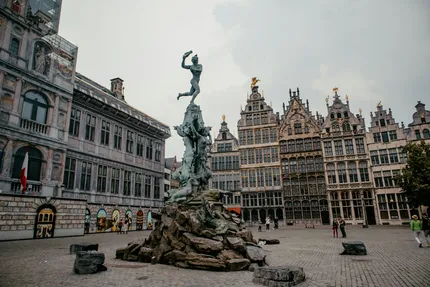
Stroll Grote Markt and Brabo Fountain
Antwerp’s Grote Markt is a historic square framed by ornate guildhalls and the Renaissance City Hall. At its center, the Brabo Fountain depicts Silvius Brabo tossing a giant’s hand into the Scheldt, a legend tied to the city’s name. Stroll for architecture, photos, and café terraces; arrive early to avoid crowds.
16:15
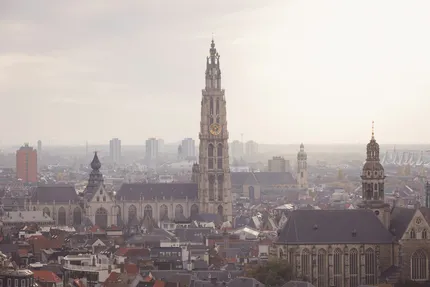
Explore Cathedral of Our Lady interior
Step inside Antwerp’s Cathedral of Our Lady to see its soaring Gothic nave, the choir, and richly decorated chapels. Highlights include Peter Paul Rubens’ monumental altarpieces The Elevation of the Cross and The Descent from the Cross, alongside vivid stained glass and sculpture. Admission is ticketed; access may be limited during services.
17:15
Coffee and waffle break in Vlaeykensgang alley
18:00
Sunset riverside walk past Het Steen castle
Take an evening stroll along the Scheldt quays, passing Het Steen, Antwerp’s restored medieval fortress at Steenplein. The flat riverside path offers wide views of the Scheldt, passing ships, and the Cathedral spire. Benches and lookouts line the promenade. It’s an easy walk from the historic center and ideal at sunset facing west.
19:30
Flemish dinner near Old Town
Enjoy a traditional Flemish dinner around Antwerp’s Old Town (Grote Markt/Onze-Lieve-Vrouwekathedraal), where brasseries and brown cafés serve stoofvlees (beer-braised beef) with frites, waterzooi, rabbit in prunes, and seasonal mussels. Pair with local De Koninck beer. Kitchens typically run 18:00–22:00; weekends are busy, so reservations help. Many venues offer English menus.
21:00
Belgian beer tasting at cozy brown café
Experience Antwerp’s beer culture in a traditional brown café: dark-wood interior, convivial locals, and a curated tasting of Belgian styles. Sample a Bolleke De Koninck alongside Trappist ales like Westmalle, plus lambic, dubbel, tripel, or saison. Staff offer guidance and snacks, often cheese cubes with mustard, enhancing flavor notes and local character.
22:30
Return to hotel and rest
Day #2
Station, chocolate, UNESCO print museum, MAS, waterfront dining.
08:30
Breakfast at local café
09:15
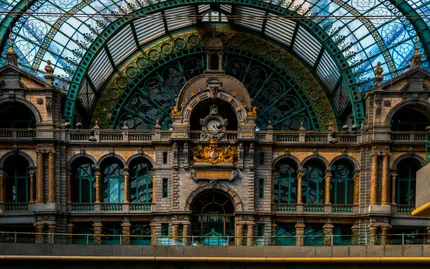
Marvel at Antwerp Central Station architecture
Admire Antwerpen-Centraal, the city's Railway Cathedral, a protected early-20th-century landmark blending eclectic, neo-Baroque flourishes with a soaring iron-and-glass train shed. The 1905 station by Louis Delacenserie was sensitively revamped in the 2000s into a multi-level through-station. Step onto upper galleries for dome and hall views, and explore restored stonework, clocks, and detailing.
10:15
Visit Chocolate Nation museum
Chocolate Nation, opposite Antwerp Central Station, is Belgium’s largest chocolate museum. Take a self-guided multimedia tour tracing cocoa’s journey to Belgian pralines, with exhibits on craftsmanship, brands, and production. Expect aromas, interactive installations, and tastings at the end. Allow 60–90 minutes. Audio guides and occasional demonstrations are available; workshops can be booked, with an on-site shop.
11:45
Walk the Meir and Stadsfeestzaal architecture
Stroll the Meir, Antwerp’s main pedestrian shopping boulevard, to admire grand 18th–20th‑century facades and landmarks like the former city palace. Step into the Stadsfeestzaal, a restored 1908 festival hall turned arcade, featuring a gilded hall, sweeping staircases, and a glass dome—an elegant Beaux‑Arts showcase amid contemporary shops. The walk links the station area with Groenplaats and the Cathedral quarter.
12:30
Lunch with Belgian fries and stoofvlees
13:30
Tour Museum Plantin-Moretus (UNESCO)
Explore Antwerp's UNESCO-listed Museum Plantin-Moretus, the preserved 16th-century house and printing works of Christophe Plantin and Jan Moretus. Tour historic workshops with two of the world's oldest presses, original punches and matrices, and the patrician residence. See portraits and title-page designs by Rubens, rare early editions, and the renowned Plantin archives documenting early modern book production.
15:15
Tram to Eilandje docks district
15:45
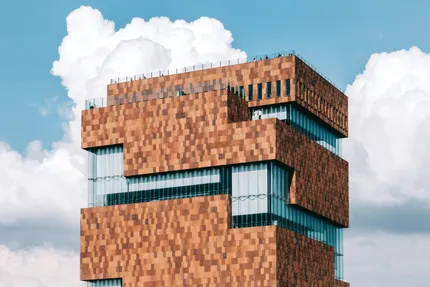
Explore MAS Museum galleries
Explore MAS (Museum aan de Stroom) in Antwerp’s Eilandje district, a landmark stack-like tower of red sandstone and glass. Its galleries trace the city’s maritime history, global trade links, and diverse cultures, drawing on ethnographic and shipping collections. Exhibitions mix objects and multimedia, and the building’s escalator boulevard and rooftop terrace offer sweeping city and port views.
17:15
MAS rooftop panorama over port and city
The rooftop terrace of the Museum aan de Stroom (MAS) in Antwerp’s Eilandje district offers a 360-degree panorama across the port, historic center, and the River Scheldt. Reach it via the museum’s public walkway with glass-enclosed escalators. Access is free, separate from exhibitions, though hours vary and closures occur in bad weather or for events.
18:00
Drinks on the Bonapartedok waterfront
19:15
Seafood dinner in Eilandje
Enjoy a seafood-focused dinner in Eilandje, Antwerp’s dockside district around Willemdok and Bonapartedok, near the MAS. Menus feature North Sea fish, oysters, shrimp croquettes, and seasonal mussels, often paired with Belgian beers. Many venues offer waterside terraces. Reservations are advisable on weekends; expect mid‑range to upscale pricing and a relaxed harbour atmosphere.
21:00
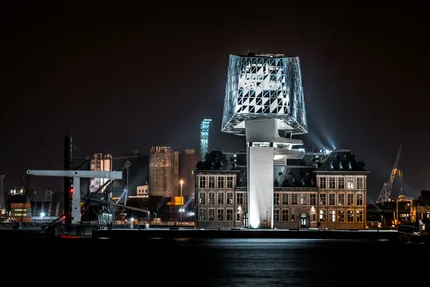
Night stroll to Port House for photos
Take an evening walk from Eilandje toward the Port House (Havenhuis), Zaha Hadid’s striking extension atop a historic fire station. The illuminated faceted structure reflects in the docks, ideal for long-exposure shots. Best views along Kattendijkdok and Mexicobrug. Exterior is accessible year-round; interiors are offices. Bring a tripod and mind windy, exposed quays.
22:15
Return to hotel
Day #3
Quiet Sunday culture, park stroll, museum, riverside, depart afternoon.
08:30
Breakfast at bakery
09:15
Peaceful walk in Stadspark
Antwerp’s Stadspark offers a calm city-center stroll along winding paths, mature trees, and a central pond with ducks. Benches and lawns provide quiet pauses, while small bridges and a few monuments add interest. It’s flat and accessible, popular with joggers and families, and convenient for a short, restorative break near the shopping streets.
10:00
Red Star Line Museum visit
The Red Star Line Museum in Antwerp’s Eilandje district chronicles the mass migration via the Red Star Line (1873–1934). Set in the company’s restored warehouses, it presents personal testimonies, artifacts, and photographs, and recreates medical checks and embarkation. Exhibits trace journeys from Europe to New York and Philadelphia, linking Antwerp’s port history with global migration.
11:30
Scheldt quays promenade and photos
Stroll the Scheldt quays (Scheldekaaien), Antwerp’s riverside promenade, for wide views of the river and historic skyline, including the Cathedral of Our Lady. Photograph cargo ships, sunset reflections, and Het Steen fortress near Steenplein. For the best skyline shot, cross via the Sint-Annatunnel to Linkeroever. Flat, bike-friendly path; lighting is best late afternoon.