City break inVienna
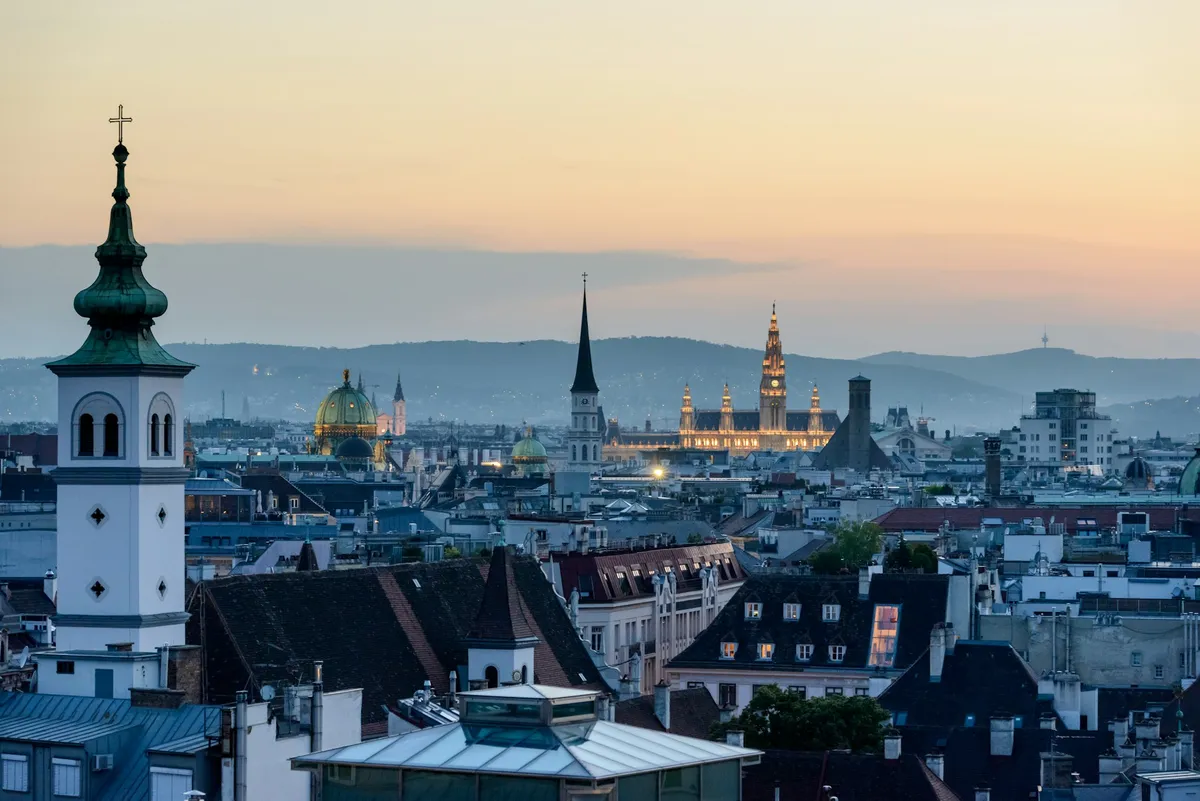
Vienna, the capital of Austria, is one of Europe's most historically rich and architecturally striking cities. Once the seat of the Habsburg Empire, it retains an imperial grandeur that is visible in its monumental buildings, wide boulevards, and meticulously maintained palaces. The Ringstrasse boulevard alone offers a concentrated tour through 19th-century architectural ambition, lined with the State Opera, the Kunsthistorisches Museum, and the Parliament building. Beyond the grand facades, Vienna is a city of coffee house culture, where locals and visitors alike linger over a Melange and a slice of Sachertorte.
The city has a deeply embedded musical heritage as the former home of Mozart, Beethoven, Schubert, and Brahms, and world-class concerts remain central to Viennese life. The inner districts offer excellent walking, with cobblestone alleys, Baroque churches, and independent boutiques sitting comfortably alongside high-end shopping streets. Vienna consistently ranks among the most livable cities in the world, and its combination of cultural depth, culinary tradition, and urban polish makes it a compelling destination for almost any traveller.
Schönbrunn Palace
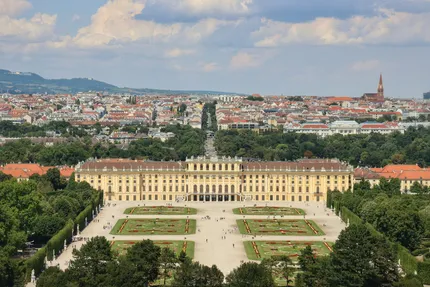
Schönbrunn Palace, Vienna’s former Habsburg summer residence, is a vast Baroque complex with richly furnished state rooms and imperial apartments. Visitors explore the Great Gallery, formal gardens, Neptune Fountain, maze, and the hilltop Gloriette with city views. The grounds include Tiergarten Schönbrunn, the world’s oldest zoo. The palace and park are a UNESCO World Heritage Site.
St. Stephen's Cathedral
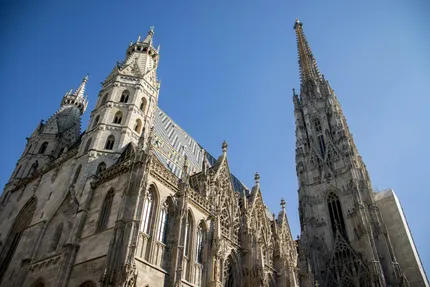
St. Stephen’s Cathedral (Stephansdom) anchors Vienna’s Stephansplatz, a landmark with 12th‑century origins and a striking Gothic nave and colored tile roof. Climb 343 steps to the South Tower lookout, see the massive Pummerin bell in the North Tower, and tour the catacombs and treasury. The cathedral hosts regular services and occasional concerts.
Prater Park and Giant Ferris Wheel
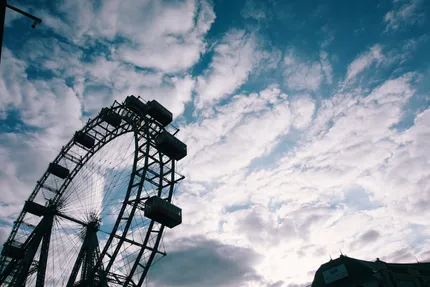
Vienna’s Prater is a vast city park combining leafy avenues (the Hauptallee) with the Wurstelprater amusement area. Its landmark, the Wiener Riesenrad (Giant Ferris Wheel, 1897), offers 360-degree views in historic cabins on a roughly 15-minute circuit. Open year-round with seasonal hours. Easy access via Praterstern (U1/U2). Popular for strolling, cycling, and family outings.
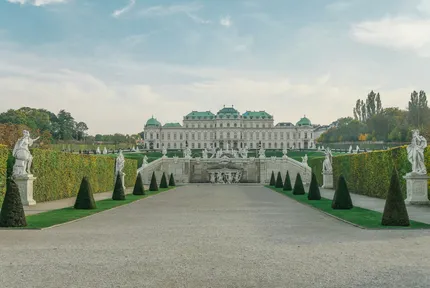
Belvedere Palace
Belvedere Palace is a grand Baroque ensemble of Upper and Lower Belvedere, built in the early 18th century for Prince Eugene of Savoy. The Upper Belvedere houses one of Austria’s most important art collections, including Gustav Klimt’s The Kiss, plus works by Schiele and Kokoschka. Formal terraced gardens, fountains, and city views link the two palaces.
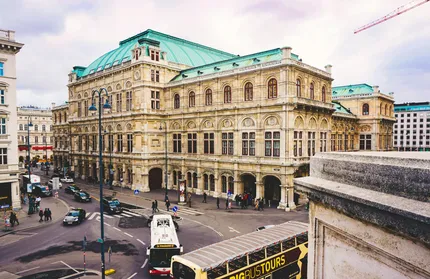
Vienna State Opera
The Vienna State Opera (Wiener Staatsoper) is a landmark on Vienna's Ringstrasse, renowned for its packed season and world-class productions. Heavily damaged in WWII, it was rebuilt and reopened in 1955. Visitors can attend regular performances, secure affordable standing-room tickets, or join guided tours of the auditorium and grand staircases. The venue also hosts the annual Vienna Opera Ball.
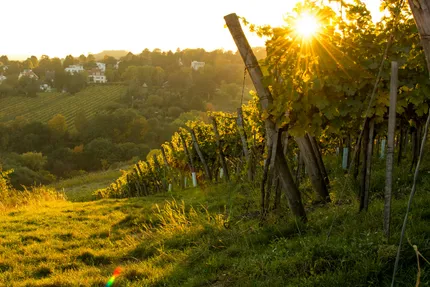
Vineyards
Vienna is one of the few capitals with extensive urban vineyards on hills like Kahlenberg and Bisamberg. About 700 hectares produce mainly whites, notably Wiener Gemischter Satz DAC. Explore traditional Heuriger taverns in Grinzing, Neustift, and Stammersdorf, or walk marked trails through the vines with city views; many sites are reachable by tram or bus.
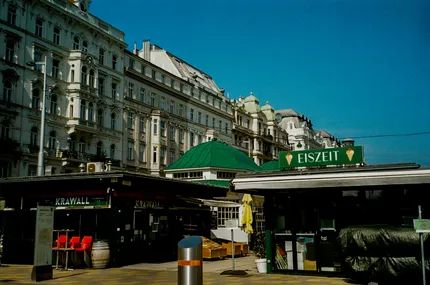
Naschmarkt
Vienna’s best-known open-air market, the Naschmarkt runs along the Wienzeile near the Secession building and dates to the 16th century. Around 120 stalls and eateries sell produce, spices, fish, baked goods, and international street food. Open Monday–Saturday; a large flea market operates on Saturdays. Nearest U-Bahn: Kettenbrückengasse (U4) and Karlsplatz.
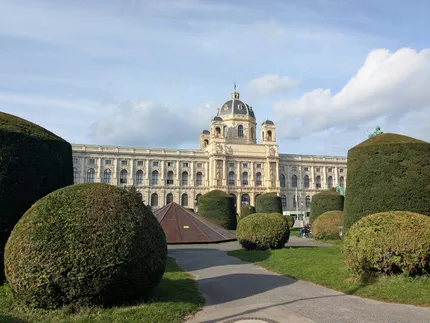
MuseumQuartier
MuseumQuartier (MQ) is Vienna’s central cultural complex mixing museums, performance spaces, and lively courtyards. Highlights include the Leopold Museum (Austrian modernism), mumok (modern and contemporary art), Kunsthalle Wien, Architekturzentrum Wien, and the family-friendly ZOOM Kindermuseum. Courtyards host cafes, seasonal events, and public seating. Access via U2 Museumsquartier or U3 Volkstheater; museum hours and admission vary.
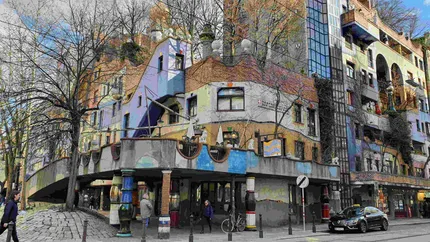
Hundertwasser House
Hundertwasser House in Vienna is a residential complex designed by artist Friedensreich Hundertwasser (with architect Josef Krawina), built 1983–85. Its colorful facade, uneven floors, irregular windows, and rooftop greenery embody his organic, anti-straight-line philosophy. The building is private; visitors view it from outside. For exhibitions and context, visit the nearby Kunst Haus Wien.
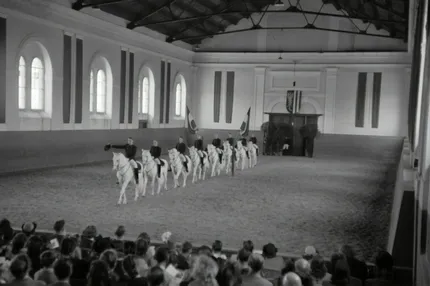
Spanish Riding School
The Spanish Riding School, housed in the Hofburg's Baroque Winter Riding School, showcases classical dressage with Lipizzaner stallions. Visitors can attend gala performances and more affordable morning exercises, or join guided tours of the historic arena and stables. Expect precise movements such as the "airs above the ground," executed to music by meticulously trained riders. Tickets often sell out.
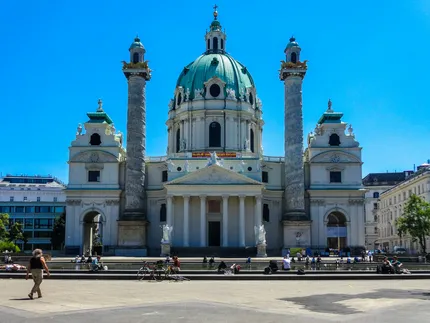
Karlskirche
Baroque landmark on Karlsplatz, Karlskirche (St. Charles Church) was built 1716–1737 by Johann Bernhard Fischer von Erlach and his son, commissioned by Emperor Charles VI after the plague, and dedicated to St. Charles Borromeo. It features a vast green dome and twin narrative columns inspired by Trajan’s Column. Inside: rich frescoes; frequent classical concerts.
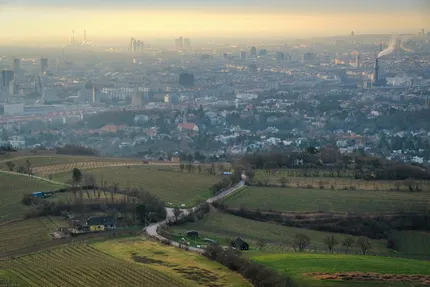
Kahlenberg
Kahlenberg, a 484‑meter hill in the Vienna Woods above Döbling, offers panoramic views of Vienna and the Danube. Reachable via bus 38A or the Höhenstraße, it features St. Joseph’s Church, an observation platform, and access to vineyards and marked trails (Stadtwanderweg 1). Popular for hikes, cycling, and sunsets, with Heuriger nearby.
Who should visit Vienna
Vienna is an outstanding destination for travellers with a strong interest in classical music and opera. The Vienna State Opera and the Musikverein host performances at the highest international level, and even standing-room tickets for the opera are reasonably priced, making it accessible beyond just luxury travellers. Music enthusiasts can also visit the composer memorial apartments and the Vienna Philharmonic's home venue. Art lovers are very well served, with the Kunsthistorisches Museum holding one of the finest collections of old master paintings in Europe, and the MuseumsQuartier offering strong contemporary and modern art programming, including dedicated museums for Egon Schiele and Gustav Klimt.
Architecture and history enthusiasts will find the city rewarding, particularly those interested in Habsburg history, Baroque design, and fin-de-siecle Viennese style. The Belvedere Palace complex and Schonbrunn Palace both warrant extended visits. Food-oriented travellers who appreciate traditional European cuisine and strong cafe culture will also find Vienna a natural fit. The city is less ideal for travellers seeking beach access, outdoor adventure sports, or a vibrant late-night club scene, as these are not among Vienna's core strengths.

Best time to visit Vienna
The best time to visit Vienna is late spring, from April to June, when temperatures are mild, outdoor seating at coffee houses opens up, and the city's parks and gardens are in full bloom. September and October offer similarly pleasant weather with fewer tourists. July and August can be hot and more crowded. December is a popular time for visitors due to its renowned Christmas markets, though temperatures drop significantly and the city gets busy around the holiday period.
Three top reasons for a city trip to Vienna
- Explore Vienna’s imperial grandeur at Schönbrunn Palace and the Hofburg, stroll the Ringstrasse past the Rathaus and Parliament, and admire St. Stephen’s Cathedral’s Gothic spire dominating the historic Innere Stadt.
- Experience Vienna’s artistic and musical brilliance: Klimt’s The Kiss at the Belvedere, masterpieces at the Kunsthistorisches Museum and Leopold Museum, and world-class performances at the Vienna State Opera and Musikverein.
- Savor authentic Viennese life: linger in grand coffeehouses like Café Central with Sachertorte, browse Naschmarkt delicacies, sip young wines at Grinzing heuriger taverns, and unwind along the Danube Canal promenades.
Vienna is an exceptionally walkable city, and its compact historic center is best explored on foot. The city also has one of Europe's finest public transport networks, consisting of the U-Bahn (subway), trams, and buses, all operating on a unified ticketing system. A 24-hour, 48-hour, or 72-hour travel pass offers unlimited access and represents good value for visitors. Cycling is also a popular and practical option, with an extensive network of bike lanes and the Citybike Vienna rental scheme available throughout the city. Taxis and ride-sharing apps are available but rarely necessary given the quality of public transit. A car is not recommended for tourists, as parking is expensive and restricted in much of the city center. The city runs night buses on weekends and late hours, ensuring connectivity around the clock.
This content was created with AI assistance and may contain inaccuracies.