
City break inMunich
Munich blends royal heritage with easygoing beer‑garden culture and green spaces. Start at Marienplatz, where the neo‑gothic Neues Rathaus and its Glockenspiel anchor a compact old town of pedestrian lanes. Nearby landmarks include the twin‑towered Frauenkirche, the food‑centric Viktualienmarkt, and the opulent Munich Residenz, once seat of the Wittelsbachs. West of the center, Nymphenburg Palace and its gardens show baroque grandeur; to the north, the Olympiapark offers hilltop views and lakeside paths. Art fans gravitate to the Pinakothek museums and the Lenbachhaus, while engineering buffs head to the Deutsches Museum or BMW Welt and the adjacent museum.
Munich is unusually green: locals picnic in the vast English Garden, surfers ride the Eisbach wave, and the Isar riverbanks are ideal for cycling. Evenings often mean a Maß under chestnut trees at Augustiner‑Keller or a classic hall like Hofbräuhaus, paired with pretzels, roast pork, or Weißwurst. With efficient U‑Bahn and S‑Bahn lines, you can cover a lot in a short stay, and day trips to nearby lakes round out an itinerary. Shoppers browse Maximilianstrasse boutiques.
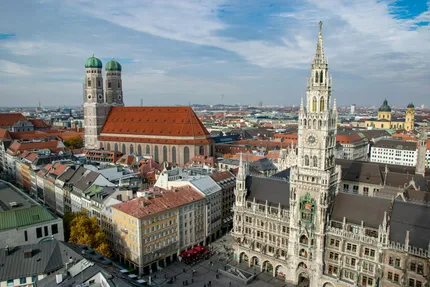
Marienplatz
Marienplatz is Munich’s central square, anchored by the Neo-Gothic Neues Rathaus and its Glockenspiel, which performs daily at 11 am and 12 pm (plus 5 pm in summer). It’s a major U- and S-Bahn hub and a starting point for pedestrian streets leading to Viktualienmarkt. The square hosts the Christkindlmarkt during Advent.
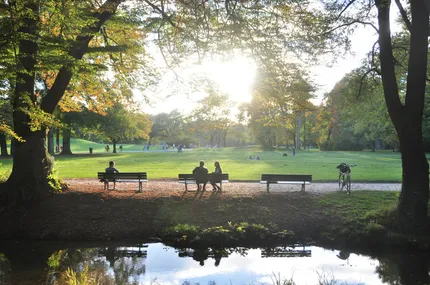
Englischer Garten
Munich’s vast Englischer Garten is one of the world’s largest urban parks, stretching from the city center to the northeast. Highlights include the Eisbach river surfing wave, the Monopteros hilltop temple, and beer gardens at the Chinesischer Turm and Seehaus. Expect lakes, meadows, cycling paths, paddleboats, and designated nude sunbathing areas. Free, open year-round.
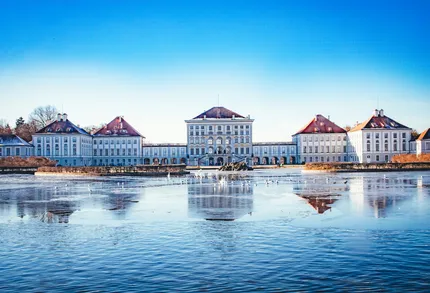
Nymphenburg Palace
Nymphenburg Palace is a vast Baroque complex in western Munich, built from 1664 as the Wittelsbachs’ summer residence. Visitors can tour the grand state rooms and the Rococo Steinerner Saal, stroll formal gardens and canals, and explore park pavilions like Amalienburg and Badenburg. On-site museums include the Marstallmuseum and the Nymphenburg Porcelain Museum.
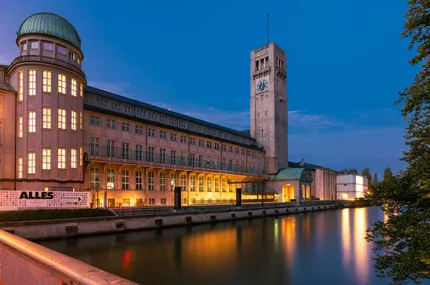
Deutsches Museum
Deutsches Museum, on Munich’s Museum Island, is one of the world’s largest science and technology museums. Its extensive, hands-on galleries cover aviation, space, computing, mining, physics, chemistry, and musical instruments. Expect interactive demonstrations and historic originals, from early aircraft to laboratory apparatus. Additional branches include the Verkehrszentrum transport museum and Flugwerft Schleissheim aviation site.
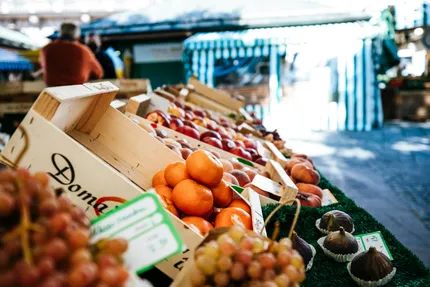
Viktualienmarkt
Viktualienmarkt is Munich's central open-air food market, just south of Marienplatz. Originating in 1807, it hosts around 140 stalls selling fresh produce, cheese, meat, fish, baked goods, and Bavarian specialties, plus flowers and gourmet items. A maypole and a popular beer garden, serving rotating Munich breweries, add atmosphere. Open Monday-Saturday; closed Sundays/holidays.
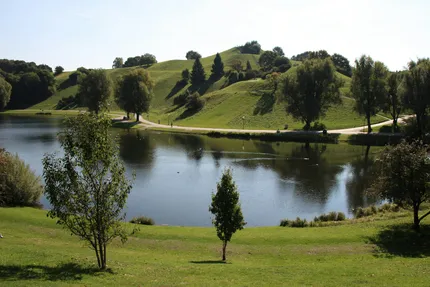
Olympiapark
Olympiapark, built for the 1972 Summer Olympics, is a vast complex of stadiums, arenas, and landscaped parkland. Highlights include the tent-like roof architecture, the Olympiastadion, and the Olympic Tower with citywide views. Visitors can join stadium roof-climb tours, attend concerts and festivals, stroll around the lake, or cycle its paths. Easily reached by U-Bahn.
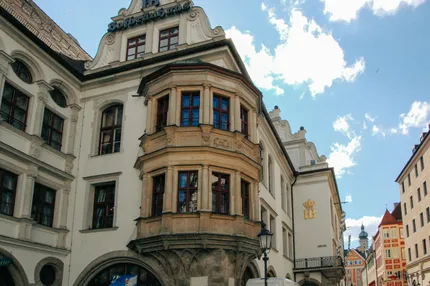
Hofbräuhaus Munich
Hofbräuhaus am Platzl is Munich’s most famous beer hall, originally founded in 1589 as a ducal brewery. Today it offers lively oompah music, communal tables, and Bavarian classics like pork knuckle, sausages, and giant pretzels, plus liter steins of Hofbräu beer. Expect crowds; reservations help. Located near Marienplatz, it also has a courtyard beer garden.
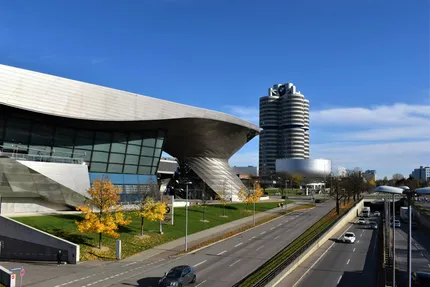
BMW Welt & Museum
BMW Welt & Museum in Munich, beside Olympiapark and the BMW headquarters tower, showcases the brand’s past and present. BMW Welt offers free entry to displays of current vehicles and technology, plus vehicle handovers. The adjacent museum (ticketed) traces BMW’s history with classic cars, motorcycles, engines, and design exhibits. Access via U3 Olympiazentrum station.
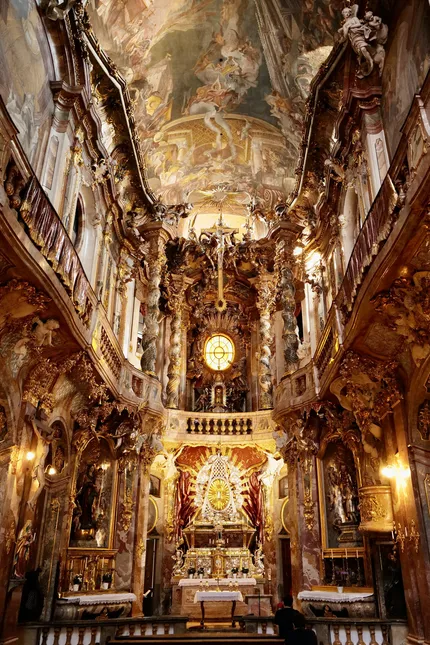
Asam Church
Asam Church (St. Johann Nepomuk) is a compact Rococo gem on Munich’s Sendlinger Straße. Built in the 1730s–1740s by the Asam brothers—painter Cosmas Damian and sculptor Egid Quirin—it features dense stucco, gilding, and ceiling frescoes. Originally a private chapel beside their residence, it’s renowned for its theatrical altar and dramatic light effects.
Who should visit Munich
Munich suits travelers who like culture anchored by clear, walkable planning. Art lovers can spend a short break in the Kunstareal alone: Alte, Neue, and Pinakothek der Moderne, plus the Lenbachhaus for Blue Rider works. History‑minded visitors have the Munich Residenz, Cuvilliés Theatre, and Nymphenburg Palace, and can add concise context at the NS‑Dokumentationszentrum. Families do well with varied, hands‑on venues: the Deutsches Museum’s interactive halls, BMW Welt’s free exhibitions, the adjacent BMW Museum, the Olympic Tower view, and the large Hellabrunn Zoo. Food‑focused city trippers should base themselves near the Viktualienmarkt or in Glockenbach for easy breakfast stalls, craft bakeries, and access to neighborhood beer gardens like Hofbräukeller or Augustiner‑Keller.
Outdoors‑inclined visitors who still want an urban break get real options: cycling along the Isar, open‑air swimming at Schyrenbad or Prinzregentenbad in summer, and long walks in the English Garden. Shoppers with a taste for high‑end brands can browse Maximilianstrasse and Theatinerstrasse; vintage and design hunters will prefer Gärtnerplatz and Glockenbach. Football fans can tour Allianz Arena or catch an FC Bayern home game when schedules align.
Nightlife seekers will find compact bar areas in Glockenbach and Schwabing and a credible electronic scene around Blitz Club. With reliable public transport and an airport S‑Bahn link, a two‑to‑three‑day stay covers core sights without rushing. Quick day trips to Lake Starnberg, Ammersee, or Tegernsee appeal to walkers and casual swimmers in summer.

Best time to visit Munich
The most comfortable months are May, June, and September. Temperatures are mild, beer gardens are open, and parks and the Isar are at their best. July and August are warmer and lively but bring occasional thunderstorms and higher hotel rates during major events. September’s Oktoberfest is iconic; expect full bookings, surge pricing, and crowds, but a unique atmosphere. Spring shoulder weeks (late April–early May) and early October offer crisp air, fall colors, and fewer visitors, though evenings can be cool. Advent season (late November–December) is cold yet festive with Christmas markets; pack winter layers and expect short daylight.
Three top reasons for a city trip to Munich
- Explore Munich’s historic heart: Marienplatz’s Glockenspiel, Frauenkirche twin towers, the Residenz, and Nymphenburg Palace; browse Viktualienmarkt; stroll Maximilianstraße and Odeonsplatz, witnessing Wittelsbach grandeur, Baroque and Neoclassical architecture, and Bavarian customs.
- Immerse in Munich’s beer culture: Oktoberfest at Theresienwiese, Hofbräuhaus singalongs, Augustiner-Keller chestnut-shaded Biergarten, Chinesischer Turm steins, Reinheitsgebot-brewed Märzen, Brezn, and Weisswurst breakfasts before noon, pairing sweet mustard with tapped Maß.
- Discover world-class museums: Kunstareal’s Alte Pinakothek, Pinakothek der Moderne, Lenbachhaus, and Museum Brandhorst; the Deutsches Museum on Museumsinsel; BMW Welt and Museum; plus contemporary galleries energizing Maxvorstadt’s vibrant academic quarter.
Munich is highly walkable, especially in the central districts like Altstadt. The extensive public transport system, consisting of the U-Bahn (underground), S-Bahn (suburban trains), trams, and buses, ensures that most areas are accessible without a car. For cyclists, Munich offers a comprehensive network of bike lanes. Public transport tickets operate on a zone system, and day passes provide flexibility for visitors. Renting a bike can be a delight, given the city's bike-friendly infrastructure and abundant parks such as the English Garden. Car rentals are available, but traffic congestion and limited parking in the city center can be challenging. Overall, Munich's blend of walking paths and efficient public transit makes it easy to navigate without a vehicle.
This content was created with AI assistance and may contain inaccuracies.