
City break inFlorence
Florence condenses Renaissance art, architecture, and Tuscan flavor into a walkable historic center along the Arno River. Landmarks cluster within minutes: the Duomo with Brunelleschi’s dome (you can climb it for citywide views), Giotto’s bell tower, and the Baptistery’s bronze doors. World‑class collections fill the Uffizi and the Accademia, home to Michelangelo’s David; Palazzo Pitti and the Boboli Gardens reveal Medici grandeur across the Ponte Vecchio’s goldsmith shops. In the Oltrarno quarter, artisans still craft leather, marbled paper, and handmade jewelry in small workshops. Food is straightforward and regional: ribollita, pappa al pomodoro, and bistecca alla fiorentina, with Chianti by the glass in wine bars.
Markets like Mercato Centrale mix produce stalls and casual eateries. For panoramic sunsets, head to Piazzale Michelangelo or the quieter terrace at San Miniato al Monte. The compact layout rewards early starts and evening strolls, letting you weave churches, frescoed chapels, and gelato stops into the same day. Beyond the center, a bus ride brings you to Fiesole’s Etruscan remains and hilltop views, while Museo Galileo, the Opera del Duomo Museum, and smaller spaces like the Bargello highlight sculpture, instruments, and craft in focused settings.
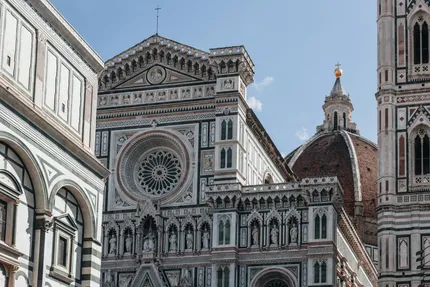
Florence Cathedral
Florence Cathedral (Santa Maria del Fiore) anchors Piazza del Duomo with its vast brick dome by Brunelleschi, 19th‑century marble facade, and adjacent Giotto’s Campanile and Baptistery. Inside, see the Last Judgment fresco beneath the dome. Visitors can climb the dome or bell tower for city views; timed tickets and dress code apply.
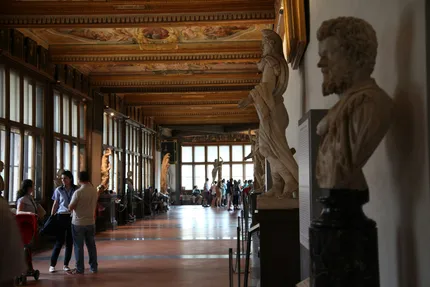
Uffizi Gallery
The Uffizi Gallery, housed in the Palazzo degli Uffizi near Piazza della Signoria, showcases premier Renaissance masterpieces from the Medici collections. Highlights include Botticelli’s Birth of Venus and Primavera, Michelangelo’s Doni Tondo, works by Leonardo, Raphael, Titian, and Caravaggio. Expect crowds; reserve timed-entry tickets in advance. Upper-floor corridors overlook the Arno and Ponte Vecchio.
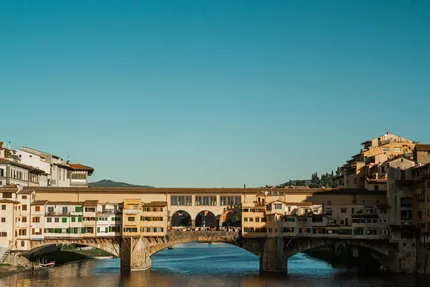
Ponte Vecchio
Ponte Vecchio is Florence’s medieval stone arch bridge over the Arno, distinguished by shops built along it—once butchers, now mostly goldsmiths and jewelers. The 16th-century Vasari Corridor runs above, linking Palazzo Vecchio and Palazzo Pitti via the Uffizi. Spared from destruction in World War II, it offers river views and is crowded at sunset.
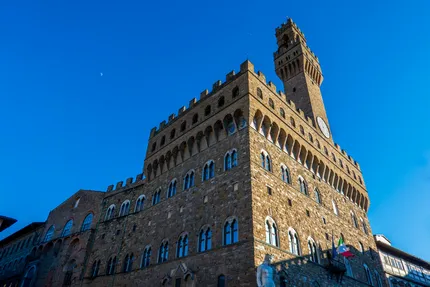
Piazza della Signoria
Piazza della Signoria is Florence’s historic civic square, dominated by the medieval Palazzo Vecchio. It features the Loggia dei Lanzi, an open-air gallery with notable sculptures, including Cellini’s Perseus, and a replica of Michelangelo’s David. The Fountain of Neptune stands nearby. The square has hosted major events, including Savonarola’s Bonfire of the Vanities; the Uffizi is adjacent.
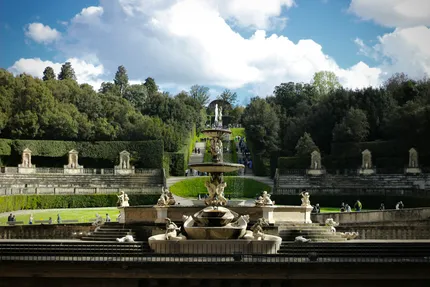
Boboli Gardens
Boboli Gardens, behind the Pitti Palace, is a vast 16th‑century Italian Renaissance park commissioned by the Medici. Its formal terraces, cypress-lined avenues, and an amphitheatre frame statues and fountains from antiquity to the 18th century. Highlights include Buontalenti’s Grotta Grande and the Neptune Fountain, plus panoramic views over Florence. Main access is via the Pitti Palace.
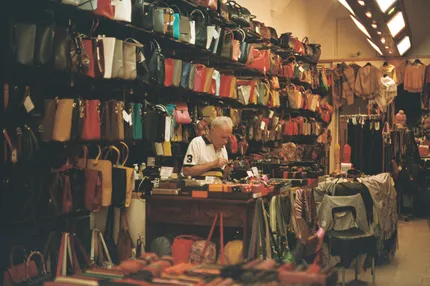
San Lorenzo Market
San Lorenzo Market is Florence’s bustling marketplace around the Basilica, combining the outdoor leather and souvenir stalls with the indoor Mercato Centrale. Browse wallets, belts, and scarves, then sample Tuscan cheeses, salumi, fresh produce, and street-food upstairs. Go earlier to avoid crowds; haggle politely at stalls and check leather quality. Central, lively, and budget-friendly.
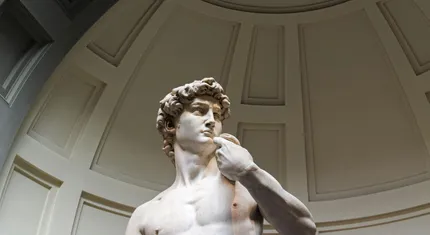
Accademia Gallery
Florence’s Galleria dell’Accademia is home to Michelangelo’s David, displayed under a skylit rotunda, along with his unfinished Prisoners (Prigioni) and St. Matthew. Galleries showcase medieval and Renaissance Florentine art and a notable collection of historic musical instruments. Expect crowds; reserve timed tickets in advance. Located near the Duomo; typically closed Mondays.
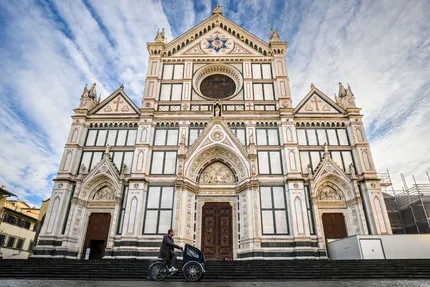
Basilica di Santa Croce
Basilica di Santa Croce is Florence’s major Franciscan church, begun in the late 13th century by Arnolfo di Cambio. It houses tombs of Michelangelo, Galileo, Machiavelli, and Rossini, and Giotto’s frescoes in the Bardi and Peruzzi Chapels. Visit Brunelleschi’s Pazzi Chapel, the museum and leather school. Neo-Gothic marble facade faces Piazza Santa Croce.
Mercato Centrale
Mercato Centrale is Florence’s historic indoor market in the San Lorenzo district, housed in a 19th‑century iron-and-glass hall by Giuseppe Mengoni. The ground floor hosts traditional vendors selling produce, meats, cheeses, and bread. The upper floor features a modern food hall with artisan stalls, wine and cocktail bars, and communal seating—ideal for casual meals.
Bargello Museum
Bargello Museum, housed in a 13th-century fortress-palace, is Florence’s premier sculpture museum. Its collections feature Donatello’s bronze David and St. George, Michelangelo’s Bacchus and Brutus, works by Cellini, Giambologna, and Verrocchio, plus della Robbia terracottas, Renaissance medals, ivories, and arms. The central courtyard and austere Gothic halls reflect the building’s former role as barracks and prison.
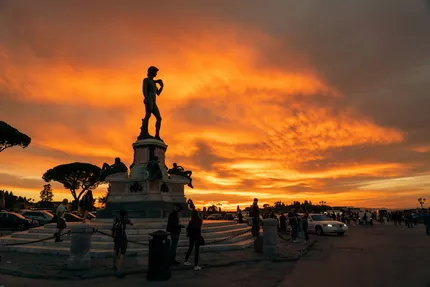
Piazzale Michelangelo
Piazzale Michelangelo is a 19th-century terrace on a hill in the Oltrarno, offering panoramic views of Florence, including the Duomo, Palazzo Vecchio, Ponte Vecchio, and the Arno. It features a bronze replica of Michelangelo's David. Popular at sunset, it's reachable by bus, taxi, or on foot via stairs/ramps; parking available.
Who should visit Florence
Florence works best for travelers who want dense culture without long commutes between sights. Art and architecture lovers can fill two to three days with focused highlights—Uffizi masterpieces, the Accademia’s David, fresco cycles at Santa Maria Novella and Santa Croce, and dome, campanile, or tower climbs for context and views. Food‑motivated visitors will find rewarding grazing: morning espresso at standing bars, lampredotto at street kiosks, produce and casual dining at Mercato Centrale, Tuscan steakhouses for bistecca, and wine bars pouring Chianti Classico and Brunello by the glass. Shoppers interested in quality over volume can target leather goods around San Lorenzo, handmade paper near Santa Croce, and goldsmiths on and near the Ponte Vecchio.
Photographers and couples should plan sunset at Piazzale Michelangelo or the steps of San Miniato, when the Arno and terracotta rooftops glow. Families with teens tend to enjoy the hands‑on Leonardo interactive museum, gelato tastings, and a half‑day in the Boboli Gardens to unwind. Active travelers comfortable with hills and stairs will get more from dome climbs and the walk up to San Miniato; those avoiding steps can lean on taxis and focus on ground‑level galleries and cloisters.
If you have an extra day, nearby Fiesole or a guided Chianti tasting loop add variety without diluting a short stay. Planners who reserve timed entry for the Uffizi and Accademia and start early will move efficiently, even in peak months.

Best time to visit Florence
The best windows are spring (April–May) and early fall (September–October), when daytime highs sit around 18–26°C, skies are generally clear, and crowds are manageable. These months suit outdoor sights like the Boboli Gardens and evening river walks, and you can still book dome or tower climbs without extreme heat. Summer brings long daylight but also 32–38°C heat, packed museums, and higher prices; August can feel quiet at midday as some small workshops take holidays. Winter (November–February) is cooler and occasionally wet, but lines shrink, hotel rates drop, and museum‑focused trips shine. For lively color, consider mid‑June’s Calcio Storico and the June/January Pitti fashion weeks.
Three top reasons for a city trip to Florence
- Renaissance masterpieces abound: Uffizi Gallery's Botticelli and Leonardo, Accademia's Michelangelo's David, Medici collections at Palazzo Pitti, frescoes in Santa Maria Novella and Brancacci Chapel, plus chapels showcasing transformative artistic innovation.
- Iconic landmarks and vistas: climb Brunelleschi's Duomo cupola and Giotto's Campanile, admire Baptistery's Gates of Paradise, stroll Ponte Vecchio and Oltrarno, at Piazzale Michelangelo, explore Boboli Gardens, visit San Miniato.
- Distinctive Tuscan flavors: Mercato Centrale and Sant'Ambrogio markets, bistecca alla fiorentina, lampredotto sandwiches, ribollita and pappa al pomodoro, artisan gelato, Chianti and Brunello tastings, aperitivo in Santo Spirito's piazza, enotecas.
Florence is a very walkable city, with its historic center being a UNESCO World Heritage site and mostly pedestrian-friendly. The city's compact nature allows you to explore iconic sights like the Duomo, Uffizi Gallery, and Ponte Vecchio easily on foot. For further distances, the city offers a decent public transportation network with buses operated by ATAF, covering most of the city and surrounding areas, though they can get crowded during peak times. Cycling in Florence has become more popular in recent years, with bike rental shops and designated bike lanes increasingly available. However, the historic cobblestone streets can be a challenge for cyclists. Renting a car is generally unnecessary and not recommended for exploring the city due to limited parking spaces and restricted traffic zones, although it might be useful for trips to the Tuscan countryside.
This content was created with AI assistance and may contain inaccuracies.