
3 days in Florence
ItalyDay #1
Historic center highlights, sunset on the Arno
15:00
Arrive and hotel check-in
15:30
Orientation stroll: Piazza del Duomo and Baptistery
Begin at Piazza del Duomo, Florence's focal square, to orient yourself around the Duomo complex: Santa Maria del Fiore, Giotto's Campanile, and the Baptistery of San Giovanni. Walk the perimeter to spot entrances and queues, admire Ghiberti's bronze doors, and note viewpoints. The square is free; interiors and climbs require tickets. Best early or late.
16:00
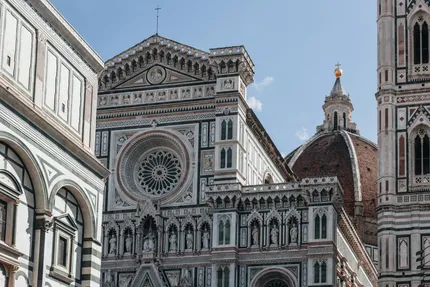
Visit Cathedral interior (Santa Maria del Fiore)
Step inside Florence's Duomo to see Brunelleschi's vast nave, the marble intarsia floor, and the soaring dome frescoed with Vasari and Zuccari's Last Judgment. Look for Paolo Uccello's 24-hour clock and stained-glass windows by Donatello and Ghiberti. Entry to the cathedral is free; expect security queues and observe the modest dress code.
16:45
Gelato near the Duomo
17:15
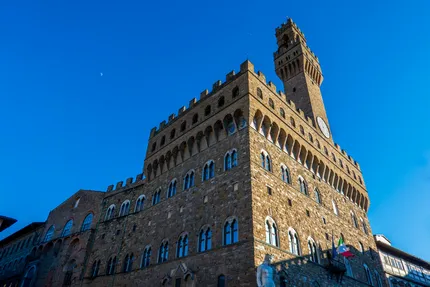
Piazza della Signoria and Palazzo Vecchio courtyard
Florence’s civic center, Piazza della Signoria, fronts Palazzo Vecchio and doubles as an open-air sculpture museum. See the Neptune Fountain, a replica of Michelangelo’s David, and masterpieces under the Loggia dei Lanzi (Cellini’s Perseus, Giambologna’s Rape of the Sabine Women). Inside, the Palazzo Vecchio’s Michelozzo-designed courtyard, frescoed by Vasari’s workshop, is free to visit.
18:00
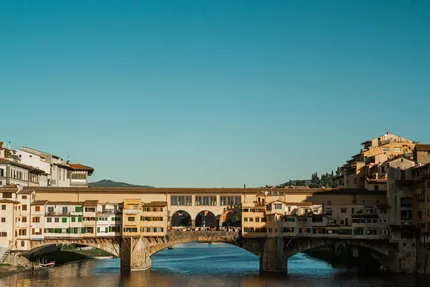
Sunset light on Ponte Vecchio
Watch Florence’s Ponte Vecchio catch warm sunset light as the sun drops behind the Arno. Colors intensify on the stone arches and shop-lined span, reflecting in the river. Best viewpoints include Ponte Santa Trinita, Lungarno degli Acciaiuoli, and Piazzale Michelangelo. Arrive 20–30 minutes before sunset; expect crowds, especially in summer.
18:45
Aperitivo in Piazza Santo Spirito
20:00
Tuscan dinner in Oltrarno trattoria
Experience a classic Tuscan dinner in Oltrarno's neighborhood trattorias, across the Arno from Florence's center. Expect unfussy rooms, seasonal menus, and staples like ribollita, pappa al pomodoro, pappardelle al cinghiale, and bistecca alla fiorentina, paired with Chianti. Portions are hearty. Reserve for weekends; dinner service generally starts later in the evening.
21:30
Night panorama from Piazzale Michelangelo
Piazzale Michelangelo offers the classic night panorama of Florence, with illuminated views of the Duomo, Palazzo Vecchio, Ponte Vecchio, and the Arno River. Arrive at sunset to watch the city light up. The terrace is free, busy, and features a bronze copy of David. Reach it by uphill walk or ATAF bus.
22:30
Stroll back along the Arno
Day #2
Masterpieces, markets, gardens, and Oltrarno evening
08:30
Breakfast: cappuccino and pastry at a local bar
09:00
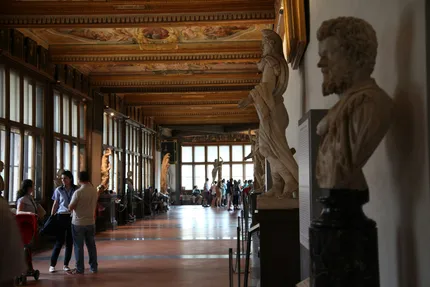
Uffizi Gallery timed entry
Secure a reserved time slot for the Uffizi Gallery, Florence's premier Renaissance museum. Timed entry reduces waiting at the ticket line and admits you after security screening. Explore masterpieces like Botticelli's Birth of Venus and works by Leonardo, Michelangelo, and Caravaggio. Arrive early for security; large bags are restricted. Plan 2-3 hours.
11:30
Coffee break at Caffè Gilli or Rivoire
12:00
Mercato Centrale lunch and quick browse
Grab lunch at Mercato Centrale, Florence’s lively indoor market in San Lorenzo. Head upstairs to the modern food hall for varied stalls—fresh pasta, pizza, seafood, and regional specialties like lampredotto—served with quick, communal seating. After eating, browse ground-floor vendors for produce, cheeses, cured meats, olive oil, and other Tuscan ingredients.
13:15
San Lorenzo Basilica visit
Visit Florence’s San Lorenzo Basilica, the Medici parish church and a key Early Renaissance work. Brunelleschi designed the austere interior; the façade remains unfinished. See Donatello’s pulpits, the Old Sacristy, and Michelangelo’s New Sacristy with Medici tombs. The Medici Chapels and Laurentian Library adjoin the complex; separate admissions may apply.
14:00
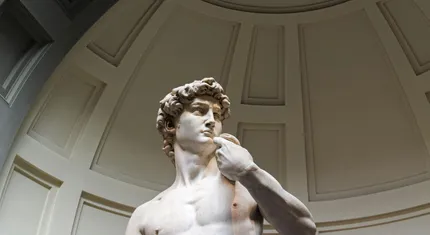
Accademia Gallery: Michelangelo's David
Florence’s Galleria dell’Accademia showcases Michelangelo’s David (1501-1504), a 5.17-meter marble masterpiece, displayed under a skylight in the Tribuna. You can also see his unfinished Prisoners and St. Matthew, plus Florentine paintings and a musical instruments section. Reserve timed tickets to avoid queues; the museum sits on Via Ricasoli, a short walk from the Duomo.
15:15
Santa Maria Novella church and cloisters
Santa Maria Novella is Florence’s principal Dominican church, noted for Leon Battista Alberti’s marble façade. Inside are masterpieces like Masaccio’s Holy Trinity, Giotto’s Crucifix, and Ghirlandaio’s Tornabuoni Chapel. The adjoining cloisters include the Green Cloister with Paolo Uccello’s Genesis frescoes and the Spanish Chapel’s Dominican allegories. Entry is ticketed via the museum complex.
16:15
Walk across Ponte Santa Trinita to Oltrarno
16:30
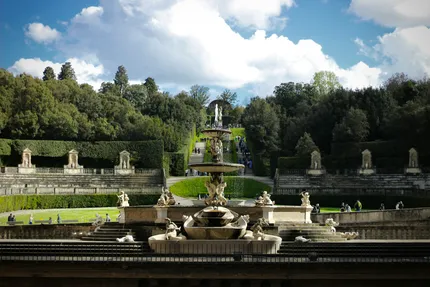
Boboli Gardens wander
Explore the Medici’s formal Boboli Gardens behind Palazzo Pitti, a vast Renaissance landscape of terraces, shaded avenues, and sweeping city views. Wander past sculptures, fountains, and the Buontalenti Grotto, the amphitheater, and the Isolotto. Expect gravel paths and some steep climbs; wear sturdy shoes. Entry is ticketed, with main access from Palazzo Pitti; hours vary seasonally.
18:30
Rooftop aperitivo with Duomo views
20:00
Dinner in the Oltrarno
Cross the Arno to Oltrarno for dinner in Florence’s artisan quarter. Around Santo Spirito and San Frediano, find traditional trattorias, wine bars, and contemporary osterie. Expect Tuscan staples such as bistecca alla fiorentina, ribollita, pappa al pomodoro, and natural wines. Lively piazzas, modest prices, and late hours; reserve for weekends. Outdoor tables fill quickly in warmer months.
21:30
Gelato and evening passeggiata
Day #3
Dome climb, sacred art, relaxed Sunday departure
08:00
Espresso and pastry breakfast
08:15
Brunelleschi's Dome climb (Cupola)
Climb 463 steps to the top of Brunelleschi’s Dome (Cupola) at Florence’s Cathedral for panoramic city views. The route follows narrow, steep stairways and one-way corridors, without elevators. Along the way, see Vasari and Zuccari’s Last Judgment frescoes up close. Entry is by timed reservation; access is via the Duomo complex ticket.
11:30
Light lunch near Sant'Ambrogio
Near Florence's Sant'Ambrogio, a light lunch is easy: browse Mercato di Sant'Ambrogio for prepared salads, roast vegetables, and fresh cheeses, or sit at Trattoria da Rocco inside for simple daily plates. For quick bites, try Semel's inventive panini by the market, or Cibreo Caffe for soups, small plates, and espresso. Arrive before 14:30; many stalls close early.