3 days in Prague
Czech RepublicDay #1
Old Town wander, Charles Bridge, and evening river cruise
15:00
Arrive in Prague and check in at hotel
15:30
Stroll Old Town Square and see Astronomical Clock
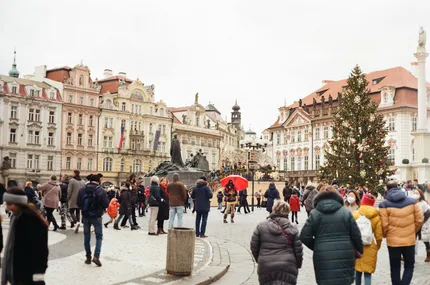
Explore Prague’s Old Town Square (Staroměstské náměstí), surrounded by Gothic and Baroque landmarks, including the Church of Our Lady before Týn, St. Nicholas Church, and the Jan Hus Monument. At the Old Town Hall, see the Astronomical Clock (Orloj): an hourly procession of Apostles, moving figures, and astronomical and calendar dials. Expect crowds; arrive early.
16:15
Explore Church of Our Lady before Týn exterior
Dominating Old Town Square, the Gothic Church of Our Lady before Týn is best appreciated from the square, where its twin spires rise behind a row of historic houses. Examine the stone tracery, pinnacles, and the gilded Madonna on the gable. For closer views of the portal and masonry, enter via the Týn Courtyard (Ungelt).
17:00
Walk across Charles Bridge at golden hour
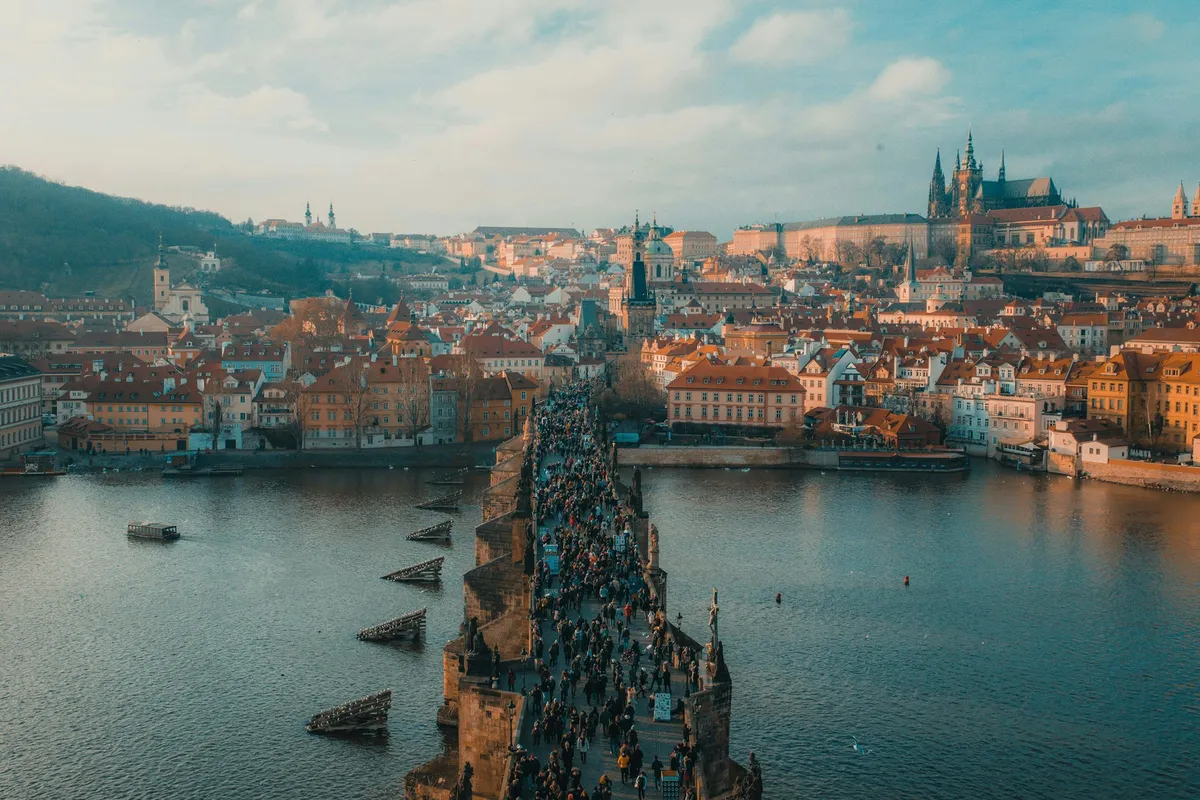
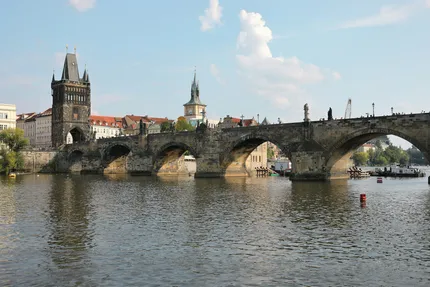
Walk across Prague’s Charles Bridge at golden hour to watch the Vltava, Prague Castle, and Old Town towers glow. The 14th-century stone span, lined with Baroque statues, attracts buskers and artists. Arrive a little before sunset to beat crowds, find room on the cobbles, and frame the castle and river in warm light.
18:15
Climb Old Town Bridge Tower for panoramic views
Climb the Gothic Old Town Bridge Tower at the Charles Bridge’s Old Town end for sweeping views of the Vltava, Charles Bridge, Lesser Town, and Prague Castle. Access is via a narrow staircase; paid entry, with seasonal hours. Go early or at sunset to avoid crowds and catch the city’s landmarks and rooftops.
19:15
Dinner in Malá Strana with classic Czech dishes
Have dinner in Malá Strana, the historic district beneath Prague Castle, at a traditional hospoda or cellar pub. Expect classic Czech dishes like svíčková (braised beef with creamy sauce), beef goulash, roast pork with dumplings and sauerkraut, and smažený sýr. Pair with Pilsner-style lager. Tables fill up evenings; reservations are advisable.
20:45
Evening Vltava River cruise
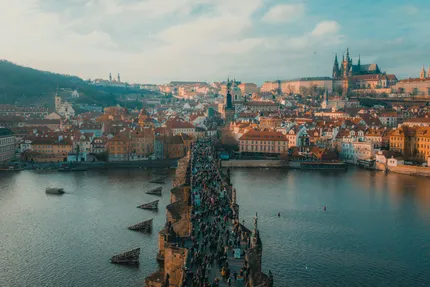
An evening Vltava River cruise offers illuminated views of Prague’s landmarks, including Charles Bridge, Prague Castle, the National Theatre, and the Dancing House. Cruises typically last 50 to 120 minutes, with options for simple sightseeing or dinner. Boats depart from central embankments, often near Čech Bridge or Rašínovo nábřeží, and commonly provide multilingual audio commentary.
22:15
Dessert trdelník and Czech beer near Old Town
Near Old Town Square, grab a fresh trdelník—rolled dough baked over a spit, coated in sugar and cinnamon, sometimes filled with ice cream or chocolate—from street stalls around the square and on the way to Charles Bridge. Pair it with a Czech lager in a nearby pivnice; Pilsner-style beers and local taps are widely available for an easy, casual stop.
23:00
Return to hotel and relax
Day #2
Prague Castle, Petřín Hill, Letná views, music at night
08:30
Breakfast at café in Hradčany
09:15
Tram to Prague Castle and enter complex
09:30
Visit St. Vitus Cathedral
St. Vitus Cathedral anchors Prague Castle, a grand Gothic church completed over centuries. It hosted coronations of Bohemian kings and holds the tombs of St. Wenceslas and St. John of Nepomuk. Highlights include the St. Wenceslas Chapel, Alfons Mucha’s stained glass, the Golden Gate mosaic, and a climbable south tower with panoramic views.
10:15
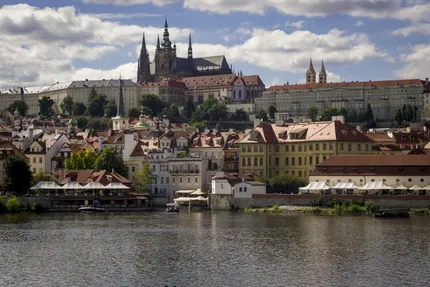
Tour Old Royal Palace and St. George’s Basilica
Visit two Prague Castle highlights: the Old Royal Palace, former seat of Bohemian rulers with the vast Late Gothic Vladislav Hall and the site of the 1618 Defenestration, and St. George’s Basilica, a 10th-century Romanesque church noted for its austere nave and royal tombs. Access via Prague Castle tickets; allow time for security screening.
11:15
Explore Golden Lane and castle ramparts
Within Prague Castle, Golden Lane (Zlatá ulička) is a narrow street of preserved 16th-century cottages once used by castle guards and artisans, now hosting small exhibits and shops. Continue along the adjoining ramparts and towers for armory displays and sweeping views over the Old Town and Vltava. Access is via Prague Castle tickets; evenings are quieter.
12:30
Lunch in Hradčany neighborhood
Have lunch in Hradčany, the Castle District above Prague. Choose traditional Czech dishes like svíčková, goulash, or roast pork with dumplings in historic houses around Hradčanské and Loretánské squares, or quieter cafés in Nový Svět. Expect higher prices near the castle and midday crowds; side streets offer better value and views.
13:30
Walk down Nerudova Street to Malá Strana
Walk downhill from Prague Castle along Nerudova Street into Malá Strana, a cobbled route lined with Baroque townhouses, palaces, and historic house signs. Named for writer Jan Neruda, the street leads to Malostranské náměstí near St. Nicholas Church. Expect embassies, cafés, and artisan shops amid classic lanterns—busy by day, atmospheric in the evening.
13:45
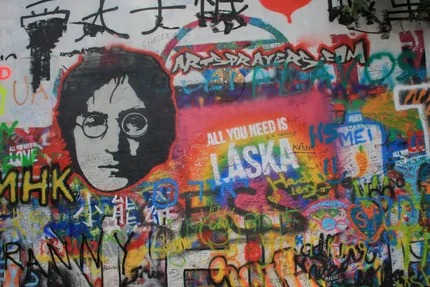
See Lennon Wall and Kampa Island
Visit Prague's Lennon Wall, a constantly evolving mural of Beatles-inspired art and messages of peace that began in the 1980s, just off Charles Bridge in Mala Strana. Steps away, Kampa Island offers riverside paths, views of the bridge, historic watermills, and Museum Kampa's modern art collection—an easy combined stroll with photo stops.
14:30
Coffee by Čertovka canal
15:00
Funicular to Petřín Hill and climb lookout tower
Take the funicular from Újezd (with a mid-stop at Nebozízek) up to Petřín Hill, using regular Prague public transport tickets. At the summit, climb the 63.5-metre Petřín Lookout Tower (1891), via 299 steps or an elevator, for panoramic views of Prague Castle, Old Town and the Vltava. Gardens and cafés nearby make an easy add-on.
16:30
Stroll Petřín Gardens to Strahov Monastery viewpoint
A gradual uphill walk through Petřín Gardens to the Strahov Monastery viewpoint offers broad views of Prague Castle, the Old Town and the Vltava. Start at Újezd (funicular available) and follow paved and gravel paths past orchards and the rose garden. Allow 30–45 minutes. Free access; uneven surfaces. Refreshments at Strahov Monastic Brewery nearby.
17:15
Beer tasting at Strahov Monastic Brewery
Sample on-site brewed St. Norbert beers at the Strahov Monastic Brewery, set within the Strahov Monastery near Prague Castle. Tastings typically include amber, dark, IPA and seasonal specials brewed in small batches. Pair with classic Czech dishes in the courtyard or restaurant. Historic brewing roots date to the 17th century; the modern brewery reopened in 2000. Reservations recommended.
18:30
Tram to Letná Park for sunset beer garden
20:00
Dinner in Old Town or Holešovice bistro
Dinner in Prague’s Old Town offers classic Czech fare—svíčková, roast pork with dumplings, goulash—and international menus in historic settings near the Astronomical Clock; reservations help in peak season. In Holešovice, bistros are more casual and contemporary, with seasonal plates, vegetarian options, natural wines, and craft beer. Expect moderate prices; tipping around 10% is customary.
21:30
Classical concert at Municipal House or church
Experience Prague’s classical scene in the Art Nouveau Municipal House, home to Smetana Hall, or in historic churches like St. Nicholas. Programs typically feature Dvořák, Smetana, Mozart, and Vivaldi, with chamber ensembles or organ recitals. Performances run about 60–90 minutes; smart-casual attire is fine. Book ahead in peak seasons. Tickets are available on-site and online.
23:00
Nightcap near hotel
Day #3
Quiet Sunday sights, Jewish Quarter, depart after lunch
08:00
Early walk on Charles Bridge before crowds
Experience Charles Bridge at sunrise for calm, clear views of Prague before the crowds arrive. Walk between Gothic towers and Baroque statues with the Vltava River and Prague Castle in soft morning light. Ideal for photos and quiet reflection; cobblestones can be slick, so wear good shoes and bring a light layer.
08:30
Breakfast pastry and coffee in Old Town
09:15
Jewish Quarter: Pinkas Synagogue and Old Jewish Cemetery
Situated in Josefov, the Pinkas Synagogue serves as a memorial, its walls inscribed with names of Holocaust victims from Bohemia and Moravia, and displays children’s drawings from Terezín. Adjacent, the Old Jewish Cemetery (1439–1787) preserves densely layered graves and notable tombs, including Rabbi Judah Loew (Maharal). Both sites form part of the Jewish Museum in Prague.
10:45
Visit Old-New Synagogue
Prague's Old-New Synagogue (Altneuschul) is a 13th-century early-Gothic landmark in Josefov and among Europe's oldest active synagogues. Known for the Golem of Prague legend and distinctive double-nave vaulting, it still hosts services. Expect modest dress; men must cover heads. Closed on Saturdays and Jewish holidays; admission is separate from the Jewish Museum.
11:15
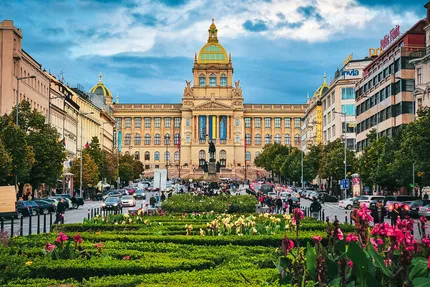
Wenceslas Square stroll and National Museum exterior
Stroll the broad boulevard of Wenceslas Square in Nové Město, lined with shops and cafes and central to Czech history, notably the 1989 Velvet Revolution. Walk uphill to the equestrian statue of Saint Wenceslas and the neo-Renaissance National Museum (1885-1891) at the square's summit, whose grand facade and dome dominate the view. Nearest metro: Muzeum.