City break inPrague
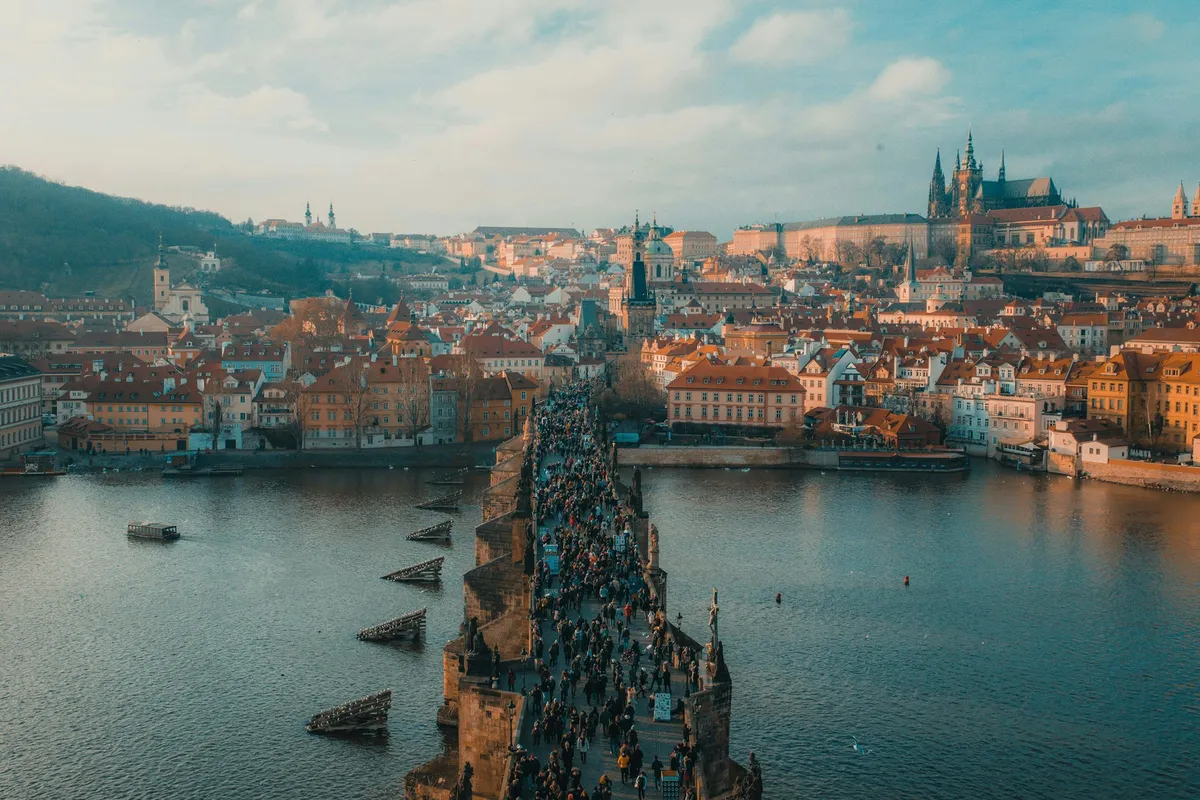
Prague, the capital of the Czech Republic, is one of Europe's most beautifully preserved medieval cities. Sitting along the Vltava River, the city offers an extraordinary concentration of Gothic, Baroque, and Art Nouveau architecture that survived the destruction of World War II largely intact. The historic center, a UNESCO World Heritage Site, is compact and highly walkable, making it easy to explore on foot. Visitors are drawn to landmarks such as Prague Castle, the largest ancient castle complex in the world, the iconic Charles Bridge lined with Baroque statues, and the intricate astronomical clock on the Old Town Square.
Beyond its architectural splendor, Prague has a vibrant cultural scene with numerous museums, galleries, and a strong classical music tradition. The city also boasts a lively restaurant and bar scene, offering some of the finest Czech beer in the world alongside a growing number of quality restaurants. Prague manages to feel both historically rich and energetically modern at the same time.
Charles Bridge
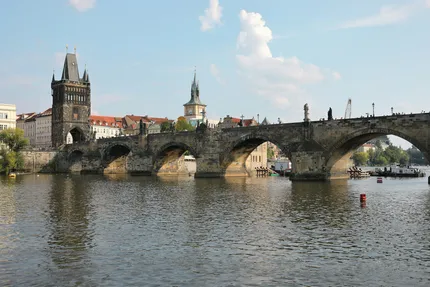
Charles Bridge is a 14th-century stone Gothic bridge spanning the Vltava, commissioned by Charles IV in 1357. It links Old Town and Malá Strana, guarded by historic towers. Lined with Baroque statues (mostly replicas), it is pedestrian-only, with views of Prague Castle. Expect crowds and street performers; visit early for quieter photos.
Prague Castle
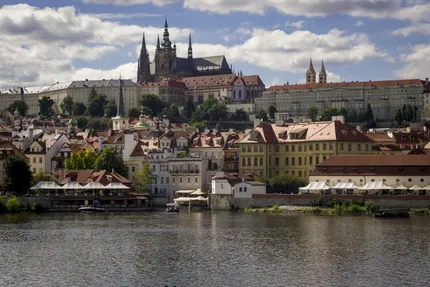
Prague Castle is a vast hilltop complex overlooking the city, housing St. Vitus Cathedral, St. George's Basilica, the Old Royal Palace, and Golden Lane. Founded in the 9th century, it serves as the seat of the Czech president. Visitors explore historic courtyards and exhibitions, watch the changing of the guard, and enjoy panoramic views.
Old Town Square
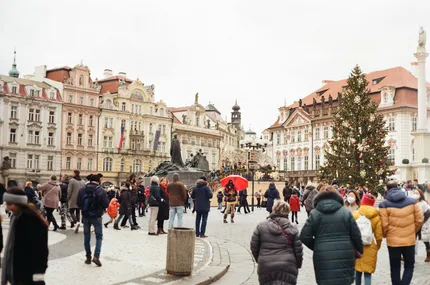
Old Town Square is Prague’s historic heart, framed by Gothic and Baroque landmarks. See the Astronomical Clock on the Old Town Hall, the Church of Our Lady before Týn, and St. Nicholas Church. The square hosts seasonal markets and street performances, with cafes and viewpoints nearby. Arrive early or late to avoid peak tour crowds.
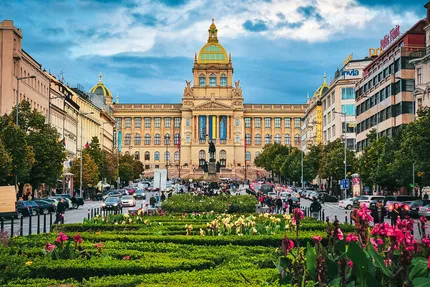
Wenceslas Square
Wenceslas Square (Václavské náměstí) is a broad boulevard in Prague’s New Town, anchored by the National Museum and the equestrian statue of Saint Wenceslas. It’s a focal point for demonstrations and celebrations, notably the 1989 Velvet Revolution. Today it’s lined with shops, cafes, and hotels. Nearest metro stations: Muzeum and Můstek; Jan Palach memorial nearby.
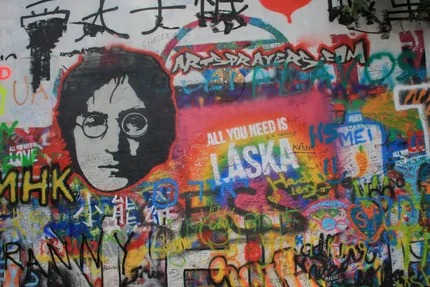
Lennon Wall
The Lennon Wall in Prague’s Malá Strana is a constantly changing mural of John Lennon portraits, Beatles lyrics, and messages of peace. It emerged in the 1980s as a silent protest against the communist regime. Located near Charles Bridge and Kampa, it’s free to visit; arrive early for photos and respect current painting rules.

Nightlife
Prague’s nightlife ranges from historic beer halls and craft pubs to cocktail bars, jazz venues, and multi-level clubs. Popular areas include Old Town, New Town/Wenceslas Square, Vinohrady, and Žižkov. Expect late hours and reasonable prices. Riverfront bars buzz in summer. Metro runs until around midnight; night trams and taxis cover late returns.
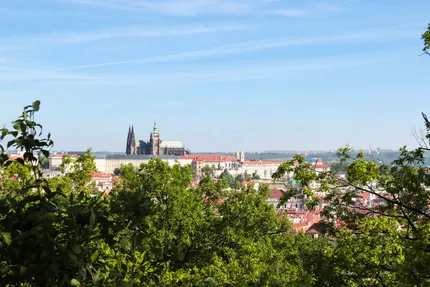
Petrin Hill
Petřín Hill offers panoramic views over Prague’s Old Town and castle. Ride the funicular from Újezd to reach gardens and orchards, the 63.5‑meter Petřín Lookout Tower, and a historic mirror maze. Trails connect to the 14th‑century Hunger Wall and Strahov area. The Štefánik Observatory and seasonal rose displays make it a pleasant urban escape.
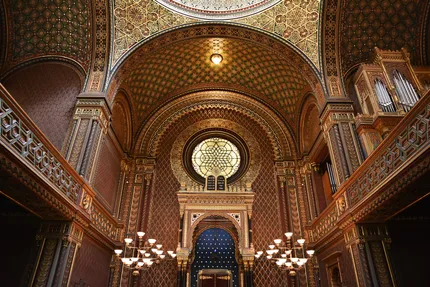
Jewish Quarter
Prague's Jewish Quarter (Josefov) preserves centuries of Jewish heritage. Visit the Old-New, Spanish, and Pinkas synagogues, the Old Jewish Cemetery, and the Jewish Museum's exhibitions. See memorial walls bearing Holocaust victims' names and historic gravestones. Central and walkable from Old Town, the area blends architecture, ritual artifacts, and the Maharal's Golem legend across a compact historic district.
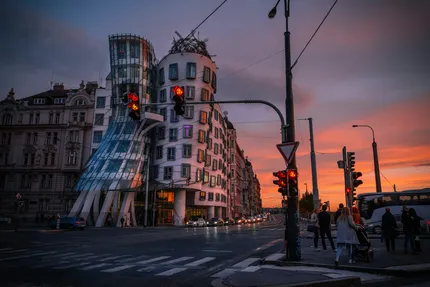
Dancing House
Dancing House (Tančící dům) is a deconstructivist landmark on Prague’s Vltava riverfront, designed by Vlado Milunić with Frank Gehry and completed in 1996. Nicknamed Fred and Ginger, it is primarily offices but includes a contemporary art gallery, the Ginger & Fred restaurant, and a rooftop bar/terrace offering panoramic city views. Located in Nové Město near Karlovo náměstí.
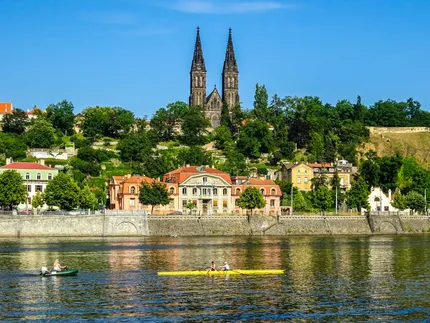
Vysehrad
Vyšehrad is a historic hilltop fortress above the Vltava, dating to the 10th–11th centuries. It features the neo-Gothic Basilica of St. Peter and St. Paul, the 11th-century Rotunda of St. Martin, and Vyšehrad Cemetery with the Slavín tomb of Czech cultural figures such as Dvořák and Smetana. Park-like ramparts offer panoramic city views and calm walks.
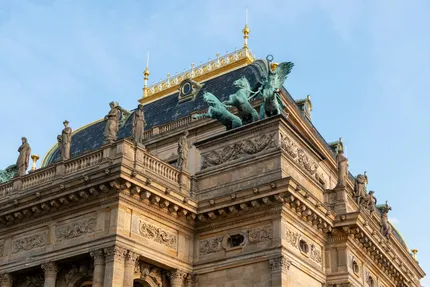
National Theatre
Prague’s National Theatre (Národní divadlo) is a neo-Renaissance landmark on the Vltava, opened in 1881, rebuilt after a fire, and reopened in 1883 thanks to public donations. It hosts opera, ballet and drama, featuring Czech classics by Smetana and Dvořák. Highlights include the gilded roof and rich interiors. Guided tours and performances run year-round.
Who should visit Prague
Prague is an excellent destination for architecture and history enthusiasts. Few cities in Europe offer such a dense concentration of well-preserved medieval and Baroque buildings, making it a rewarding destination for those who enjoy simply walking through historically layered streets and discovering architectural details at every turn. History buffs will find plenty to keep them engaged, from the Bohemian royal history centered at Prague Castle to the Jewish Quarter of Josefov, one of the best-preserved Jewish heritage sites in Central Europe. Beer lovers will feel very much at home here, as Czech beer culture is deeply embedded in daily life and Prague offers countless traditional pubs serving world-class pilsners on tap.
The city is also a strong fit for budget-conscious travelers, as it remains noticeably more affordable than Western European capitals when it comes to food, drinks, and accommodation. Classical music fans will appreciate the strong concert culture, with performances available in historic venues throughout the year. Prague is less suited to travelers primarily seeking beach activities, cutting-edge contemporary art scenes, or outdoor wilderness experiences, as none of these are particular strengths of the city or its immediate surroundings.

Best time to visit Prague
The best time to visit Prague is during spring, from April to May, when temperatures are mild, the city is in bloom, and crowds are smaller than in peak summer. Early autumn, particularly September and October, is equally pleasant with comfortable weather and beautiful foliage. July and August bring the largest tourist crowds and higher prices. Winter visits, especially around Christmas, offer a magical atmosphere with festive markets, though temperatures can be cold and days short.
Three top reasons for a city trip to Prague
- Wander Prague’s storybook core: Charles Bridge at sunrise, Old Town Square’s Astronomical Clock, Gothic St. Vitus within Prague Castle, winding Lesser Town lanes, panoramic rooftops from Petřín and Letná parks.
- Savor Czech beer culture where Pilsner rules: historic U Fleků and bustling Lokál, leafy Letná beer garden, Náplavka riverfront, plus svíčková, roast duck, pork knuckle, dumplings, chlebíčky, and pub chatter.
- Immerse in Prague’s culture: Dvořák and Smetana at the Rudolfinum, Mozart’s Don Giovanni at the Estates Theatre, Kafka haunts, Jewish Quarter synagogues, DOX contemporary art, Signal Festival lights, Christmas markets.
Prague is a highly walkable city, and the historic center is best explored on foot. The city also has an excellent public transport network consisting of metro, trams, and buses, which covers virtually all areas efficiently and affordably. Trams are particularly useful for getting between neighborhoods, and the metro connects major hubs quickly. Cycling infrastructure has improved in recent years, though the cobblestone streets in older districts can be challenging. Ride-sharing and taxis are widely available but less necessary given the strong public transit options. Driving a car in the city center is not recommended due to limited parking, traffic restrictions, and the ease of getting around without one. A reloadable Lítačka card or short-term travel passes make using public transport simple and cost-effective for visitors.
This content was created with AI assistance and may contain inaccuracies.