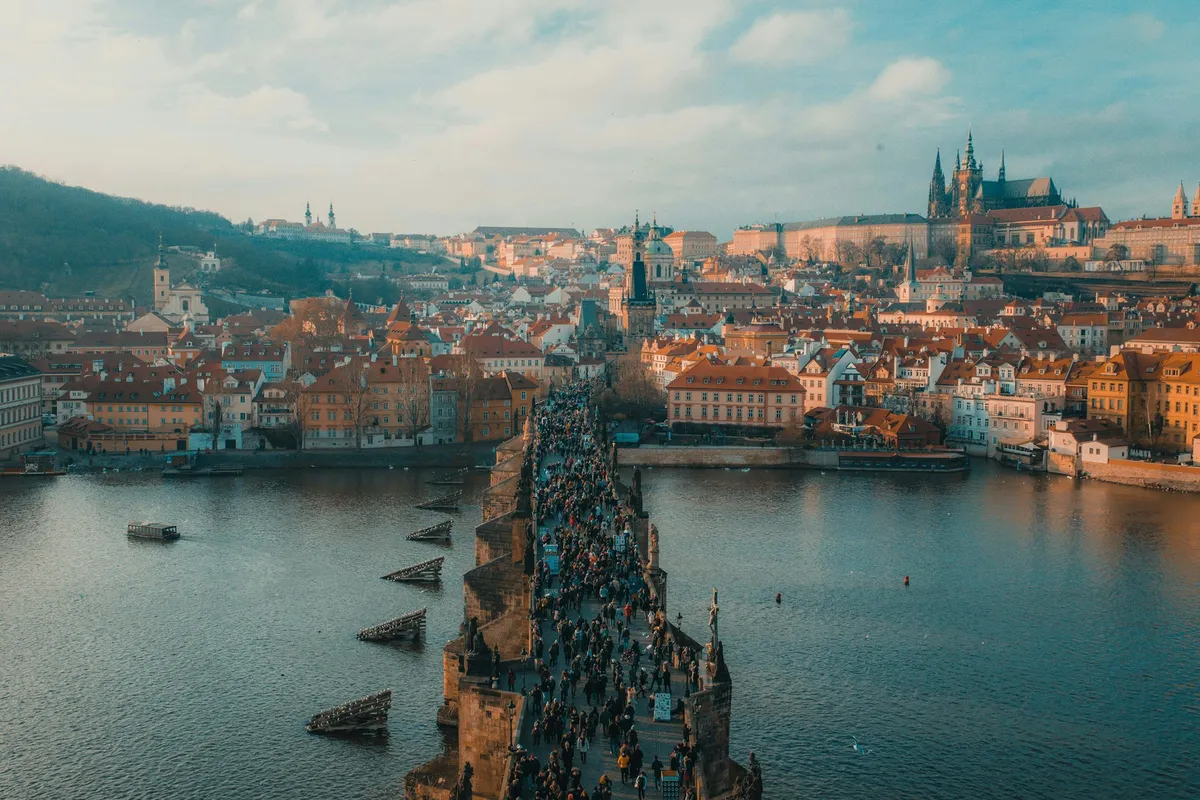
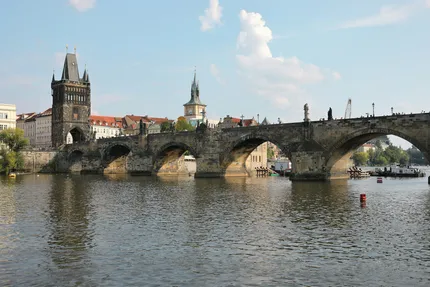
Charles Bridge
Charles Bridge is a 14th-century stone Gothic bridge spanning the Vltava, commissioned by Charles IV in 1357. It links Old Town and Malá Strana, guarded by historic towers. Lined with Baroque statues (mostly replicas), it is pedestrian-only, with views of Prague Castle. Expect crowds and street performers; visit early for quieter photos.
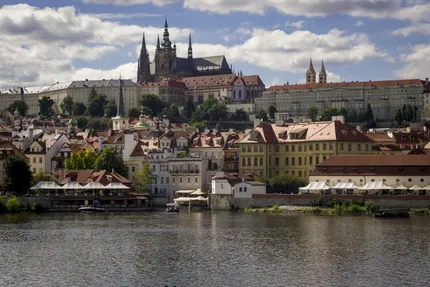
Prague Castle
Prague Castle is a vast hilltop complex overlooking the city, housing St. Vitus Cathedral, St. George's Basilica, the Old Royal Palace, and Golden Lane. Founded in the 9th century, it serves as the seat of the Czech president. Visitors explore historic courtyards and exhibitions, watch the changing of the guard, and enjoy panoramic views.
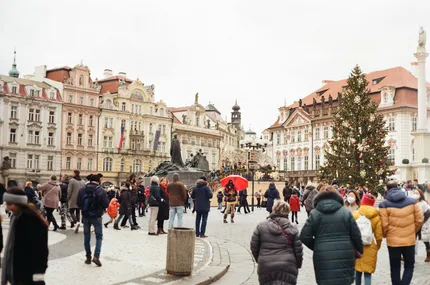
Old Town Square
Old Town Square is Prague’s historic heart, framed by Gothic and Baroque landmarks. See the Astronomical Clock on the Old Town Hall, the Church of Our Lady before Týn, and St. Nicholas Church. The square hosts seasonal markets and street performances, with cafes and viewpoints nearby. Arrive early or late to avoid peak tour crowds.
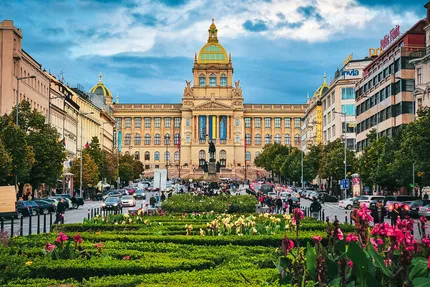
Wenceslas Square
Wenceslas Square (Václavské náměstí) is a broad boulevard in Prague’s New Town, anchored by the National Museum and the equestrian statue of Saint Wenceslas. It’s a focal point for demonstrations and celebrations, notably the 1989 Velvet Revolution. Today it’s lined with shops, cafes, and hotels. Nearest metro stations: Muzeum and Můstek; Jan Palach memorial nearby.
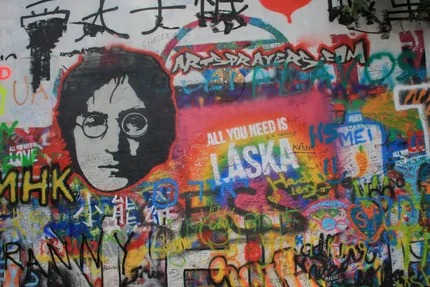
Lennon Wall
The Lennon Wall in Prague’s Malá Strana is a constantly changing mural of John Lennon portraits, Beatles lyrics, and messages of peace. It emerged in the 1980s as a silent protest against the communist regime. Located near Charles Bridge and Kampa, it’s free to visit; arrive early for photos and respect current painting rules.

Nightlife
Prague’s nightlife ranges from historic beer halls and craft pubs to cocktail bars, jazz venues, and multi-level clubs. Popular areas include Old Town, New Town/Wenceslas Square, Vinohrady, and Žižkov. Expect late hours and reasonable prices. Riverfront bars buzz in summer. Metro runs until around midnight; night trams and taxis cover late returns.
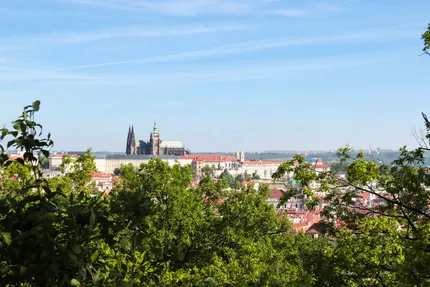
Petrin Hill
Petřín Hill offers panoramic views over Prague’s Old Town and castle. Ride the funicular from Újezd to reach gardens and orchards, the 63.5‑meter Petřín Lookout Tower, and a historic mirror maze. Trails connect to the 14th‑century Hunger Wall and Strahov area. The Štefánik Observatory and seasonal rose displays make it a pleasant urban escape.
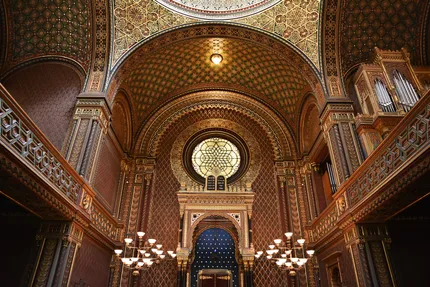
Jewish Quarter
Prague's Jewish Quarter (Josefov) preserves centuries of Jewish heritage. Visit the Old-New, Spanish, and Pinkas synagogues, the Old Jewish Cemetery, and the Jewish Museum's exhibitions. See memorial walls bearing Holocaust victims' names and historic gravestones. Central and walkable from Old Town, the area blends architecture, ritual artifacts, and the Maharal's Golem legend across a compact historic district.
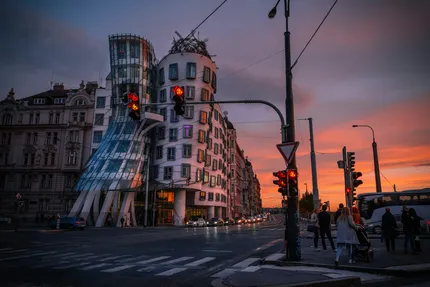
Dancing House
Dancing House (Tančící dům) is a deconstructivist landmark on Prague’s Vltava riverfront, designed by Vlado Milunić with Frank Gehry and completed in 1996. Nicknamed Fred and Ginger, it is primarily offices but includes a contemporary art gallery, the Ginger & Fred restaurant, and a rooftop bar/terrace offering panoramic city views. Located in Nové Město near Karlovo náměstí.
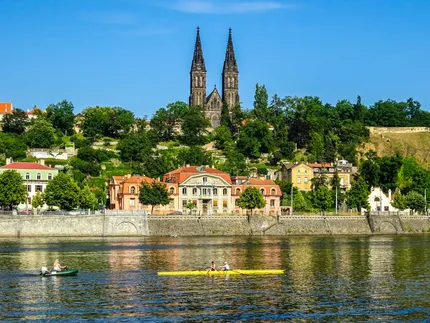
Vysehrad
Vyšehrad is a historic hilltop fortress above the Vltava, dating to the 10th–11th centuries. It features the neo-Gothic Basilica of St. Peter and St. Paul, the 11th-century Rotunda of St. Martin, and Vyšehrad Cemetery with the Slavín tomb of Czech cultural figures such as Dvořák and Smetana. Park-like ramparts offer panoramic city views and calm walks.
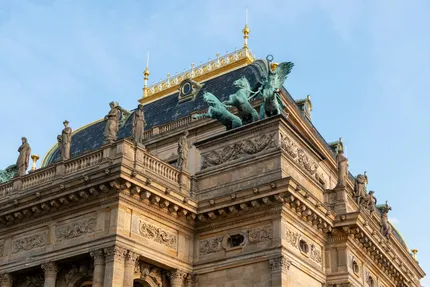
National Theatre
Prague’s National Theatre (Národní divadlo) is a neo-Renaissance landmark on the Vltava, opened in 1881, rebuilt after a fire, and reopened in 1883 thanks to public donations. It hosts opera, ballet and drama, featuring Czech classics by Smetana and Dvořák. Highlights include the gilded roof and rich interiors. Guided tours and performances run year-round.
This content was created with AI assistance and may contain inaccuracies.