
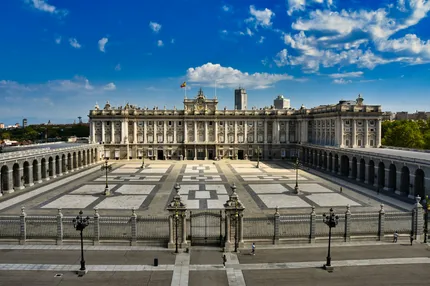
Royal Palace of Madrid
The Royal Palace of Madrid is the official residence of the Spanish Royal Family, though used today for state ceremonies. It is the largest royal palace in Western Europe, with over 3,000 rooms. Visitors can explore lavishly decorated state apartments, the Royal Armory, and the Pharmacy. The palace overlooks the Sabatini Gardens and offers sweeping views toward the Casa de Campo.
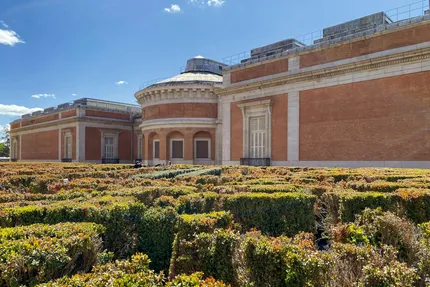
Prado Museum
The Prado Museum is Madrid’s premier art museum, showcasing European masterpieces from the 12th to early 20th centuries. Highlights include Velázquez’s Las Meninas, Goya’s The Third of May 1808, and Bosch’s The Garden of Earthly Delights. Expect rich collections of Titian, Rubens, and El Greco. Located on the Paseo del Prado, it anchors Madrid’s Golden Triangle of Art.
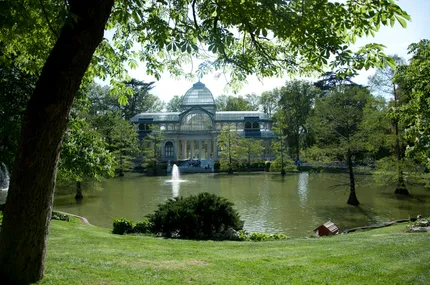
Retiro Park
Parque del Buen Retiro, Madrid’s landmark urban park, offers tree-lined promenades, the Estanque Grande with rowboat rentals, and iconic sights like the Crystal Palace and Monument to Alfonso XII. Expect temporary art exhibitions at the Palacio de Velázquez, formal gardens, sculptures, and weekend buskers. It’s part of the UNESCO-listed Landscape of Light and easily reached from Puerta de Alcalá.
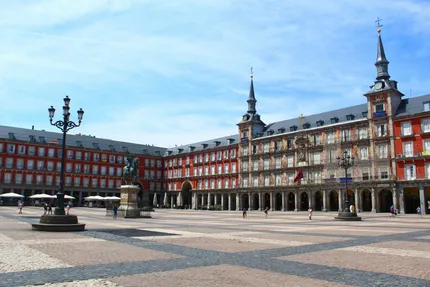
Plaza Mayor
Plaza Mayor is a grand 17th-century square in the heart of Madrid, designed by Juan Gómez de Mora. Surrounded by uniform red-brick buildings with 237 balconies, it has served as a marketplace, bullfighting arena, and site of public events throughout history. Today it hosts cafes, restaurants, and a popular Christmas market in December, and remains one of Spain's most iconic public spaces.
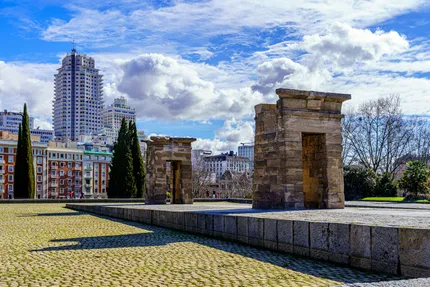
Temple of Debod
The Temple of Debod is an ancient Egyptian temple donated to Spain by Egypt in 1968, as a gesture of gratitude for Spanish help in saving monuments threatened by the Aswan Dam. Rebuilt stone by stone in Parque del Oeste, the temple dates back to the 2nd century BC. Visitors can explore the interior and enjoy panoramic views of the Casa de Campo and the Royal Palace.
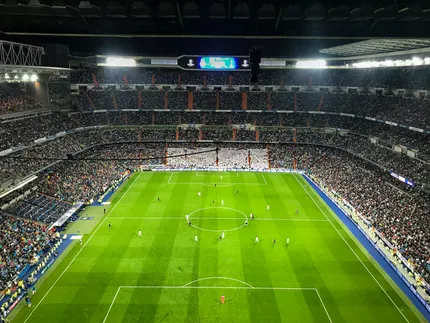
Santiago Bernabéu Stadium
The Santiago Bernabéu is Real Madrid’s home ground in Madrid’s Chamartín district. Recently renovated with a retractable roof, modern facade, and 360-degree video screen, it hosts matches and major events year-round. The Bernabéu Tour includes the club museum, trophy displays, pitchside views, and VIP areas. Metro: Santiago Bernabéu (Line 10); book tickets in advance.
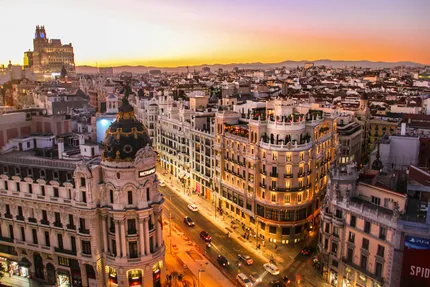
Gran Vía
Gran Vía is Madrid's most iconic boulevard, stretching over a kilometre through the city centre. Built in stages between 1910 and 1931, it features grand early 20th-century architecture, including the Telefónica Building and the Metropolis Building. Today it is a busy commercial street lined with shops, theatres, cinemas, and hotels, making it a focal point for both shopping and entertainment in the Spanish capital.
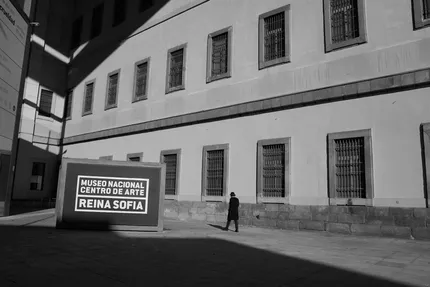
Reina Sofia Museum
The Reina Sofía is Spain’s national museum of 20th‑century art, famed for Picasso’s Guernica. Housed in a converted 18th‑century hospital with a Jean Nouvel extension, it showcases Dalí, Miró, and Spanish avant‑garde movements. Located near Atocha on Madrid’s Art Walk. Expect large permanent collections, rotating exhibitions, and free entry on select evenings.
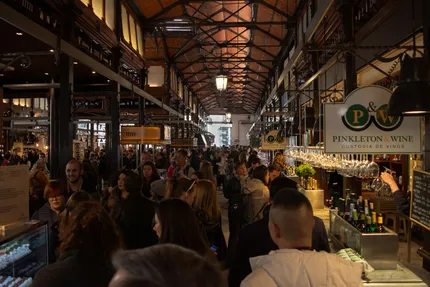
Mercado San Miguel
Mercado San Miguel is a historic iron-and-glass market near Plaza Mayor, built in 1916. It operates as a gourmet food market where visitors can sample tapas, fresh seafood, cured meats, cheeses, pastries, and wines from numerous stalls. Popular with both locals and tourists, it offers a lively atmosphere throughout the day and into the evening, making it an ideal spot for casual eating and browsing quality Spanish produce.
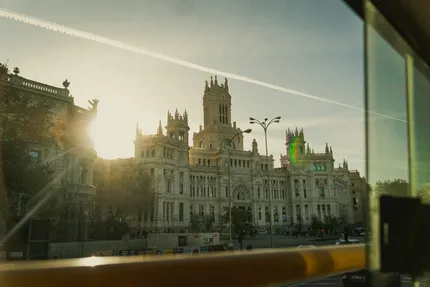
Cibeles Fountain
Cibeles Fountain is one of Madrid's most iconic landmarks, located at Plaza de Cibeles. Built in the late 18th century, it depicts the goddess Cybele riding a chariot pulled by lions. The fountain sits in front of the Cibeles Palace, Madrid's city hall. It serves as a traditional gathering point for Real Madrid fans celebrating championship victories, making it a significant symbol of the city's identity and sporting culture.
This content was created with AI assistance and may contain inaccuracies.