
City break inLuxembourg
Luxembourg City packs a surprising amount into a compact, walkable capital perched atop dramatic gorges carved by the Alzette and Pétrusse rivers. Its UNESCO-listed Old Quarters and Fortifications set the tone: stroll the Chemin de la Corniche for sweeping views, descend to the atmospheric Grund, and explore the Casemates du Bock, miles of historic cliffside tunnels. Up in the Ville Haute, the Grand Ducal Palace, Notre-Dame Cathedral, and lively squares like Place Guillaume II anchor a tidy center of cafes and boutiques. Across the valley, the modern Kirchberg plateau contrasts with striking contemporary architecture, from the MUDAM art museum and the Philharmonie to EU institutions.
Green spaces thread through the city, with parks and riverside paths never far away, and elevators and a funicular help you glide between upper and lower districts. Multilingual locals switch easily between Luxembourgish, French, and German, and English is widely understood. Dining punches above its weight, from Michelin-starred tables to simple bistros serving Gromperekichelcher and Judd mat Gaardebounen, paired with crisp Moselle wines. Getting around is effortless: public transport is clean, frequent, and free.
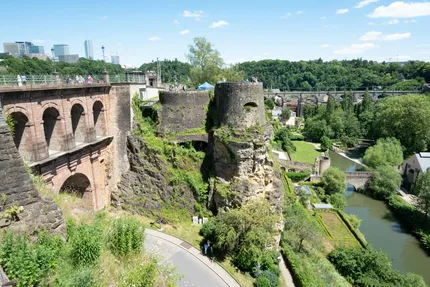
Bock Casemates and Old Quarters (UNESCO)
Explore the UNESCO-listed Bock Casemates and Old Quarters, a maze of historic tunnels and ramparts overlooking the Alzette and Pétrusse valleys. Nicknamed the Gibraltar of the North, these fortifications reveal Luxembourg City’s strategic past. Expect sweeping viewpoints, informative panels, and seasonal guided tours. Some sections close in winter; check schedules.
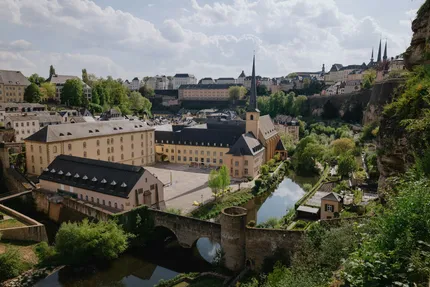
Grund and Neumünster Abbey
Descend to the Grund for cobbled lanes, stone bridges, and waterside cafés beside the Alzette. The district’s focal point, Neumünster Abbey, hosts concerts and exhibitions in striking monastic spaces. Night illumination reflects beautifully on the river. It’s relaxed, atmospheric, and easy to reach via the elevator or scenic footpaths nearby.
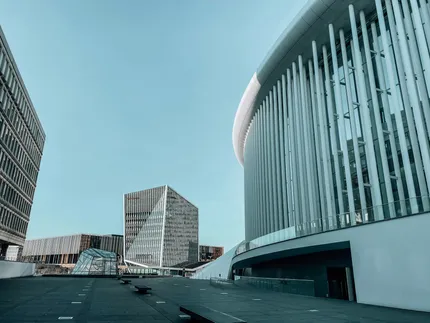
Kirchberg Plateau and Philharmonie Luxembourg
Explore Kirchberg’s contemporary skyline of EU institutions and cultural venues. The gleaming Philharmonie concert hall, by Christian de Portzamparc, hosts orchestral programs and tours; its acoustics are excellent. Modern art installations and landscaped plazas line the tram route. Visit at dusk for photographs, then dine in the district or return downtown.
Grand Ducal Palace
The Grand Ducal Palace showcases Renaissance revival elegance and the seat of Luxembourg’s monarchy. Admire its ornate façade and ceremonial guards, then peek inside on guided tours offered in summer. Rooms display state gifts, woodwork, and chandeliers. Centrally located near Place Guillaume II, it anchors civic life and major events.
Chemin de la Corniche
Walk the Chemin de la Corniche, a panoramic rampart path dubbed Europe's most beautiful balcony. It traces the cliff edge above the Alzette, linking the Bock to the Grund with flawless views of bridges, spires, and terraces. Go at golden hour for photography, gentle gradients, and an easy, unforgettable orientation.
Notre-Dame Cathedral
Luxembourg’s Notre-Dame Cathedral blends late Gothic and Renaissance elements from its Jesuit origins. Inside, admire slender pillars, stained glass, and the crypt containing grand ducal tombs. The nearby Place de la Constitution and Gëlle Fra memorial provide city views. It’s a calm, central stop between shopping streets and parks, nearby museums.
Mudam Luxembourg (Musée d’Art Moderne Grand-Duc Jean)
Mudam Luxembourg – Musée d’Art Moderne Grand-Duc Jean pairs striking I. M. Pei architecture with rotating contemporary exhibitions. Expect installations, design objects, and sculpture across luminous galleries overlooking the Kirchberg plateau. The museum’s café and terrace are pleasant. Combine with nearby Fort Thüngen and the Philharmonie for a rewarding cultural circuit.
Musée Dräi Eechelen (Fort Thüngen)
At the Musée Dräi Eechelen, housed within restored Fort Thüngen, learn how Luxembourg transformed from fortified stronghold to modern capital. Exhibits interpret sieges, treaties, and daily garrison life, while casemates and bastions are visitable. Outdoor ramparts give commanding views toward Kirchberg and the old town. Allow ample time for exploration.
Pfaffenthal Panoramic Elevator
Ride the free Pfaffenthal panoramic elevator linking the Upper Town with the valley. Its glass cabin and footbridge deliver impressive views of fortifications, rooftops, and greenery. Cyclists are welcome. At the base, connect to the funicular and tram network toward Kirchberg, or stroll riverside paths into the Grund and Clausen.
Place d’Armes
Place d’Armes is the lively central square framed by cafés under arcades. A bandstand anchors free summer concerts, while weekly markets and winter festivities create year-round activity. It’s perfect for people-watching between museum visits and shopping on Grand Rue. Nearby side streets offer bakeries, chocolatiers, and relaxed terraces and brasseries.
National Museum of History and Art (MNHA)
The National Museum of History and Art (MNHA) spans archaeology, decorative arts, and fine art across well-designed galleries in the Fishmarket quarter. Highlights include the Vichten Roman mosaic, Celtic and Merovingian artifacts, and Luxembourgish painting. Temporary exhibitions broaden context. It’s an engaging, weatherproof stop close to cafés and the palace.
Pétrusse Valley and Adolphe Bridge
Stroll the Pétrusse Valley for green lawns, trails, and viewpoints beneath the city ramparts. The Adolphe Bridge’s suspended glass walkway offers dramatic perspectives and an easy link to the Gare district. Bring a picnic, rent a bike, or simply photograph arches, viaducts, and seasonal foliage along the meandering stream below.
Who should visit Luxembourg
Luxembourg City suits travelers who like depth over sprawl and want to cover a lot in two or three days. History and architecture enthusiasts will appreciate the UNESCO fortifications, the Casemates du Bock, the Chemin de la Corniche viewpoints, and museums such as MNHA, Dräi Eechelen, and Villa Vauban. Contemporary culture fans get strong design and exhibitions at MUDAM and concerts at the Philharmonie. Food-focused visitors can sample a dense cluster of quality kitchens, from Michelin addresses to convivial brasseries, and pair meals with local Moselle wines and crémant. Active urban explorers will enjoy the city’s hills, parks, and riverside paths for scenic runs and bike rides, aided by elevators, the Pfaffenthal panoramic lift, and the funicular.
Families find compact distances, car-free squares, playgrounds in the Pétrusse valley, and easy tram and bus links; the small Petrusse Express tourist train is a simple crowd-pleaser. Photographers and cityscape lovers will get rewarding light and angles from the Corniche, the Grund, and the Pfaffenthal lift platform. Business travelers based in Kirchberg can fold in serious sightseeing without long transfers.
Nightlife exists but is low-key, clustered in the Grund and Rives de Clausen, so it’s less suited to party-only weekends. Free public transport and straightforward day trips to Vianden or the Moselle valley make Luxembourg City a practical, polished base for a short European escape.

Best time to visit Luxembourg
Late spring (April to June) and early autumn (September to October) are the sweet spots for Luxembourg City. Expect mild temperatures, long daylight, and gardens and valley slopes at their greenest, ideal for walking the Corniche and exploring the Grund. Summer brings outdoor terraces, festivals, and free concerts, though showers are common. Late August to early September hosts the historic Schueberfouer funfair. Winter is quieter and can be damp, but the Christmas markets from late November add warmth and lights to the squares. Whatever the season, pack layers and a light rain jacket; weather shifts quickly in this hilltop city.
Three top reasons for a city trip to Luxembourg
- Explore Luxembourg City's UNESCO Old Quarters and Fortifications: walk the Chemin de la Corniche, descend into the Bock Casemates, admire Grund's charm, and ride elevators linking dramatic cliffs with neighborhoods.
- Discover storybook castles and countryside: tour Vianden's hilltop fortress, Bourscheid's ramparts, and Clervaux's Family of Man exhibition; then hike Mullerthal Trail's sandstone gorges to Schiessentumpel waterfall in Luxembourg's Little Switzerland.
- Savor Luxembourg's culinary and wine scene: taste Moselle riesling and cremant in Remich cellars, dine at Michelin restaurants, try judd mat gaardebounen, and enjoy free public transport for day trips.
Luxembourg City is compact but split by deep valleys; plan for hills and stairs. Most central sights are walkable; public elevators and lifts bridge upper and lower quarters (Grund, Pfaffenthal). Free nationwide public transport makes buses, trams, and trains the easiest option. The modern tram links Kirchberg’s EU district with the city center and the main station, with frequent service; buses fill the gaps to neighborhoods and the airport. The Pfaffenthal-Kirchberg funicular connects to CFL rail services. Vel’OH! bike share (including e-bikes) and growing cycle lanes make short trips easy, though gradients and cobbles require caution. Driving in the center is slow and parking tight; use Park & Ride sites on the edges and finish by tram or bus. Taxis and ride‑hailing are available, and weekend night buses run late. For cross-border excursions, regional trains to Trier, Arlon, and Metz are frequent and also free in Luxembourg territory; expect peak-hour crowding from commuters.
This content was created with AI assistance and may contain inaccuracies.