
3 days in Luxembourg
LuxembourgDay #1
Historic core, casemates, Corniche, dinner in Grund
15:00
Check-in at hotel in Luxembourg City
15:30
Orientation stroll: Place d’Armes and Place Guillaume II
Begin in Place d’Armes, Luxembourg City’s lively pedestrian square, with its bandstand, café terraces, and frequent concerts and markets. Stroll a minute to Place Guillaume II (Knuedler), dominated by the Hôtel de Ville and the equestrian statue of Grand Duke William II. This spacious square hosts markets and events and houses the Luxembourg City Tourist Office.
16:30
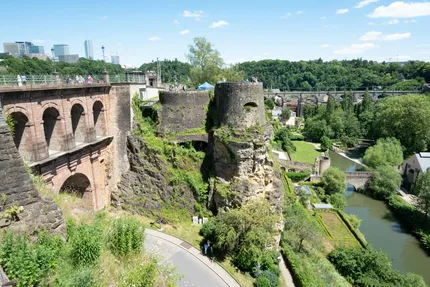
Explore Bock Casemates tunnels
Explore the Bock Casemates, Luxembourg City’s honeycomb of rock-cut defensive galleries beneath the Bock promontory. Originating in the 17th century and later expanded, they form part of the UNESCO-listed fortifications. Walk narrow passages and steep stairs to lookouts over the Alzette valley and Grund. Open seasonally; guided tours available; sturdy footwear recommended.
18:00
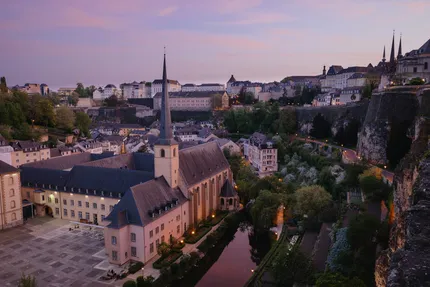
Golden-hour views on Chemin de la Corniche
Chemin de la Corniche is a pedestrian promenade atop Luxembourg City’s historic ramparts, often called Europe’s most beautiful balcony. At golden hour, it overlooks the Alzette valley and Grund, with striking views of Neumünster Abbey, the Bock and its casemates, and arched bridges. Free, central, perfect for photos; expect some steps and narrow sections.
19:30
Dinner in the Grund district by the Alzette
21:00
Nightcap with city views at a rooftop bar
Cap your evening with a drink overlooking Luxembourg City’s illuminated valleys and fortifications. Rooftop terraces in the center and Kirchberg offer views of the Grund, Adolphe Bridge, and Ville Haute; the top-floor bar at Sofitel Luxembourg Le Grand Ducal is a reliable option. Arrive near sunset, reserve for weekends, and expect smart-casual vibes and late hours.
22:30
Return to hotel and relax
Day #2
Old town sights, museums, shopping, Kirchberg art and nightlife
08:30
Breakfast at a local bakery
09:15
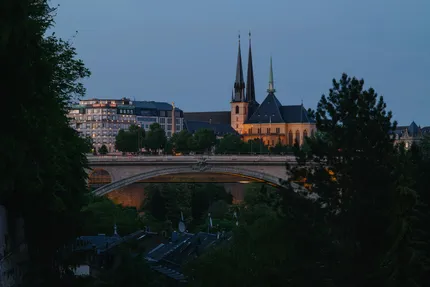
Notre-Dame Cathedral visit
Luxembourg City's Notre-Dame Cathedral, the country's only cathedral, began as a 17th-century Jesuit church and was enlarged in the 1930s. Highlights include 20th-century stained glass, the venerated statue of Our Lady, Comforter of the Afflicted, and the Grand Ducal family crypt. Central location; free entry; verify service times and opening hours.
10:00
Grand Ducal Palace exterior and guard change
At Luxembourg City’s Grand Ducal Palace, the official residence of the Grand Duke, visitors admire the ornate 16th-century Renaissance façade along Rue du Marché-aux-Herbes. Outside, Luxembourg Army sentries mount a ceremonial guard, with a simple changing of the guard occurring periodically when the palace is in use. Watching is free; keep respectful distance for security.
10:30
Lëtzebuerg City Museum exploration
Explore Luxembourg City's past at the Lëtzebuerg City Museum, set in restored historic townhouses in the Old Town. Exhibitions trace urban development, daily life, and fortifications from medieval times to today, with interactive displays and archaeological remains. A striking glass panoramic elevator links multiple levels and reveals views over the Grund and the city's layers.
12:15
Lunch on a Place d’Armes terrace
14:00
Shopping along Grand-Rue and Rue Philippe II
Grand-Rue and Rue Philippe II form Luxembourg City's central, largely pedestrian shopping axis in the Ville Haute near Place d'Armes. Expect a mix of international brands, luxury boutiques, and local retailers for fashion, jewellery, cosmetics, and gourmet products, plus cafes for breaks. It's ideal for window-shopping and people-watching, and sits close to Place Guillaume II and other central squares.
15:30
Tram to Kirchberg via Pfaffenthal panoramic lift
15:45
Mudam Luxembourg – Modern Art Museum
Mudam Luxembourg – Musée d’Art Moderne Grand-Duc Jean – is Luxembourg’s museum of contemporary art. Designed by I. M. Pei, it sits in Parc Dräi Eechelen on the Kirchberg plateau beside Fort Thüngen. Expect rotating exhibitions of international and Luxembourgish artists, installations, design and new media, plus commissions and events. Served by nearby tram and bus.
17:15
Fort Thüngen ramparts and viewpoints
Climb the ramparts of Fort Thüngen (Dräi Eechelen) on the Kirchberg plateau for some of Luxembourg City’s best panoramas. From the restored Three Acorns towers, paths in Dräi Eechelen Park overlook the Pfaffenthal and Alzette valley, the Old Town, and the European quarter. Free outdoor access year-round; the on-site Musée Dräi Eechelen explains the UNESCO-listed fortifications.
18:30
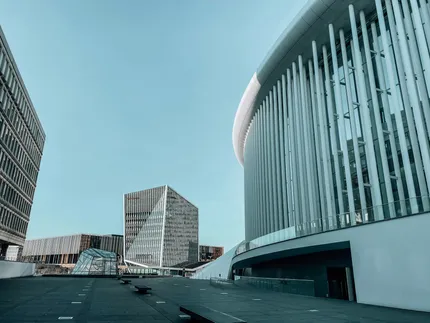
Sunset stroll around Philharmonie and Kirchberg
Begin at Philharmonie Luxembourg on Place de l’Europe, then follow pedestrian paths to Mudam and the historic Fort Thüngen in Dräi Eechelen Park. Continue along Avenue John F. Kennedy past EU institutions and contemporary architecture. Pause by the Grand Duchess Charlotte (Red) Bridge for valley views as the sun sets. Easy tram access (Philharmonie/Mudam).
19:30
Dinner at Rives de Clausen
21:30
Drinks in Grund’s riverside bars
Set along the Alzette River beneath Luxembourg City’s old fortifications, Grund’s riverside bars offer relaxed terraces with scenic views of bridges and cliffside walls. Expect a mix of locals and visitors, casual pubs and cocktail spots, busiest on warm evenings and weekends. Easily reached via the public lift from St-Esprit or by footpaths.
22:30
Return to hotel
Day #3
Scenic walks, museum visit, brunch, departure Sunday
08:30
Leisurely Sunday breakfast or brunch
09:30
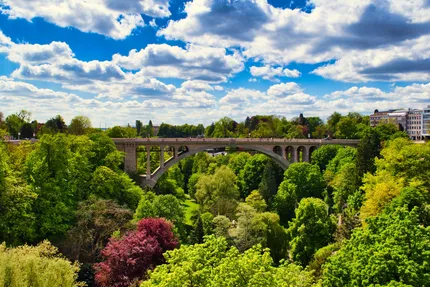
Walk Pétrusse Valley and Passerelle viewpoints
Stroll through the Pétrusse Valley, the green gorge beneath Luxembourg’s Upper Town, on easy riverside and hillside paths with frequent viewpoints. From the Passerelle (Old Bridge) and its approaches, look across the valley to cliffside fortifications and the Adolphe Bridge. Wayfinding is clear; combine upper and lower routes for a short, scenic loop.
10:30
MNHA – National Museum of History and Art
MNHA, Luxembourg City’s National Museum of History and Art, stands in the Old Town’s Fishmarket. It presents extensive archaeology (from prehistory to the Gallo‑Roman era), fine and decorative arts, and numismatics, alongside temporary exhibitions. Galleries span multiple levels with clear multilingual labels and learning spaces, offering a concise overview of Luxembourg’s cultural and historical heritage.