
City break inLondon
London, the vibrant capital of England, is a melting pot of history, culture, and modern life. With landmarks like the iconic Big Ben and the Tower of London, visitors can delve into a rich tapestry of history while exploring diverse neighborhoods such as Camden, Notting Hill, and Shoreditch, each offering unique experiences and atmospheres. The city's extensive public transport system makes it easy to navigate, allowing travelers to embrace both the traditional and contemporary sides of London, from world-class museums and art galleries to fashionable shops and diverse culinary offerings.
Don't forget to take a stroll through its beautiful parks, like Hyde Park or Regent's Park, where you can enjoy natural beauty amidst the urban hustle. Each visit to London is an opportunity to discover something new, making it an ideal destination for those seeking a multifaceted urban adventure.
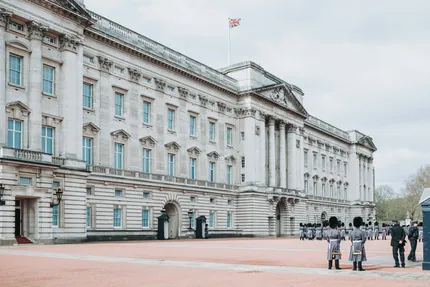
Buckingham Palace
Buckingham Palace is the official London residence and administrative headquarters of the British monarch. Located in Westminster, it features the regular Changing of the Guard and opens its State Rooms to visitors in summer. Originally Buckingham House (1703), it was expanded in the 19th century. The palace hosts state ceremonies and welcomes public viewings from the Mall.
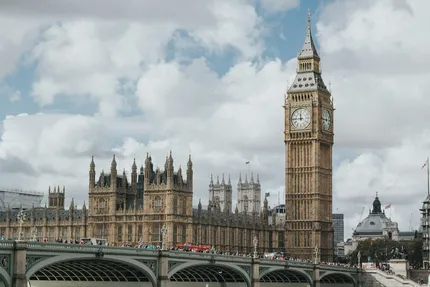
Palace of Westminster
The Palace of Westminster, on the Thames, houses the UK Parliament’s House of Commons and House of Lords. Rebuilt in neo-Gothic style by Charles Barry and A.W.N. Pugin after the 1834 fire, it includes the Elizabeth Tower (“Big Ben”) and medieval Westminster Hall. A UNESCO World Heritage Site, it offers booked guided/audio tours; Westminster station nearby.
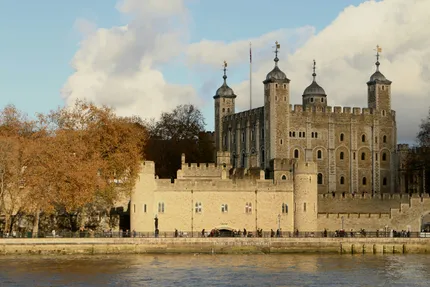
Tower of London
The Tower of London is a historic fortress on the Thames, founded by William the Conqueror in the 11th century. It has served as royal palace, armory, mint, and prison. Highlights include the White Tower, Crown Jewels, Yeoman Warder tours, and resident ravens. Tower Green marks execution sites. It's a UNESCO World Heritage Site.
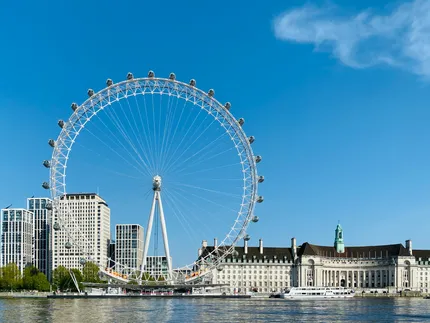
London Eye
The London Eye is a 135-metre observation wheel on the South Bank of the Thames, offering 360-degree views of Big Ben, the Houses of Parliament, St Paul's, and beyond. Its 32 glass pods take about 30 minutes per rotation. Opened in 2000, it's popular; pre-book to avoid queues. Nearest stations: Waterloo and Westminster.
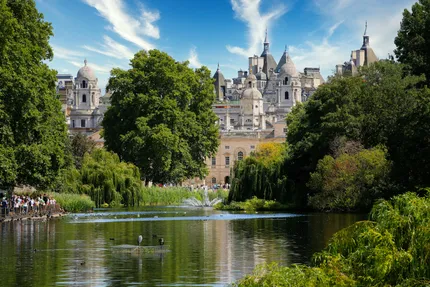
Hyde Park
Hyde Park, a 350-acre Royal Park in central London, offers expansive lawns, the Serpentine lake for boating and seasonal swimming, and horse riding along Rotten Row. Highlights include Speakers’ Corner and the Diana, Princess of Wales Memorial Fountain. The park is open daily (typically 5am–midnight) and is served by several nearby Underground stations.
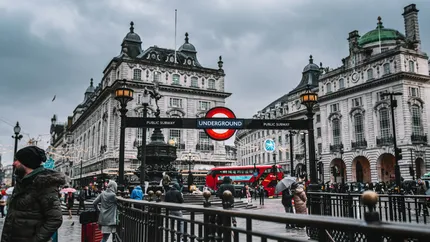
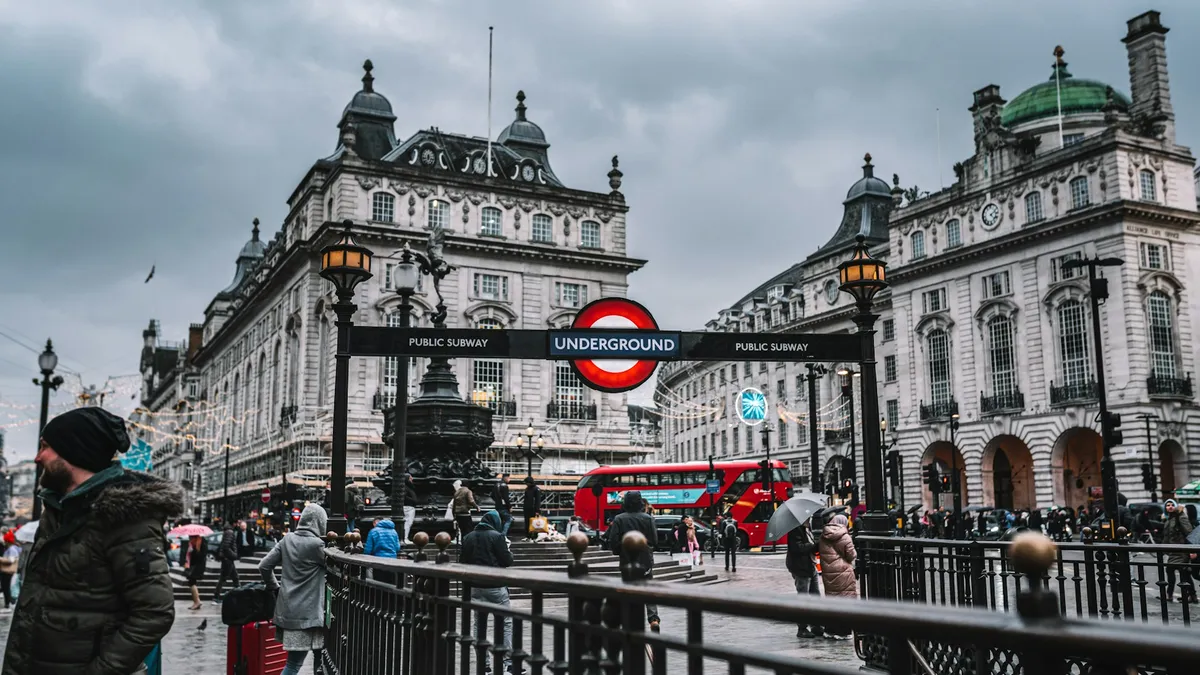
Piccadilly Circus
Piccadilly Circus is a bustling West End junction famed for the giant Piccadilly Lights and the Shaftesbury Memorial Fountain (often called Eros). It links Regent Street, Piccadilly, Shaftesbury Avenue and Haymarket, steps from Soho and theatreland. A popular meeting point with constant street life, it has its own Underground station on the Bakerloo and Piccadilly lines.
Westminster Abbey
Westminster Abbey is a landmark Gothic church and UNESCO World Heritage Site, the coronation church of English and British monarchs since 1066. It hosts royal weddings and houses tombs and memorials, including Poets' Corner. Located beside the Houses of Parliament, it offers ticketed entry, audio guides, and daily services; check hours, queues, and security screening.
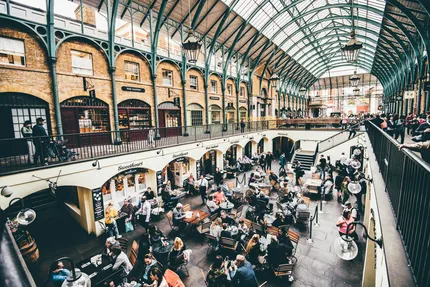
Covent Garden
Covent Garden is a lively central London district known for its historic market halls, shops, and eateries. The Piazza hosts licensed street performers, while the Apple Market offers crafts and antiques on select days. Nearby, the Royal Opera House anchors the area's cultural scene. It's easily reached by Tube and is popular day and night.
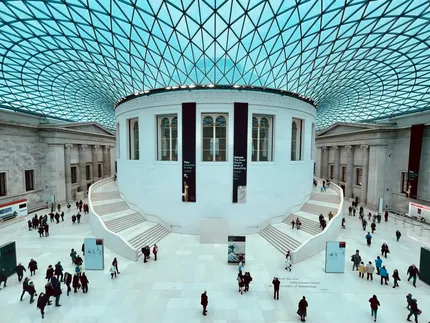
The British Museum
The British Museum, in Bloomsbury, houses one of the world's largest collections of human history and culture. Highlights include the Rosetta Stone, Parthenon sculptures, Egyptian mummies, and Assyrian reliefs, set around the glass-roofed Great Court. Admission is free (charges for some exhibitions). Free timed tickets are recommended. Nearby Tube: Tottenham Court Road, Holborn, Russell Square.
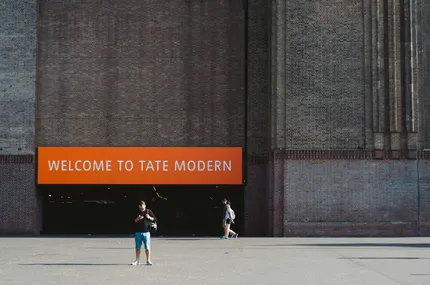
Tate Modern
Tate Modern is a major museum of modern and contemporary art, occupying the former Bankside Power Station on Bankside. Converted by Herzog & de Meuron, it features the vast Turbine Hall for large-scale commissions. Admission to the collection is free; special exhibitions are ticketed. Accessible via the Millennium Bridge on the Thames.
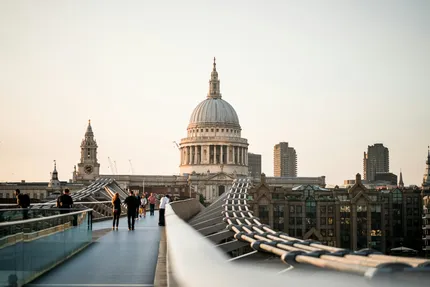
St. Paul’s Cathedral
St Paul’s Cathedral, Sir Christopher Wren’s Baroque masterpiece (completed 1710), dominates Ludgate Hill with its iconic dome. Visitors can explore the nave and crypt (Nelson and Wellington lie here), test the Whispering Gallery, and climb to Stone and Golden Galleries for citywide views. Regular services and choral Evensong run; check schedules and entry requirements.
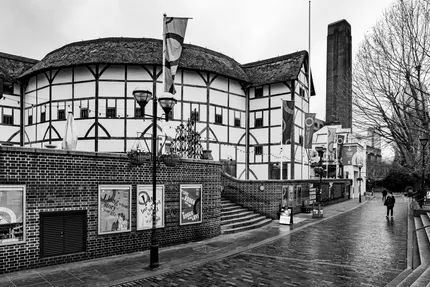
Shakespeare’s Globe
Shakespeare’s Globe is a faithful reconstruction of the 1599 open-air theatre on Bankside. It hosts Shakespeare and period-inspired productions, with affordable standing groundling tickets. Guided tours and an exhibition explain Elizabethan stagecraft and history. The adjacent Sam Wanamaker Playhouse offers candlelit indoor performances. Season runs roughly April-October; tours operate year-round.
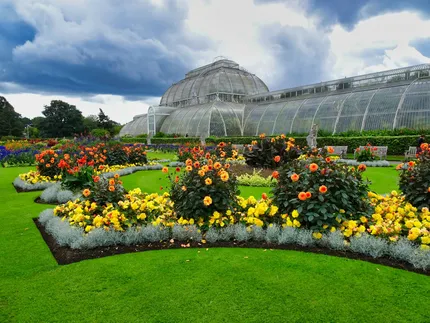
Kew Gardens
Royal Botanic Gardens, Kew is a UNESCO World Heritage Site showcasing one of the world’s largest and most diverse plant collections. Highlights include the Victorian Palm House, the vast Temperate House, and the Princess of Wales Conservatory, plus the Treetop Walkway and Kew Palace. Expect themed gardens, seasonal displays, research exhibits, and family-friendly trails.
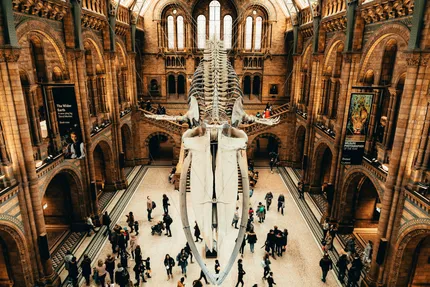
Natural History Museum
The Natural History Museum in South Kensington showcases Britain's premier collections on dinosaurs, human evolution, minerals, and biodiversity. Highlights include the blue whale skeleton "Hope" in Hintze Hall, an animatronic T. rex, and the Darwin Centre's Cocoon. Free general admission with paid exhibitions. Family-friendly interactive galleries and temporary shows make it a major London museum.
Nightlife
London’s nightlife spans traditional pubs, late-opening bars, live music venues, comedy clubs and major nightclubs. Key areas include Soho, Shoreditch, Camden, Brixton, Dalston and Vauxhall (notably LGBTQ+). Many venues run late on weekends; last entry policies and photo ID are common. Night Tube and extensive night buses operate on Fridays and Saturdays for easy transport.
Who should visit London
London is a perfect fit for various types of travelers. History buffs will revel in the numerous museums and historic sites, such as the British Museum and the historic pubs where literary giants once gathered. Foodies can explore the city's culinary diversity, from trendy food markets like Borough Market to Michelin-starred restaurants featuring global cuisine. Families will appreciate attractions like the Natural History Museum and interactive experiences aboard the London Eye.
Additionally, art enthusiasts can indulge in world-renowned galleries, while shoppers can immerse themselves in the bustling atmosphere of Oxford Street. With its blend of history, culture, entertainment, and gastronomy, London appeals particularly to those seeking a city trip rich in experience, making it an exciting option for urban explorers, culture vultures, and families alike.
Best time to visit London
The best time to visit London is during the late spring (April to June) and early autumn (September to October). During these months, the weather is generally mild and pleasant, with blooming gardens and vibrant street life enhancing the cityscape. Additionally, you can enjoy a plethora of outdoor events and festivals without the overwhelming summer crowds. Train travel and accommodations tend to be more manageable outside the peak tourist season, allowing for a more relaxed exploration of this bustling metropolis.
Three top reasons for a city trip to London
- Explore royal and historic London: Tower of London’s Crown Jewels, Westminster Abbey, Houses of Parliament, Buckingham Palace’s Changing of the Guard, and St Paul’s Cathedral linked by iconic ceremonial routes.
- Delve into free world-class museums: British Museum, National Gallery, Tate Modern, Kensington’s Victoria and Albert and Natural History Museums, showcasing major exhibitions and collections from ancient civilizations to contemporary art.
- Experience culture after dark: West End theatre, Shakespeare’s Globe, live music in Camden, Borough Market bites, Brick Lane curries, Chinatown dim sum, pubs in Soho, and afternoon tea at Fortnum’s.
London offers a comprehensive transport system, making it easy for visitors to get around. The London Underground, or Tube, is the most popular and efficient way to navigate the city, complemented by buses and the Docklands Light Railway. The Oyster card or contactless payment methods make riding public transport simpler and more economical. London is also cycle-friendly, with numerous bicycle rental options like Santander Cycles. Walking is a viable option, especially for central locations, thanks to pedestrian-friendly streets. Taxis and ride-sharing services are plentiful but can be expensive. For those exploring on foot, London's extensive network of walking routes offers a great way to see the city's iconic landmarks up close. While a car is unnecessary and often impractical due to congestion and limited parking, driving might be useful for those planning on exploring outer areas or embarking on day trips to nearby destinations. Overall, public transit and walking will suffice for most visitors to London.

This content was created with AI assistance and may contain inaccuracies.