
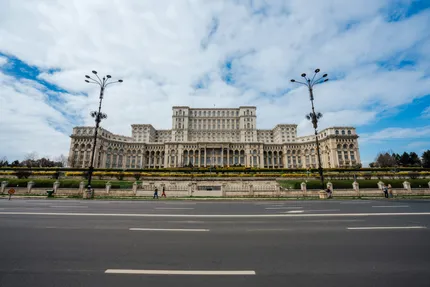
Palace of the Parliament
The Palace of the Parliament is one of the world's largest administrative buildings, constructed under Nicolae Ceaușescu in the 1980s. Visitors can tour its vast interior, featuring hundreds of chandeliers, marble halls, and grand chambers. The building houses Romania's parliament and hosts a contemporary art museum. Guided tours offer insight into its controversial history and the immense human and material resources required to build it.
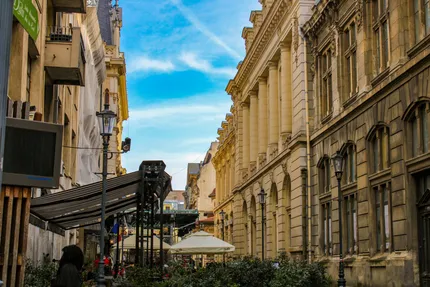
Old Town Lipscani
Lipscani is Bucharest's historic commercial district, once the heart of medieval trade in the city. Today it's a lively pedestrianized area filled with bars, restaurants, cafes, and shops housed in restored old buildings. The narrow cobblestone streets buzz with activity day and night, making it the social hub of the city. Remnants of old merchant guilds and historic structures give the area genuine character.
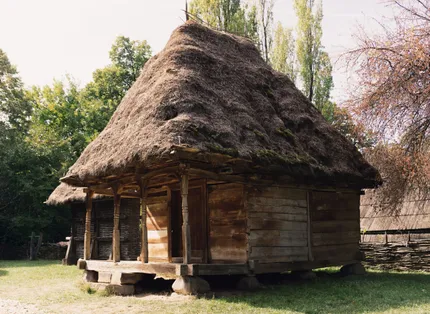
The Village Museum
The Village Museum (Muzeul Satului) is an open-air ethnographic museum situated on the shores of Herastrau Lake in northern Bucharest. Founded in 1936, it displays over 300 authentic rural households, churches, and workshops gathered from across Romania. Visitors can explore traditional architecture, folk art, and crafts representing the country's diverse regional cultures, making it one of Europe's oldest and largest open-air museums.
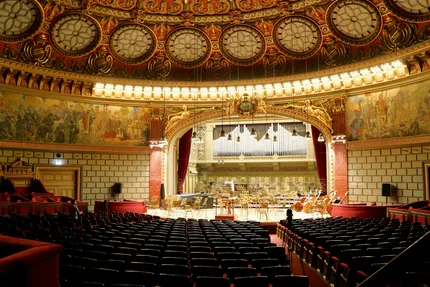
Romanian Athenaeum
The Romanian Athenaeum is a stunning neoclassical concert hall built in 1888 and one of Bucharest's most iconic landmarks. Located in the city center, it serves as home to the George Enescu Philharmonic Orchestra. Its grand circular hall features a large fresco depicting Romanian history. The building is a symbol of Romanian culture and was designated a European Heritage Site in 2007.
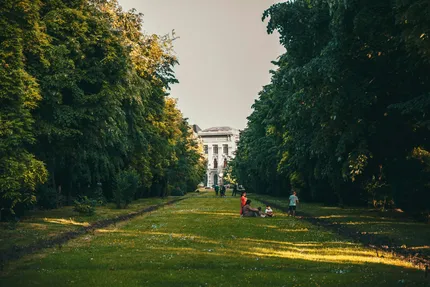
Cismigiu Gardens
Cismigiu Gardens is Bucharest's oldest and most central public park, established in the mid-19th century. Spanning around 17 hectares, it features a large lake where visitors can rent rowboats, tree-lined walkways, flower beds, and statues. The park hosts a Romanian Writers' Alley and has several cafes on site. It serves as a popular gathering spot for locals year-round.
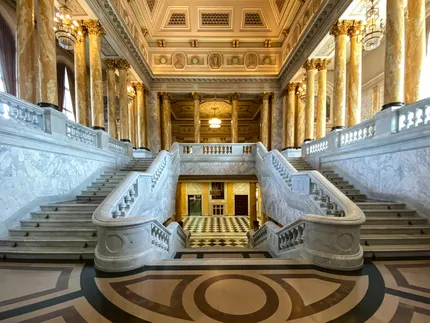
National Museum of Art
The National Museum of Art of Romania, housed in the former Royal Palace on Calea Victoriei, holds an impressive collection of Romanian and European art. The Romanian Gallery showcases medieval art, icons, and works by prominent local artists, while the European Gallery features paintings by El Greco, Rembrandt, and Rubens. It is one of the most significant cultural institutions in the country.
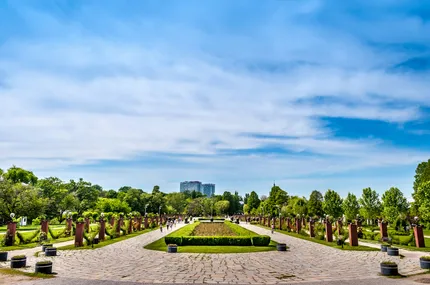
Herăstrău Park
Herăstrău Park is Bucharest's largest and most popular park, surrounding the northern shore of Lake Herăstrău. Spanning over 180 hectares, it offers walking and cycling paths, boat rentals, open-air restaurants, and stages for concerts and events. The park also houses the Village Museum, an open-air ethnographic collection showcasing traditional Romanian architecture and rural life from across the country.
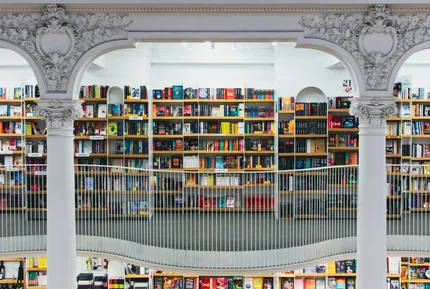
Carturesti Carusel
Carturesti Carusel is a stunning bookstore located in a restored 19th-century building in Bucharest's old town. Spread across six floors, it features a striking white interior with spiral staircases, housing thousands of books, music, films, and art objects. It also contains a bistro on the top floor. Widely regarded as one of the most beautiful bookstores in Europe, it is a cultural landmark worth visiting.
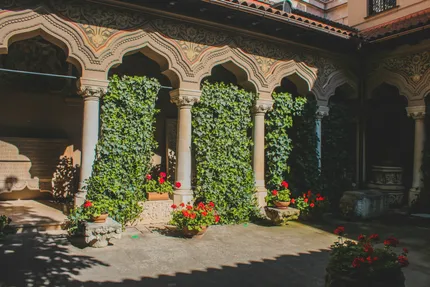
Stavropoleos Monastery
The Stavropoleos Monastery is a small but remarkably beautiful Orthodox monastery in central Bucharest, built in 1724. Its courtyard combines Romanian, Byzantine, and Ottoman architectural elements, featuring intricate stone carvings and decorative arches. The attached church contains valuable medieval icons and religious art. The monastery also houses a library with rare manuscripts and old books, making it one of Bucharest's most historically significant and architecturally refined landmarks.
This content was created with AI assistance and may contain inaccuracies.