
City break inAthens
Athens blends world‑famous antiquity with a lived‑in, contemporary cityscape, making it a compelling long‑weekend destination. The Acropolis and Parthenon dominate the skyline, but the experience extends well beyond ruins: the sleek Acropolis Museum and the vast National Archaeological Museum connect artifacts to stories you can then trace on foot through Plaka, the Ancient Agora, and Roman forums. Neighborhoods shift quickly—Monastiraki’s flea market, Psyrri’s cafes and street art, polished Kolonaki boutiques, and seaside strolls along the Athens Riviera reached by tram.
Food is a highlight: market‑fresh meze, souvlaki stands, modern Greek bistros, and rooftop bars framing sunset views of the citadel. Much of the historic core is pedestrianized, so you can weave between sights, churches, and shaded squares, punctuated by strong coffee or a spoon sweet. For a different vantage, hike Philopappos or Lycabettus Hill, or watch the changing of the guard at Syntagma. Ferries depart nearby Piraeus for easy day trips, but Athens itself rewards slow exploration and late evenings, when tavernas hum and bouzouki riffs drift through narrow lanes.
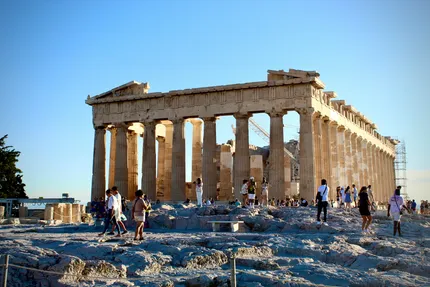
Acropolis of Athens
The Acropolis is Athens' most iconic landmark, a UNESCO World Heritage Site perched on a rocky hill above the city. It houses the Parthenon, a 5th-century BC temple dedicated to the goddess Athena, along with the Erechtheion, the Propylaea, and the Temple of Athena Nike. Visiting at sunrise or sunset offers dramatic lighting and smaller crowds. The on-site Acropolis Museum nearby holds many original artifacts.
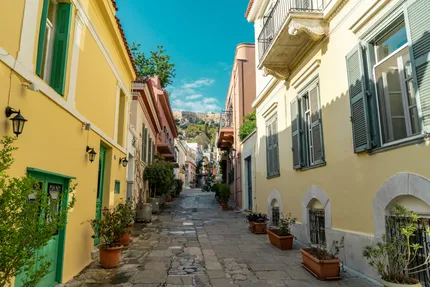
Plaka
Plaka is Athens’ oldest neighborhood, spread around the slopes of the Acropolis. Its pedestrian lanes, neoclassical houses, and small squares host tavernas, cafés, and craft shops. Sights include the Roman Agora, Tower of the Winds, and Lysicrates Monument, plus the tiny Anafiotika quarter. It’s ideal for strolling, dining, and photographing historic streetscapes.
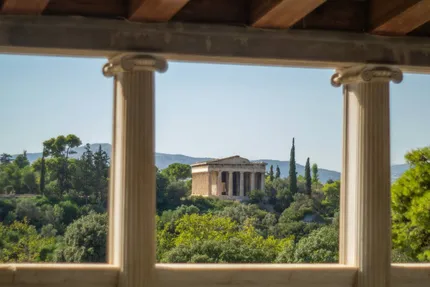
Ancient Agora
The Ancient Agora of Athens, below the Acropolis, was the city’s political, commercial, and social heart. Explore the well-preserved Temple of Hephaestus, the reconstructed Stoa of Attalos housing the Museum of the Ancient Agora, and remains of the Bouleuterion and Panathenaic Way. Paths and signage trace daily life, philosophy, and democracy’s early institutions.
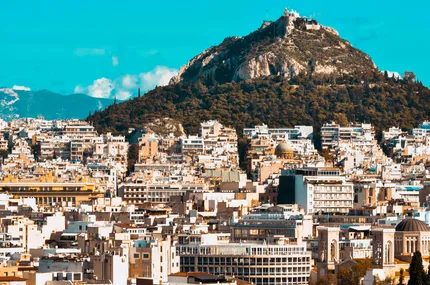
Mount Lycabettus
Mount Lycabettus is the highest hill in Athens, rising 277 metres above the city. Visitors can hike or take a funicular to the summit, where the 19th-century Chapel of Saint George and a restaurant offer panoramic views over Athens, the Acropolis, and the Saronic Gulf. The hill is surrounded by pine trees and is particularly popular at sunset and during outdoor summer concerts.
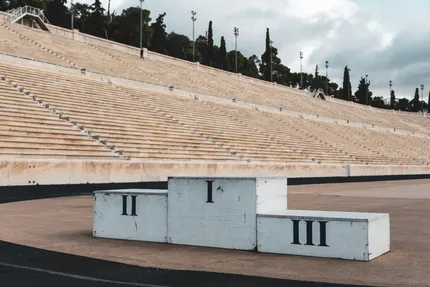
Panathenaic Stadium
Panathenaic Stadium (Kallimarmaro) is Athens’s all‑marble arena, built on a 4th‑century BCE site for the Panathenaic Games and restored for the first modern Olympics in 1896. Today it hosts ceremonial events, including the Athens Marathon finish and Olympic flame handover. Visitors can walk the track, climb the stands, and see a collection of Olympic torches.

Syntagma Square
Syntagma Square, or Constitution Square, is the central square of Athens located in front of the Greek Parliament building. It serves as the political and social heart of the city. Visitors can watch the ceremonial changing of the Evzone guards at the Tomb of the Unknown Soldier, which takes place hourly. The square is surrounded by hotels, shops, and serves as a major metro hub.
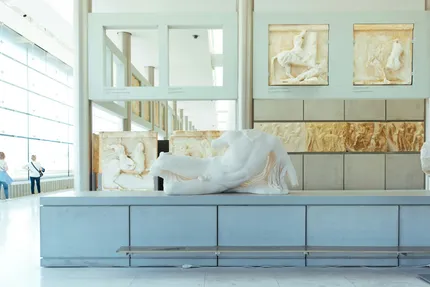
Acropolis Museum
The Acropolis Museum sits at the foot of the Acropolis hill and showcases artifacts found on and around the sacred rock. Opened in 2009, it houses sculptures, friezes, and objects from the Archaic and Classical periods, including original Parthenon marbles. The glass floor reveals ancient ruins beneath the building. It is considered one of the finest archaeological museums in the world.
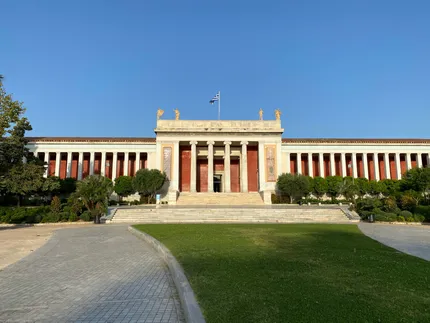
National Archaeological Museum
Athens' National Archaeological Museum, Greece's largest, presents the country's premier collection of antiquities from prehistoric times to late antiquity. Highlights include the gold Mask of Agamemnon, the Antikythera Mechanism, the Artemision Bronze, and the Jockey of Artemision. Galleries cover Cycladic, Mycenaean, classical sculpture, vases, and an Egyptian collection. Allow 2-3 hours; nearest metro: Victoria or Omonia.
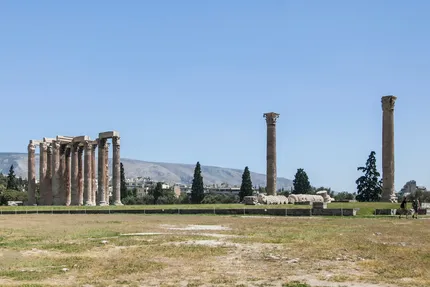
Temple of Olympian Zeus
The Temple of Olympian Zeus, located in central Athens, is one of the largest temples ever built in ancient Greece. Construction began in the 6th century BC but was only completed under Roman Emperor Hadrian in 131 AD. Of the original 104 massive Corinthian columns, only 15 remain standing today. The site offers a striking view of ancient architecture against the Athens skyline.
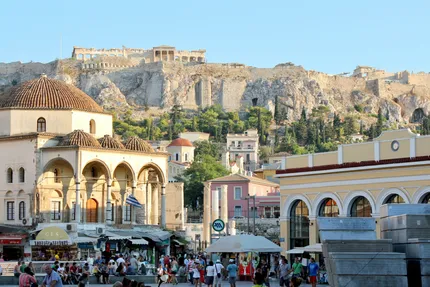
Monastiraki Flea Market
Monastiraki Flea Market is a lively shopping area around Monastiraki Square and Avissinias Square, with stalls and small shops selling souvenirs, antiques, vintage finds, leather sandals, jewelry, and vinyl. Browse narrow lanes like Ifestou Street, practice light haggling, and bring cash. It’s steps from Monastiraki metro and landmarks like the Ancient Agora.
Psyri Neighborhood
Psyri is a lively neighborhood in central Athens, just west of Monastiraki. Once a working-class district known for craftsmen and warehouses, it has transformed into one of the city's most vibrant areas for nightlife, street art, and dining. Its narrow streets are lined with tavernas, bars, and galleries. The neighborhood retains an authentic, slightly gritty character that contrasts with more polished tourist areas nearby.
Who should visit Athens
Athens suits short‑break travelers who like dense, walkable sightseeing anchored by a few marquee experiences. History lovers who plan their days around landmark sites and curated museums will find two to three days richly filled with the Acropolis, Ancient Agora, Kerameikos, Acropolis Museum, and the National Archaeological Museum. Urban explorers who enjoy neighborhoods will appreciate hopping between Plaka’s neoclassical lanes, Monastiraki’s flea market, Psyrri’s murals and late‑night meze, and Kolonaki’s galleries and design shops. Food‑focused visitors who want everyday Greek cooking rather than fine‑dining marathons can build an itinerary around central market tastings, souvlaki spots, kafeneia, and modern tavernas, capped with rooftop sunsets. Photographers and sunset chasers can climb Philopappos or Lycabettus and work blue‑hour views of the lit Acropolis.
Active travelers with a couple of hours to spare can add coastal cycling or swims along the tram‑served Athens Riviera, particularly around Edem and Alimos. Families with school‑age children who enjoy mythology do well with short, spaced‑out visits and hands‑on exhibits at the Acropolis Museum. Night owls who prefer relaxed bar‑hopping over mega‑clubs will find lively scenes in Psyrri and Koukaki. Shoppers interested in Greek crafts, leather sandals, and contemporary jewelry will find good picks around Adrianou, Pandrossou, and Kolonaki. For compact culture, street life, and warm evenings, Athens delivers an great, memorable city break.

Best time to visit Athens
The most comfortable months are April–June and late September–October, when days are sunny, humidity is low, and highs hover around 20–28°C. Spring brings blooming jacarandas around the Zappeion and longer daylight without peak‑season queues at the Acropolis or major museums. Early summer offers lively nightlife and open‑air cinemas and theaters, yet heat is manageable. July–August can exceed 35°C, with crowds and occasional heatwaves; plan very early or late visits if traveling then. Winter (November–March) is mild and good value, with quieter sites and cozy tavernas, though rain and some breezy days occur. Major holidays can affect opening hours, so check ahead.
Three top reasons for a city trip to Athens
- Marvel at the Acropolis and Parthenon, then delve into the Acropolis Museum, Ancient Agora, Kerameikos, and Temple of Hephaestus; Athens concentrates unmatched classical heritage where democracy, philosophy, and mythology resonate.
- Wander Plaka's neoclassical lanes, bargain in Monastiraki Flea Market, sample loukoumades and souvlaki near Varvakios Agora, then toast sunsets over the illuminated Acropolis from Psyrri and Thissio's bars and terraces.
- Combine urban buzz with seaside escapes: swim at Vouliagmeni, relax by Lake Vouliagmeni, stroll the Stavros Niarchos Foundation Cultural Center, and chase a sunset at Cape Sounion's Temple of Poseidon.
Athens is a city where you can enjoy a variety of transportation options. The city's public transport network is well-developed and includes buses, trolleys, a metro system, and trams. The metro is particularly useful for reaching major sites and neighborhoods. Walking is another viable option in the more historic and central areas, such as Plaka and Monastiraki, which are both very pedestrian-friendly. For those venturing further afield, the city's well-marked taxi service is an option, though it might cost more than public transport. While driving isn't necessary thanks to the robust public transit options, having a car might be useful for day trips outside the city. Biking is not very popular in Athens due to limited cycling paths and heavy traffic. Overall, the best way to explore Athens, especially its historical areas, is by a combination of walking and public transport.
This content was created with AI assistance and may contain inaccuracies.