
2 days in Salzburg
AustriaDay #1
Old Town exploration, Mozart, and fortress views
08:00
Breakfast at Café Tomaselli, one of Austria's oldest coffee houses
09:30
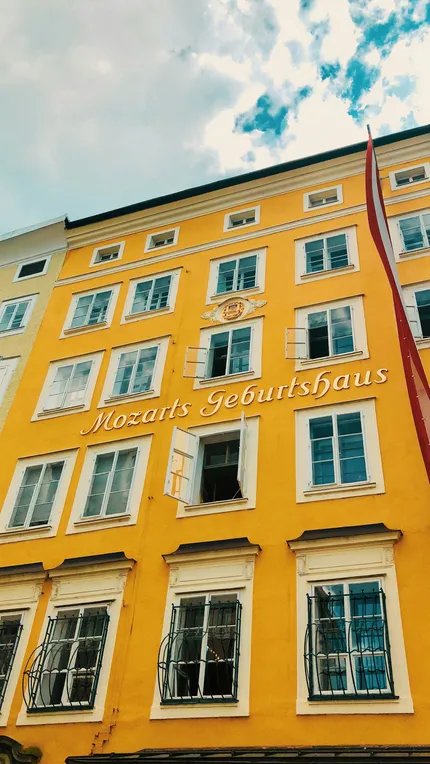
Visit Mozart's Birthplace (Mozarts Geburtshaus) on Getreidegasse
Mozart's Birthplace on Getreidegasse is where Wolfgang Amadeus Mozart was born in 1756. Now a museum, the yellow building houses original instruments, portraits, letters, and personal belongings from Mozart's early life. Visitors can explore the rooms where he spent his childhood, gaining insight into his formative years. The Getreidegasse location also places you in one of Salzburg's most charming and historically rich shopping streets.
11:00
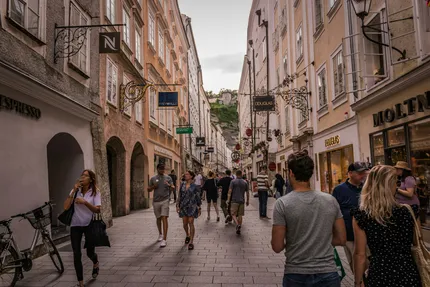
Stroll along Getreidegasse and browse the charming shops
Getreidegasse is Salzburg's most famous shopping street, located in the Old Town. Its narrow medieval lane is lined with independent shops, boutiques, and restaurants, all featuring ornate wrought-iron guild signs hanging above their entrances. The street is also home to Mozart's birthplace at number 9, now a popular museum. It offers a lively mix of local commerce and historic architecture worth exploring on foot.
12:30
Lunch at Stiftskeller St. Peter, one of Europe's oldest restaurants
14:00
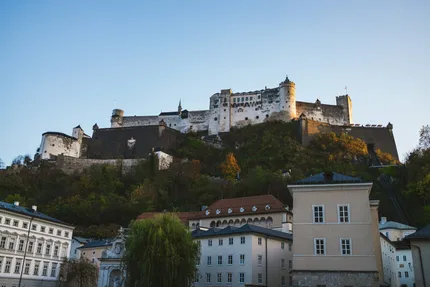
Visit Hohensalzburg Fortress via funicular railway
Hohensalzburg Fortress, perched atop Festungsberg hill, is one of Europe's largest and best-preserved medieval castles, dating to 1077. The funicular railway offers a short but scenic ride to the top, where visitors explore state rooms, towers, and museums. Panoramic views over Salzburg's baroque rooftops and the surrounding Alps make this one of the city's most rewarding and popular attractions.
15:30
Explore the fortress museums and enjoy panoramic views of Salzburg
Hohensalzburg Fortress, perched on Festungsberg hill, is one of the best-preserved medieval castles in Europe. Built in 1077, it houses several museums covering the fortress's history, medieval instruments of torture, and the royal chambers of the prince-archbishops. The hilltop location provides sweeping panoramic views over Salzburg's old town, the Salzach River, and the surrounding Alps. A funicular railway provides easy access.
17:00
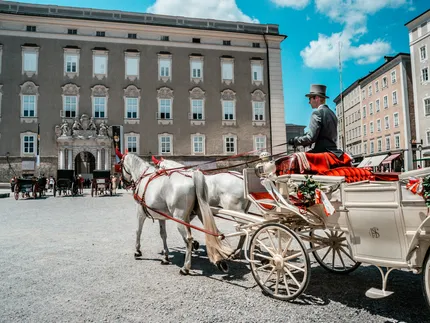
Walk through the Old Town (Altstadt) and admire Baroque architecture
Salzburg's Altstadt is a UNESCO World Heritage Site packed with Baroque architecture dating from the 17th and 18th centuries. Stroll through Getreidegasse, the main medieval street lined with guild signs, and explore Residenzplatz with its grand fountain. The Cathedral, the Residenz palace, and numerous churches showcase the city's ecclesiastical and aristocratic heritage. The compact old town is easily walkable and rich with history at every turn.
18:00
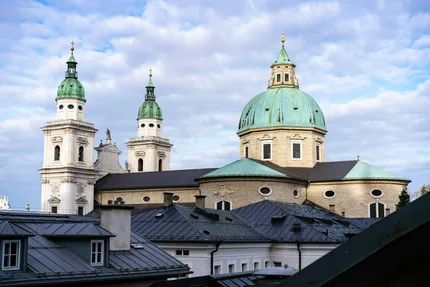
Visit Salzburg Cathedral (Salzburger Dom)
The Salzburg Cathedral, located in the heart of the Old Town, is a masterpiece of Italian Baroque architecture completed in 1628. It features a striking white facade, twin towers, and a grand dome. Inside, visitors can admire impressive frescoes, ornate altars, and the baptismal font where Mozart was baptized in 1756. The cathedral remains an active place of worship and a central landmark of Salzburg.
19:30
Dinner at Zum Eulenspiegel restaurant in the Old Town
21:00
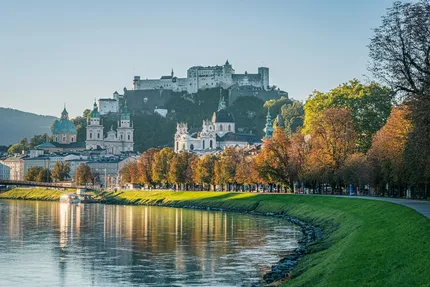
Evening stroll along the Salzach River and enjoy the illuminated cityscape
A walk along the Salzach River in the evening offers striking views of Salzburg's illuminated skyline. The riverbanks are well-maintained and easily walkable, with the fortress Hohensalzburg and the Old Town churches reflecting light across the water. Both banks provide different perspectives of the city. The atmosphere is relaxed, and the route connects several central areas, making it a pleasant way to end the day.
Day #2
Gardens, Sound of Music, and Mirabell Palace
08:00
Breakfast at a local bakery near Mirabell Square
09:00
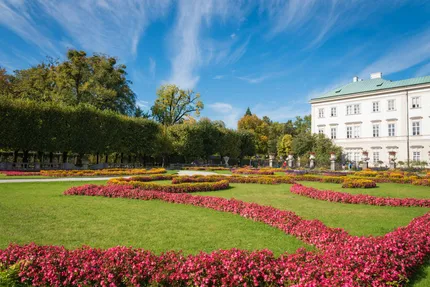
Explore Mirabell Palace and its beautiful gardens
Mirabell Palace was built in 1606 and is now a UNESCO World Heritage Site. Its baroque gardens are among the most impressive in Europe, featuring geometric flower beds, fountains, and sculptures. The palace's Marble Hall is a popular concert venue. The gardens offer a direct view of Hohensalzburg Fortress and served as a filming location in The Sound of Music.
10:30
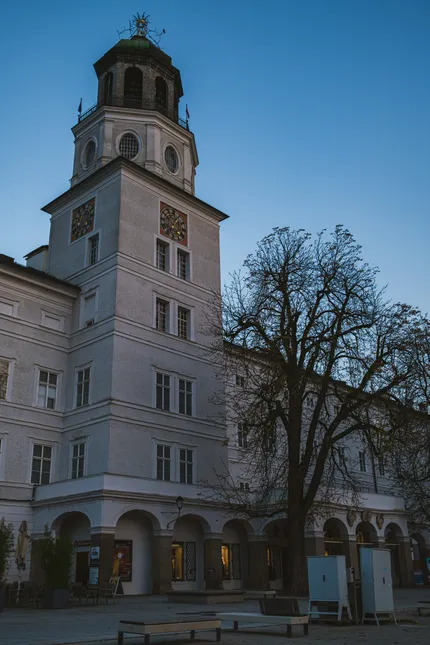
Visit the Salzburg Museum for local history and culture
The Salzburg Museum, located on Mozartplatz, is the city's primary institution for local history, art, and culture. Housed in the former Neue Residenz, it presents permanent collections covering Salzburg's history from prehistoric times through the modern era, alongside rotating temporary exhibitions. Highlights include regional artifacts, historical maps, and artworks that trace the city's development as a cultural and political center over centuries.
12:00
Lunch at Wasserfall restaurant near Mirabell
13:30
Sound of Music sightseeing tour around Salzburg
Relive the magic of the classic film on a guided tour of Salzburg's most iconic Sound of Music locations. Visit the Mirabell Gardens, where the Do-Re-Mi scene was filmed, the Nonnberg Abbey, and the picturesque lake district used as a backdrop. Tours typically last around four hours and are offered by several local operators, combining city highlights with scenic countryside stops.
15:30
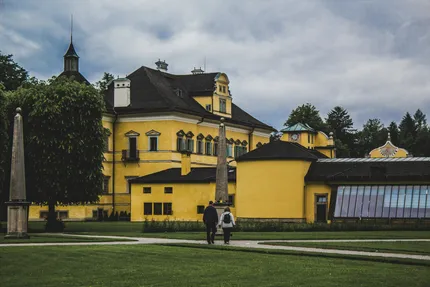
Visit Hellbrunn Palace and the famous trick fountains
Hellbrunn Palace, built in the early 17th century for Archbishop Markus Sittikus, is a Renaissance pleasure palace south of Salzburg's city center. Its famous trick fountains were designed to surprise and drench unsuspecting guests, a tradition that continues today during guided tours. The expansive grounds also include a zoo, scenic ponds, and one of the oldest mechanical theater installations in the world, dating to 1750.
17:00
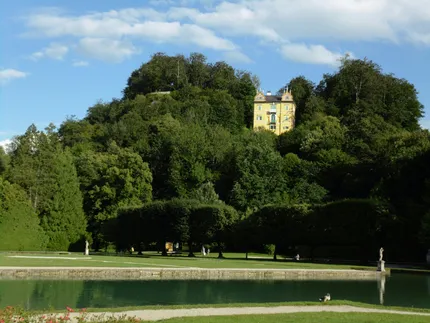
Explore Hellbrunn Palace gardens and Stone Theatre
Hellbrunn Palace, built in the early 17th century for Archbishop Markus Sittikus, is famous for its elaborate trick fountains designed to surprise unsuspecting visitors. The expansive grounds include themed grottos, ponds, and mechanical water-powered figures. The Stone Theatre, carved into a natural rock face, is one of the oldest open-air opera venues in the world and hosted its first opera performance in 1617.
18:30
Return to the city and visit St. Sebastian Church and cemetery
St. Sebastian Church and its cemetery are tucked away in Salzburg's Linzer Gasse neighborhood. The cemetery is one of the most beautiful Renaissance garden cemeteries in the German-speaking world. Notable burials include Paracelsus, the famous physician and alchemist, and members of Mozart's family. The elaborately decorated Gabriel Chapel, built as a mausoleum for Archbishop Wolf Dietrich, stands at the cemetery's center.