Colosseum
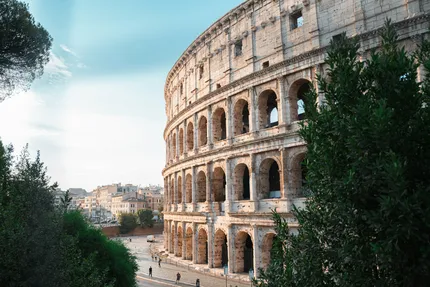
Rome's Colosseum is a 1st-century AD amphitheater begun by Vespasian and opened under Titus. It hosted gladiatorial contests and spectacles for tens of thousands. Built of travertine and concrete, it anchors a UNESCO-listed historic core. Visits typically use timed-entry tickets, often combined with the Roman Forum and Palatine Hill; guided underground/arena access is available.
Vatican Museums
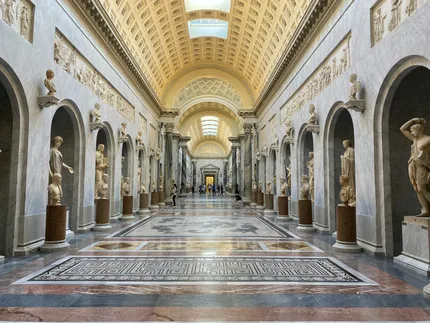
The Vatican Museums in Vatican City, Rome, house extensive papal art collections, from Egyptian and Classical antiquities to Renaissance works. Highlights include the Raphael Rooms and Michelangelo’s Sistine Chapel ceiling. Expect crowds; reserve timed-entry tickets. Dress modestly (shoulders/knees covered). Closed most Sundays; the last Sunday of the month is free but very busy.
St. Peter's Basilica
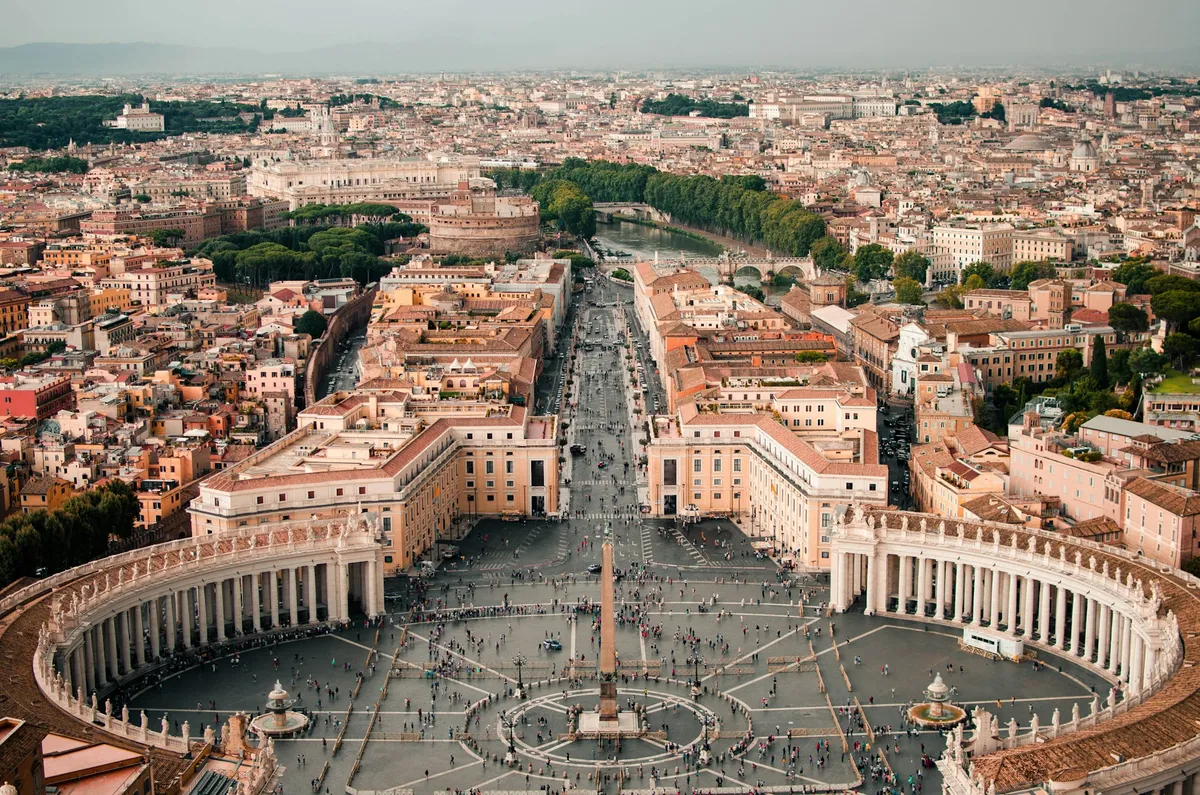
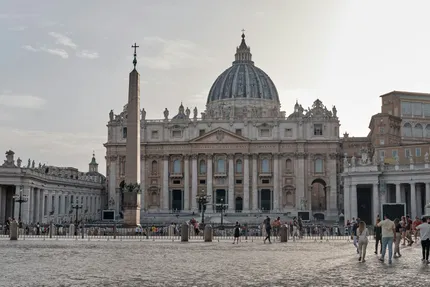
St. Peter's Basilica, in Vatican City, is Rome’s foremost church. See Michelangelo’s Pietà, Bernini’s Baldachin, and the vast nave beneath Michelangelo’s dome. Climb the dome (ticketed) for sweeping city views. Entry is free but security lines can be long; modest dress is required. Papal grottoes and St. Peter’s tomb are accessible.
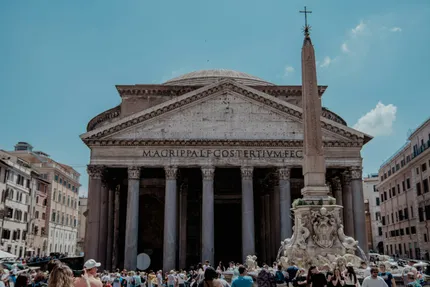
Pantheon
The Pantheon is Rome’s best-preserved ancient monument, a former Roman temple rebuilt by Emperor Hadrian (AD 118–125) and now the Basilica of Santa Maria ad Martyres. Its vast unreinforced concrete dome with a 9 m oculus illuminates the coffered interior. Notable burials include Raphael and Italy’s kings Vittorio Emanuele II and Umberto I.
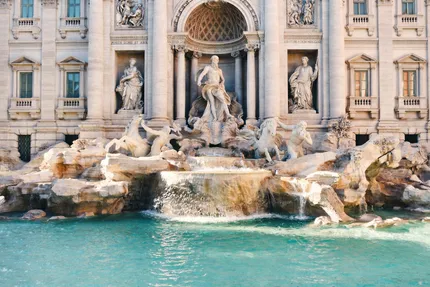
Trevi Fountain
The Trevi Fountain is Rome’s monumental Baroque fountain at Piazza di Trevi, designed by Nicola Salvi and completed in 1762. Its façade of Palazzo Poli frames Oceanus with allegories of Abundance and Health, fed by the ancient Acqua Vergine aqueduct. Tossing a coin is said to ensure a return; coins fund Caritas charity.
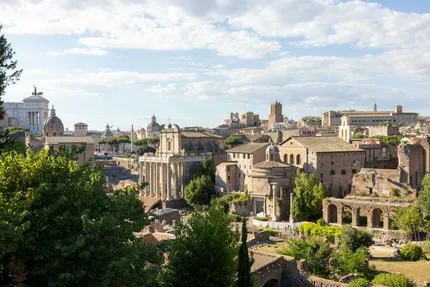
Roman Forum
Once the political, religious, and commercial center of ancient Rome, the Roman Forum is a sprawling archaeological site of temples, basilicas, and public spaces. Highlights include the Via Sacra, Curia Julia, Arch of Septimius Severus, and Temple of Saturn. Entry is typically combined with Palatine Hill and the Colosseum. Expect uneven terrain and minimal shade.
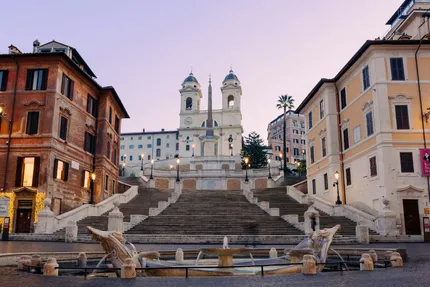
Spanish Steps
The Spanish Steps (Scalinata di Trinità dei Monti) comprise 135 Baroque steps linking Piazza di Spagna with the Trinità dei Monti church. Designed by Francesco de Sanctis (1723–1725), they overlook Bernini’s Barcaccia fountain and Via dei Condotti. A major meeting point, they’re often crowded; sitting or eating on the steps is prohibited. Nearest metro: Spagna.
Borghese Gallery
Borghese Gallery, in Rome’s Villa Borghese Pinciana, showcases masterworks by Bernini, Caravaggio, Raphael, and Titian. Highlights include Bernini’s Apollo and Daphne and The Rape of Proserpina, and Canova’s Pauline Bonaparte. Entry requires a timed reservation with a two-hour visit slot. The surrounding gardens invite short strolls nearby before or after.
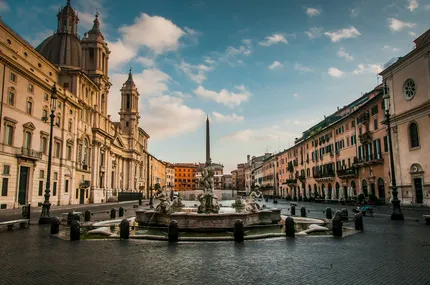
Piazza Navona
Piazza Navona is a Baroque square built on the site of Domitian’s stadium, preserving its oval outline. It features Bernini’s Fountain of the Four Rivers, Borromini’s Sant’Agnese in Agone, and the Fontana del Moro and Fontana del Nettuno. Today it’s a lively pedestrian space with cafes, street artists, and a seasonal Christmas market.
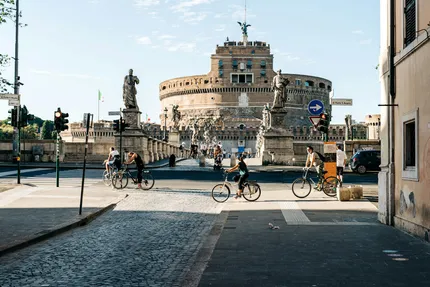
Castel Sant'Angelo
Castel Sant'Angelo, originally Emperor Hadrian's 2nd-century mausoleum, later became a fortress, papal refuge, and prison. Linked to the Vatican by the Passetto di Borgo, it now houses a museum with arms, sculptures, and frescoed rooms. Visitors can explore ramparts and papal apartments and enjoy sweeping views of the Tiber, Rome's rooftops, and St. Peter's.
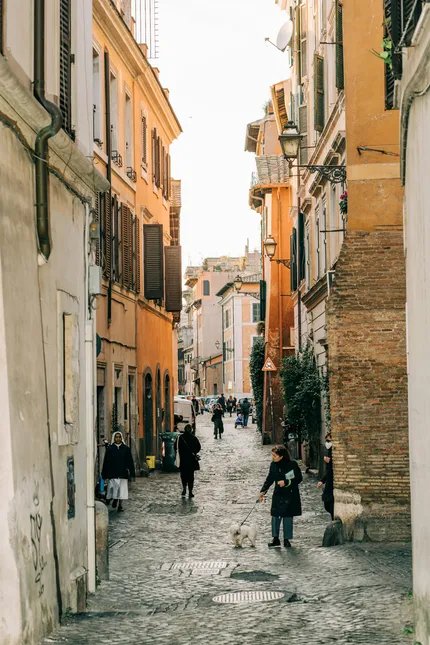
Trastevere
Trastevere is a riverside neighborhood with narrow cobbled streets, medieval buildings, and a busy evening scene. Visit the Basilica of Santa Maria in Trastevere with its 12th-century mosaics, browse artisan workshops, and eat at traditional trattorias and wine bars. It's also close to viewpoints on Gianicolo Hill. Piazza di Santa Maria in Trastevere is a central gathering spot.
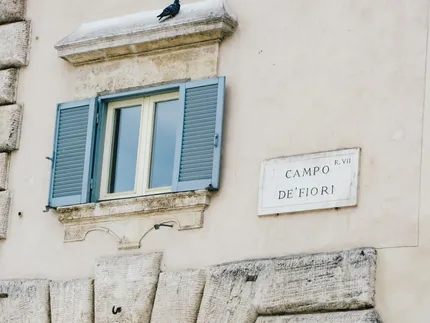
Campo de' Fiori
Campo de’ Fiori is a lively square known for its weekday morning market (Mon–Sat), selling fresh produce, flowers, cheeses, and household goods. The 1889 statue of philosopher Giordano Bruno marks the spot of his 1600 execution. By evening, stalls give way to bars and trattorias, making it a busy nightlife hub near Piazza Navona.
This content was created with AI assistance and may contain inaccuracies.