
City break inRio de Janeiro
Rio de Janeiro is one of the world's most visually dramatic cities, wedged between granite mountains and the Atlantic Ocean in southeastern Brazil. The city is defined by its iconic landmarks: the statue of Christ the Redeemer atop Corcovado mountain, the rounded peak of Sugarloaf Mountain, and the sweeping arc of Copacabana beach. Beyond the postcard images, Rio offers a rich cultural life rooted in samba, Carnival, and Afro-Brazilian traditions. Neighborhoods like Santa Teresa, with its bohemian art scene and colonial architecture, and Lapa, known for its lively nightlife and historic arches, reveal a city with considerable depth.
The culinary scene ranges from simple beachside kiosks serving cold beer and grilled shrimp to upscale restaurants in Ipanema and Leblon. Rio is a city that operates largely outdoors, and its residents, known as Cariocas, have shaped a distinct lifestyle culture built around beaches, football, and communal public spaces like Flamengo Park.

Christ the Redeemer
Christ the Redeemer is an iconic Art Deco statue of Jesus Christ standing 30 meters tall atop Corcovado Mountain, overlooking Rio de Janeiro. Completed in 1931, it is one of the New Seven Wonders of the World. Visitors can reach the statue by cog train or van through Tijuca Forest. The panoramic views of the city, beaches, and Guanabara Bay from the summit are spectacular.
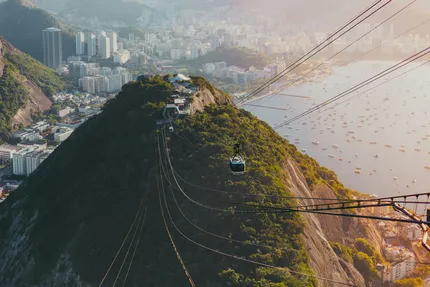
Sugarloaf Mountain
Sugarloaf Mountain is an iconic granite peak rising 396 meters above Guanabara Bay. Visitors reach the summit via two cable car stages, stopping first at Morro da Urca. From the top, panoramic views stretch across Rio, encompassing Copacabana Beach, Corcovado, and the bay. The cable cars operate throughout the day, and the site is particularly popular at sunset when the city lights begin to emerge.

Copacabana and Ipanema Beaches
Copacabana and Ipanema are Rio's most iconic beaches, stretching along the city's Atlantic coastline. Copacabana is famous for its energetic atmosphere, beachside kiosks, and the distinctive wave-patterned promenade. Ipanema, immortalized in the bossa nova song, attracts a fashionable crowd and offers stunning views of the Dois Irmãos hills. Both beaches are central to Rio's outdoor culture, hosting volleyball, football, and weekend markets.
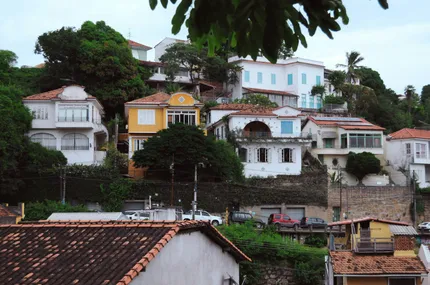
Santa Teresa Neighborhood
Santa Teresa is a historic hilltop neighborhood known for its bohemian character, colonial architecture, and winding cobblestone streets. Home to artists, musicians, and intellectuals, it features galleries, studios, and eclectic restaurants. The iconic yellow trams, known as bondes, once defined the area. Visitors can explore the Museu Chácara do Céu, enjoy panoramic views of the city, and experience a more relaxed, creative side of Rio.
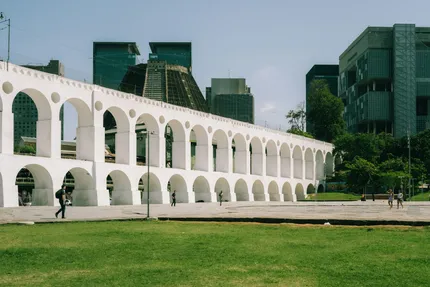
Lapa Arches and Nightlife
Lapa is Rio's most iconic nightlife district, centered around the grand Arcos da Lapa, 18th-century stone aqueduct arches that now serve as a tram viaduct. On weekends, the surrounding streets fill with open-air samba clubs, street vendors, and live music spilling from bars. The area is the heartbeat of traditional samba culture in Rio, drawing locals and visitors alike for an authentic, energetic night out.

Tijuca National Park
Tijuca National Park is one of the world's largest urban forests, covering about 32 square kilometers within Rio de Janeiro. The park features dense Atlantic rainforest, waterfalls, wildlife, and trails leading to scenic viewpoints including the summit of Pico da Tijuca. It also contains the iconic Christ the Redeemer statue. Visitors can hike, birdwatch, and explore natural pools throughout the park.
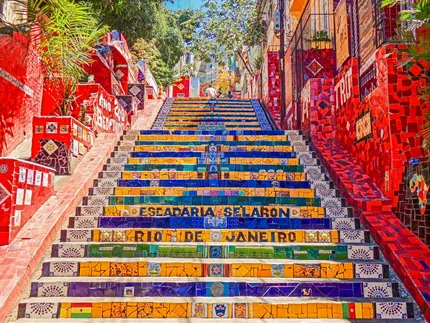
Selarón Steps
The Selarón Steps, or Escadaria Selarón, are a famous staircase in the Santa Teresa neighborhood connecting Lapa and Santa Teresa. Chilean artist Jorge Selarón began covering the 215 steps with colorful tiles in 1990, dedicating the work to the Brazilian people. He spent over two decades collecting and incorporating tiles from more than 60 countries, creating a constantly evolving mosaic that became one of Rio's most visited landmarks.

Maracanã Stadium
Maracanã is one of the world's most iconic football stadiums, located in Rio de Janeiro. Built for the 1950 FIFA World Cup, it has hosted legendary matches, the 2014 World Cup Final, and the 2016 Olympic ceremonies. Guided tours allow visitors to explore the pitch, dressing rooms, and a museum dedicated to Brazilian football history. Capacity reaches nearly 79,000 spectators.
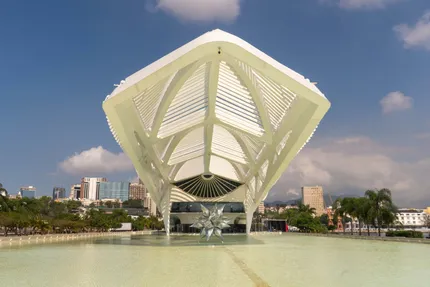
Museum of Tomorrow
Designed by Spanish architect Santiago Calatrava, the Museum of Tomorrow sits on the revitalized Maua Pier in the port district. Its striking futuristic architecture and thought-provoking exhibitions focus on sustainability and the future of humanity. The surrounding waterfront area, known as Porto Maravilha, has become a lively hub with cafes, galleries, and cultural spaces.
Who should visit Rio de Janeiro
Rio de Janeiro suits travelers who are comfortable with a lively, fast-paced urban environment and want a destination that combines natural scenery with cultural immersion. Beach lovers will find Copacabana and Ipanema among the most famous urban beaches in the world, with a distinct social culture that goes well beyond simply sunbathing. Active travelers have strong options including hiking the trails up Corcovado and Pedra da Gavea, hang gliding from Pedra Bonita, and surfing at beaches like Prainha and Barra da Tijuca.
Those interested in music and dance will find Rio especially rewarding, with samba schools open to visitors, live music venues in Lapa, and the option to take samba or forró dance classes. Culture-focused travelers can explore the Museum of Tomorrow, the National Museum of Fine Arts, and the historic neighborhood of Santa Teresa. Football enthusiasts should consider catching a match at the Maracana stadium, which remains one of the most atmospheric football venues in the world. Rio is less suited to travelers seeking a quiet or relaxed city break, as it is a large, intense, and sometimes challenging city to navigate. Travelers should be aware of safety considerations and plan their movements accordingly.

Best time to visit Rio de Janeiro
The best time to visit Rio de Janeiro is from May to October, during the Southern Hemisphere's autumn and winter months. Temperatures remain warm and pleasant, typically between 22 and 28 degrees Celsius, and rainfall is significantly lower than in the summer months. December through March is peak summer and brings heavy rain, high humidity, and large crowds. However, if attending Carnival is a priority, visiting in February or early March is essential, as this is when the city hosts its most famous and spectacular annual celebration.
Three top reasons for a city trip to Rio de Janeiro
- Christ the Redeemer atop Corcovado Mountain offers panoramic views of the city, Guanabara Bay, and surrounding rainforest, making it one of the world's most iconic landmarks.
- Copacabana and Ipanema beaches provide world-famous stretches of sand with a vibrant local culture of beach football, volleyball, and seaside kiosks serving caipirinhas.
- Rio's annual Carnival, held before Lent, features elaborate samba school parades at the Sambadrome, street parties called blocos, and is considered the largest carnival celebration on Earth.
Rio de Janeiro is a sprawling city, but its main tourist areas are reasonably accessible. The metro system is clean, safe, and efficient, connecting key neighborhoods like Ipanema, Copacabana, Botafogo, and the city center. Buses are extensive but can be confusing for first-time visitors and are less safe at night. Ride-hailing apps like Uber and 99 are widely used and affordable, making them a practical option for getting around after dark or reaching areas not served by the metro. The city is not particularly bike-friendly overall, though there are dedicated bike lanes along the beachfront in Copacabana and Ipanema. Walking is pleasant in beachside neighborhoods but less practical for crossing between distant parts of the city. A rental car is generally not recommended, as traffic is heavy and parking is difficult in most tourist areas.
This content was created with AI assistance and may contain inaccuracies.