
3 days in Milan
ItalyDay #1
Duomo, Galleria, Brera, and Navigli evening
08:30
Breakfast at a local bar: cappuccino and cornetto
09:30
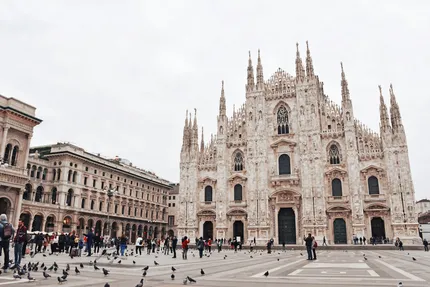
Visit the Duomo di Milano (interior)
Visiting the Duomo di Milano interior lets you see the cathedral’s vast nave, stained-glass windows, and richly carved Gothic details. Inside are numerous altars, monuments, and the crypt area, along with the famous statue of Saint Bartholomew Flayed. Entry is ticketed, with security checks; dress modestly and allow time for crowds.
11:00
Duomo Rooftop terraces for city views
The Duomo di Milano rooftop terraces let you walk among the cathedral’s spires and statues for panoramic views over central Milan. Access is by stairs or elevator, with timed tickets often available. From the terraces you can see Piazza del Duomo, the Galleria Vittorio Emanuele II, and, on clear days, the Alps.
12:30
Lunch near Duomo: risotto alla milanese
Near Milan’s Duomo, many trattorias and restaurants serve risotto alla milanese, a classic saffron risotto often paired with ossobuco. You’ll find options in the historic center around Piazza del Duomo and the Galleria Vittorio Emanuele II, ranging from casual to upscale. Reservations are helpful at peak lunch hours, especially on weekends.
14:00
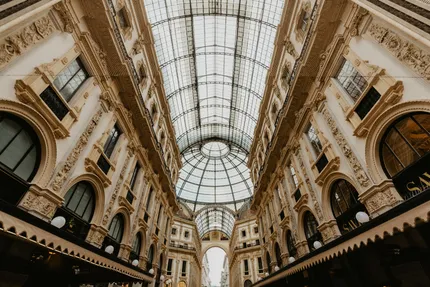
Walk through Galleria Vittorio Emanuele II
Galleria Vittorio Emanuele II is a 19th-century glass-and-iron arcade linking Piazza del Duomo and Piazza della Scala in central Milan. Walking through it highlights its mosaic floors, grand dome, and elegant façades, with historic cafés and luxury shops along the passage. It’s a convenient pedestrian route and a popular spot for photos and people-watching.
14:45
See Teatro alla Scala (museum or exterior stop)
Teatro alla Scala is Milan’s world-famous opera house, opened in 1778 and central to Italian musical history. You can visit the La Scala Museum to see costumes, instruments, portraits, and memorabilia, and sometimes view the auditorium from museum boxes when rehearsals allow. If not entering, stop outside to see the neoclassical façade and nearby Piazza della Scala.
16:00
Explore Brera district streets and boutiques
Brera is a central Milan neighborhood known for its narrow streets, historic buildings, and a strong arts presence around the Pinacoteca di Brera. Walking here is ideal for browsing independent boutiques, design and homeware shops, and small galleries. The area also has cafés and restaurants, making it easy to combine shopping with a relaxed stroll.
17:00
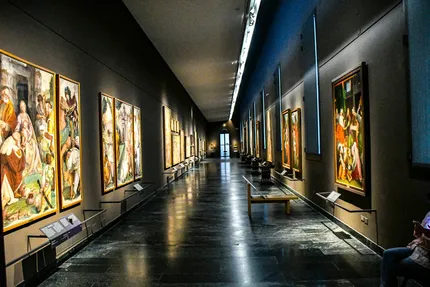
Pinacoteca di Brera (art museum)
Pinacoteca di Brera is Milan’s main fine-art museum, located in the Brera district within the Palazzo di Brera. Its collection focuses on Italian painting, especially from the 14th to 19th centuries, with notable works by Raphael, Caravaggio, Mantegna, and Hayez. The museum is part of a complex that also includes the Brera Academy and library.
19:30
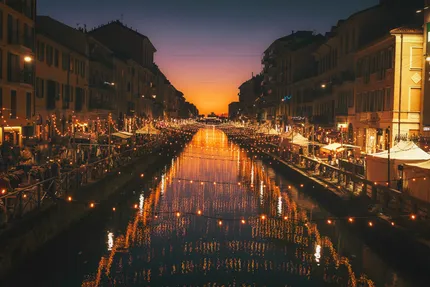
Aperitivo in Navigli canals area
Aperitivo in Milan’s Navigli area is a popular early-evening ritual centered on bars along the Naviglio Grande and Naviglio Pavese canals. Typically ordered as a drink that comes with snacks, it’s a social way to start the night before dinner. The neighborhood is known for lively outdoor seating and a walkable canal-side atmosphere.
21:00
Dinner along Navigli (classic Milanese trattoria)
Dinner along Milan’s Navigli means eating in a classic trattoria near the canal district, known for lively evening crowds. Typical menus focus on Lombard dishes such as risotto alla milanese, ossobuco, cotoletta, and seasonal pastas, often with local wines. Many places offer outdoor tables when weather allows; reservations are recommended on weekends.
22:30
Evening stroll by the canals and gelato
For an evening stroll by the canals in Milan, head to the Navigli district, especially along Naviglio Grande and Naviglio Pavese. The area is lively after sunset, with pedestrian-friendly stretches, bridges, and waterside views. You’ll find many gelaterie nearby, making it easy to pair a walk with gelato and people-watching.
Day #2
Last Supper, Sforza Castle, and modern Milan
08:00
Breakfast: pastry and espresso near your hotel
09:00
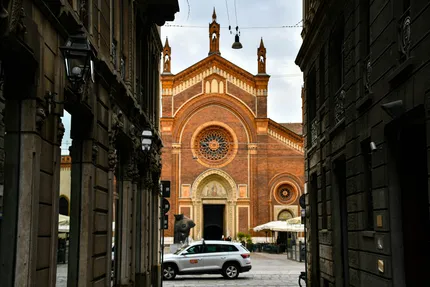
Santa Maria delle Grazie and 'The Last Supper' timed entry
Santa Maria delle Grazie is a UNESCO-listed church in Milan, best known for housing Leonardo da Vinci’s mural “The Last Supper” in the refectory. Visits are by timed entry with strict limits on group size and time inside to protect the artwork. Booking in advance is typically required, and security checks are common before entry.
10:30
Walk to Basilica di Sant’Ambrogio
A walk to the Basilica di Sant’Ambrogio takes you to one of Milan’s oldest and most important churches, founded in the 4th century and rebuilt in Romanesque style. Notable features include the brick façade, the atrium courtyard, and the interior’s early Christian and medieval elements. It’s near the Catholic University and reachable from central Milan on foot or by metro.
11:15
Visit Sant’Ambrogio (church and cloisters)
Basilica di Sant’Ambrogio is one of Milan’s most important early Christian churches, founded in the 4th century by St Ambrose and later rebuilt in Romanesque style. Visit the atrium and interior to see medieval architecture and notable chapels. The adjacent cloisters, part of a former monastery, are now linked to the Catholic University and can be viewed when open.
12:30
Lunch in the area (panzerotti or light trattoria meal)
14:00
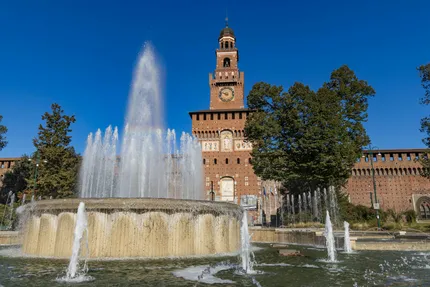
Sforzesco Castle (courtyards and museums)
Sforzesco Castle (Castello Sforzesco) is a major Renaissance fortress in central Milan. Visitors can walk through its large courtyards and access several on-site museums, including collections of ancient art, decorative arts, musical instruments, and archaeological material. The complex also connects to Parco Sempione, making it easy to combine museum time with a park stroll.
15:30
Stroll and relax in Parco Sempione
Parco Sempione is Milan’s large central park behind Castello Sforzesco, offering lawns, tree-lined paths, and shaded benches for an easy stroll or break from sightseeing. You can walk to landmarks like the Arco della Pace and pass the park’s pond and bridges. It’s popular for picnics, jogging, and people-watching.
16:30
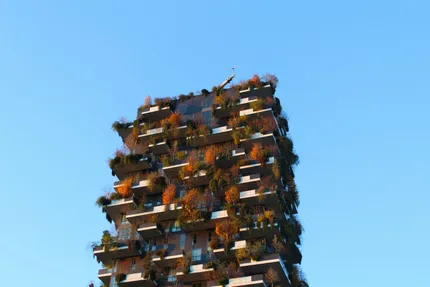
Head to Porta Nuova for modern architecture
Porta Nuova is Milan’s main contemporary district, known for high-rise architecture and urban redevelopment. Walk around Piazza Gae Aulenti, a raised public square surrounded by offices and shops, and see the Bosco Verticale residential towers nearby. The area connects easily to Corso Como and Garibaldi station, making it convenient for a self-guided architecture stroll.
17:00
Piazza Gae Aulenti and Bosco Verticale photo stop
Piazza Gae Aulenti is a modern, elevated square in Milan’s Porta Nuova district, surrounded by contemporary towers and close to the UniCredit Tower. Nearby, Bosco Verticale (“Vertical Forest”) consists of two residential high-rises with extensive planted balconies. Both are popular photo stops for modern architecture; visit during daylight for clearer views.
18:30
Aperitivo in Isola neighborhood
Aperitivo in Milan’s Isola neighborhood is centered around Piazza Gae Aulenti and the streets near Via Borsieri and Via Thaon di Revel. Many bars offer early-evening drinks with small bites, and some provide a buffet-style spread. The area mixes modern architecture with independent venues, making it a popular after-work stop.
20:30
Dinner in Isola (contemporary Milanese cuisine)
Isola is a lively Milan neighborhood north of Porta Garibaldi, known for modern trattorias, wine bars, and creative Italian cooking. For contemporary Milanese cuisine, look for menus that reinterpret classics like risotto alla milanese, ossobuco, and cotoletta with seasonal ingredients and updated techniques. Many spots offer aperitivo, natural wines, and late dinners.
22:00
Optional: rooftop drink in Porta Nuova area
Day #3
Fashion, museums, and a relaxed final evening
08:30
Breakfast: brioche and coffee (try a historic pastry shop)
09:30
Walk the Quadrilatero della Moda (Via Montenapoleone area)
Milan’s Quadrilatero della Moda is the city’s main luxury shopping district, centered around Via Montenapoleone and nearby streets like Via della Spiga, Via Sant’Andrea, and Via Manzoni. A walk here is ideal for window-shopping flagship boutiques, spotting Italian design, and seeing elegant architecture. It’s easily reached from the Duomo area and nearby metro stops.
10:30
Visit Villa Necchi Campiglio (design and gardens)
Villa Necchi Campiglio is a 1930s modernist house museum in Milan, designed by architect Piero Portaluppi for the Necchi family. Visitors can tour preserved interiors with period furnishings and decorative arts, and explore the private garden and grounds. The villa is managed by FAI (Italian National Trust) and offers guided visits and temporary exhibitions.
12:30
Lunch around San Babila / Porta Venezia
14:00
Visit Museo del Novecento (20th-century Italian art)
Museo del Novecento in Milan focuses on 20th-century Italian art, with strong holdings in Futurism and postwar movements. Located near Piazza del Duomo in the Palazzo dell’Arengario, it features works by artists such as Umberto Boccioni, Giorgio de Chirico, and Lucio Fontana. Upper floors offer notable views over the cathedral.
15:30
Coffee break and people-watching in Piazza del Duomo
Piazza del Duomo is Milan’s central square, framed by the Duomo cathedral and the Galleria Vittorio Emanuele II. For a coffee break, nearby cafés and bars offer espresso and pastries with outdoor seating when available. It’s a prime spot for people-watching, street performers, and observing the constant flow of locals and visitors.
16:30
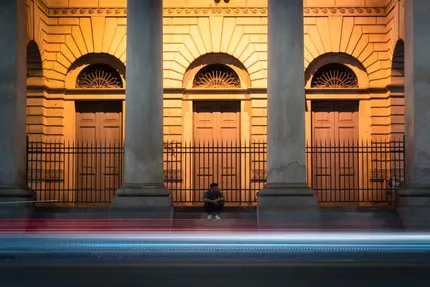
Explore Porta Venezia and Corso Buenos Aires shopping stroll
Porta Venezia is a central Milan neighborhood known for Liberty-style architecture, nearby gardens, and a lively mix of cafés and international eateries. From here, Corso Buenos Aires runs east with one of the city’s main shopping streets, lined with chain stores, Italian brands, and frequent sales. It’s an easy, flat stroll with good metro access.
18:30
Aperitivo at a classic Milanese café
20:00
Farewell dinner (ossobuco or cotoletta alla milanese)
For a farewell dinner in Milan, try classic dishes like ossobuco (braised veal shank, often served with saffron risotto) or cotoletta alla milanese (breaded veal cutlet, typically fried in butter). Many traditional trattorias and osterie serve both. Reservations are recommended, especially on weekends, and portions can be generous.