
City break inKuala Lumpur
Kuala Lumpur is Malaysia's bustling capital, a city where colonial heritage, gleaming skyscrapers, and traditional culture coexist in a dense urban landscape. The Petronas Twin Towers remain the city's most iconic landmark, dominating a skyline that reflects decades of rapid economic growth. Beyond the modern facade, neighborhoods like Chinatown, Brickfields, and Kampung Baru offer a glimpse into the city's multicultural roots, where Malay, Chinese, and Indian influences shape daily life. Street food is a central part of the experience, with hawker stalls and markets serving everything from nasi lemak to dim sum at any hour of the day.
The city's efficient rail network makes getting around straightforward, connecting major attractions, shopping districts like Bukit Bintang, and cultural sites such as the Batu Caves and the Islamic Arts Museum. Kuala Lumpur manages to be both an accessible introduction to Southeast Asia and a destination with enough depth to reward curious travelers willing to explore beyond the obvious highlights.
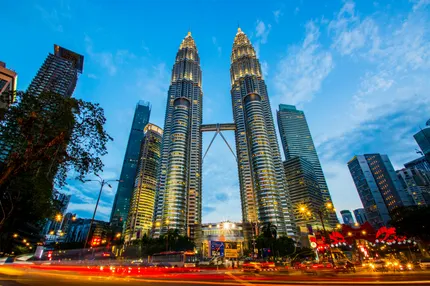
Petronas Twin Towers
The Petronas Twin Towers dominated the skyline as the world's tallest buildings from 1998 to 2004. Standing at 452 meters, these iconic structures in the heart of Kuala Lumpur feature a sky bridge connecting the two towers at floors 41 and 42. Visitors can access observation decks on floors 86 and 170 for sweeping city views. The towers also house offices, a shopping mall, and a concert hall.
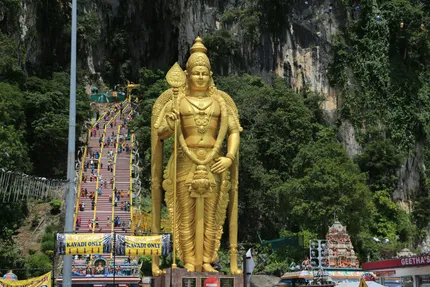
Batu Caves
Batu Caves is a limestone hill complex located just north of Kuala Lumpur, housing a series of caves and cave temples. It is one of the most popular Hindu shrines outside India, dedicated to Lord Murugan. A 272-step staircase leads to the main Temple Cave. The site is also famous for its annual Thaipusam festival, which draws hundreds of thousands of devotees and visitors.
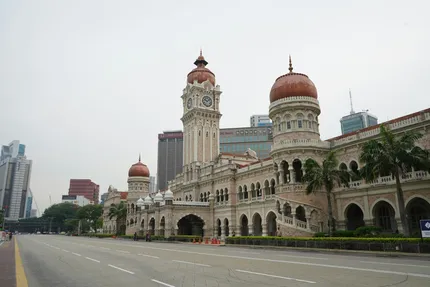
Merdeka Square
The historic heart of Kuala Lumpur, Merdeka Square is where Malaysian independence was declared in 1957. The vast open field is flanked by colonial-era buildings, including the Sultan Abdul Samad Building with its distinctive Moorish architecture and copper domes. The square also holds one of the world's tallest flagpoles. It is a great starting point for exploring the city's colonial district.
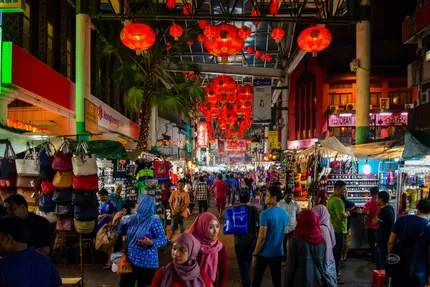
Chinatown and Petaling Street
Kuala Lumpur's Chinatown is a lively district packed with market stalls, food vendors, temples, and budget shops. Petaling Street is its bustling spine, known for bargain goods and street food. Nearby Sri Mahamariamman Temple and Chan See Shu Yuen Temple add cultural depth. Visit in the evening when the night market comes alive and the street food scene is at its best.
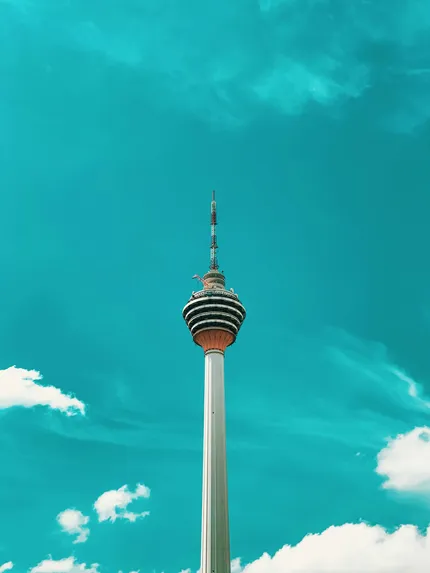
KL Tower (Menara KL)
Standing at 421 meters, KL Tower offers panoramic views of the city skyline from its observation deck and revolving restaurant. Located on Bukit Nanas hill, it predates the Petronas Towers and still provides excellent vantage points. The surrounding forest reserve is one of the oldest in the world and offers a short nature walk just minutes from the city center.

Islamic Arts Museum Malaysia
One of Southeast Asia's finest museums dedicated to Islamic art and culture, this institution houses over 7,000 artifacts spanning architecture, textiles, jewelry, and manuscripts. Exhibits cover contributions from across the Islamic world, making it educational and visually impressive. The building itself features beautiful domes and ornamental details. Admission is affordable and the museum is well organized and air-conditioned.
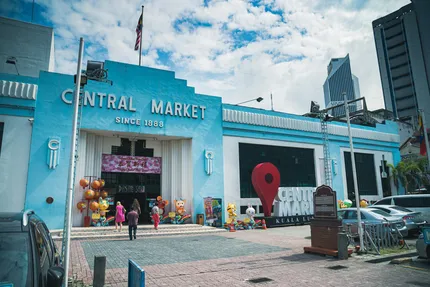
Central Market (Pasar Seni)
A heritage building originally built as a wet market in 1937, Central Market has been converted into a cultural hub selling Malaysian handicrafts, batik, art, and souvenirs. It is an excellent place to shop for authentic local goods without the pressure of street hawkers. Regular cultural performances take place nearby. The surrounding Kasturi Walk adds more food and shopping options.
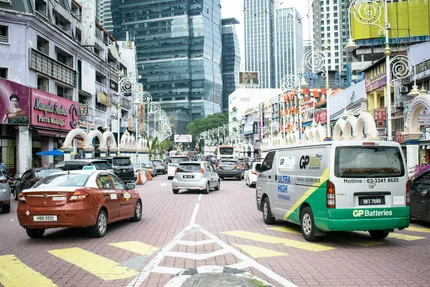
Little India (Brickfields)
Brickfields is Kuala Lumpur's official Little India neighborhood, filled with sari shops, flower garland sellers, Tamil restaurants, and Hindu temples. The area buzzes with color and aroma, especially around festival times like Deepavali. It sits conveniently near KL Sentral station, making it easy to reach. Grab a banana leaf rice meal or fresh coconut while exploring the vibrant streets.
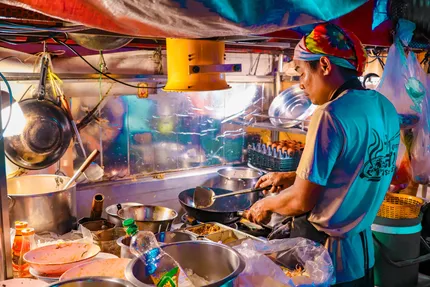
Jalan Alor Food Street
Jalan Alor is Kuala Lumpur's most famous street food destination, transforming into a lively open-air dining strip every evening. Dozens of stalls and restaurants serve satay, char kway teow, grilled seafood, and other Malaysian favorites. Located in the Bukit Bintang area, it is easy to combine with shopping along nearby Pavilion mall. Best visited after 6pm when everything opens up.
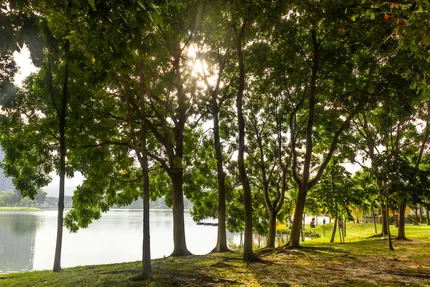
KLCC Park and Aquaria KLCC
The park at the base of the Petronas Towers offers a pleasant green escape with fountains, a jogging track, and a children's playground. Adjacent Aquaria KLCC is an impressive aquarium featuring thousands of marine species, shark feedings, and a glass underwater tunnel. It is a solid activity for families or anyone seeking a break from the heat and sightseeing.
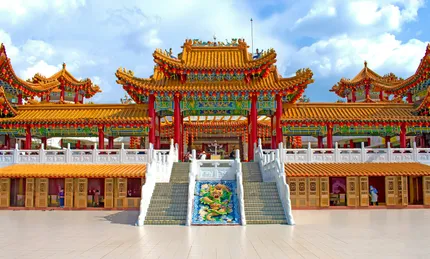
Thean Hou Temple
A large and ornate six-tiered Chinese temple dedicated to the sea goddess Thean Hou, this landmark offers city views and intricate architectural details. It is particularly atmospheric during Chinese New Year and other festivals when lanterns and decorations fill the complex. The temple also functions as a wedding venue and cultural center. The site is easily reached by taxi or ride-hailing app.
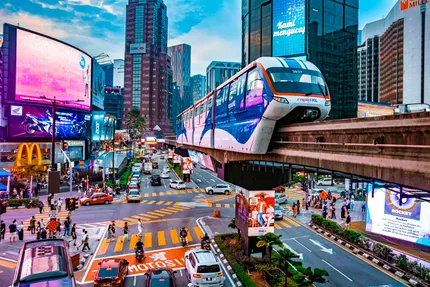
Bukit Bintang Shopping District
Bukit Bintang is Kuala Lumpur's premier shopping and entertainment zone, home to malls like Pavilion, Lot 10, and Fahrenheit88. Beyond retail, the area has a thriving dining scene ranging from street food to fine dining. It connects seamlessly to the Golden Triangle business district and is walkable in the evening. The Starhill Gallery nearby offers a more upscale shopping and dining experience.
Who should visit Kuala Lumpur
Kuala Lumpur is a strong fit for food-focused travelers. The city's multicultural makeup produces one of the most diverse and affordable street food scenes in Asia, spanning Malay, Chinese, Indian, and Nyonya cuisines. Night markets like Jalan Alor and the stalls of Petaling Street are essential stops, and the sheer variety available within a small area makes it easy to eat extremely well on any budget. Shoppers will also find the city rewarding, with massive malls such as Pavilion and Suria KLCC sitting alongside local textile shops and the weekend market at Pasar Seni. Travelers interested in religious and cultural architecture have plenty to explore, from the ornate Sri Mahamariamman Temple to the Masjid Jamek mosque and the striking Batu Caves Hindu temple complex just outside the city center.
Budget travelers benefit from the city's affordable accommodation options, cheap public transport, and low food costs, making it one of Southeast Asia's most accessible capitals. It is less suited to those seeking beach or nature experiences, though day trips to the Batu Caves or the Forest Research Institute Malaysia offer some green relief from the urban environment.

Best time to visit Kuala Lumpur
The best time to visit Kuala Lumpur is between May and July or during December, when rainfall is somewhat lower relative to the rest of the year. The city sits close to the equator and experiences a tropical climate with heat and humidity year-round, so no season is entirely dry. Avoiding the peak monsoon periods of October to November and March to April will generally mean fewer days disrupted by heavy downpours, though short afternoon showers can occur at any time regardless of the month.
Three top reasons for a city trip to Kuala Lumpur
- The Petronas Twin Towers, once the world's tallest buildings, offer stunning observation decks and a sky bridge with panoramic views over the sprawling city skyline.
- Kuala Lumpur is a food paradise where hawker centres like Jalan Alor serve iconic dishes including char kway teow, nasi lemak, and fresh seafood at low prices.
- Batu Caves, just 13 kilometres from the city centre, feature a dramatic limestone hill with a towering golden statue of Lord Murugan and vibrant Hindu temples inside.
Kuala Lumpur has a reasonably good public transport network for a Southeast Asian city. The MRT, LRT, and KTM Komuter rail lines connect most major areas and are affordable and air-conditioned, which is a relief in the tropical heat. The RapidKL bus network fills in the gaps, though buses can be slow due to traffic. Grab, the regional ride-hailing app, is widely used and often more convenient than taxis. The city is not particularly walkable outside of specific areas like Bukit Bintang or the city center, as sidewalks are often inconsistent and the heat makes long walks uncomfortable. Cycling infrastructure is limited and not recommended for getting around generally. Having a car gives you the most flexibility, but traffic congestion, especially during peak hours, can be severe. For most visitors, a combination of rail and Grab will cover the majority of travel needs comfortably.
This content was created with AI assistance and may contain inaccuracies.