
2 days in Dresden
GermanyDay #1
Old Town highlights and evening river views
08:30
Breakfast at a café near Altmarkt
Altmarkt is a central square in Dresden’s Old Town, close to sights like the Kreuzkirche and the Altmarkt-Galerie. Having breakfast at a nearby café is a convenient way to start the day before exploring on foot. Many places offer German-style breakfasts (bread rolls, cold cuts, cheese) and coffee, with indoor seating and seasonal outdoor tables.
09:30
Walk through Altmarkt and Prager Straße
Altmarkt is Dresden’s historic market square, rebuilt after World War II and still used for events such as the Striezelmarkt Christmas market. From here, walk to Prager Straße, a major pedestrian shopping street developed in the GDR era and later modernized. The route links central sights with department stores, cafés, and public art.
10:15
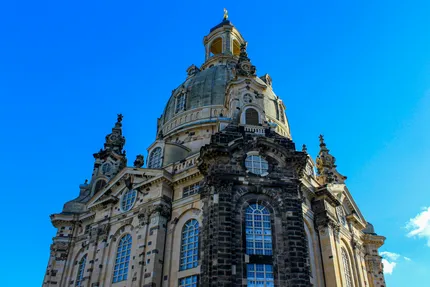
Visit Frauenkirche (church interior and dome view)
Dresden’s Frauenkirche is a reconstructed Baroque Lutheran church on the Neumarkt, rebuilt after WWII destruction and reopened in 2005. Inside, you can see the light-filled nave, ornate altar, and restored decoration. A climb (stairs and ramps) leads to the dome’s viewing platform, offering panoramic views over the Altstadt and the Elbe.
11:30
Explore Neumarkt square and surrounding courtyards
Neumarkt is Dresden’s central square beside the rebuilt Frauenkirche, surrounded by reconstructed Baroque-style buildings, cafés, and small shops. Walking the area includes nearby passages and inner courtyards within the Neumarkt quarter, which connect streets and offer quieter viewpoints. It’s a good base for exploring the Altstadt on foot and seeing postwar reconstruction up close.
12:30
Lunch in the Old Town (Saxon specialties)
13:45
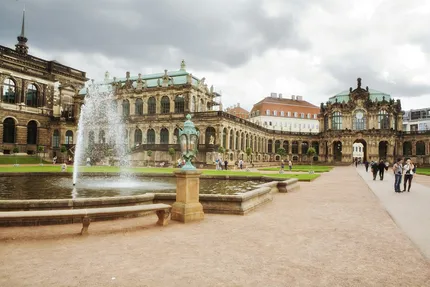
Zwinger Palace: gardens and Old Masters Gallery
The Zwinger is a major Baroque palace complex in Dresden, built in the early 18th century. Its courtyard gardens, fountains, and pavilions are popular for walks and photos. Inside are several museums, including the Old Masters Picture Gallery (Gemäldegalerie Alte Meister), known for European paintings such as Raphael’s “Sistine Madonna.” Check opening hours and ticket options.
15:45
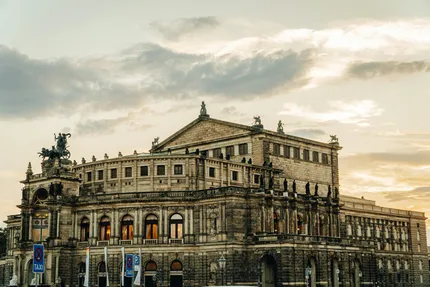
Semperoper exterior and Theaterplatz photos
Photograph the Semperoper’s exterior from Theaterplatz, where the opera house faces the Hofkirche and the equestrian statue of King Johann. The square offers wide angles for full-façade shots and closer details of sculptures and arches. Evening light and illuminated façades can work well. Expect crowds during events and peak tourist hours.
16:15
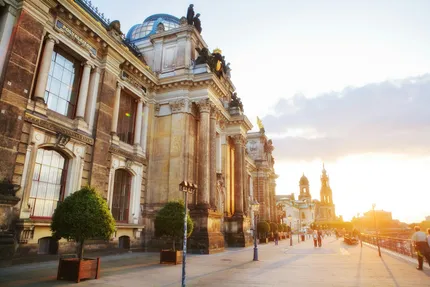
Brühl’s Terrace stroll (Elbe panorama)
Brühl’s Terrace (Brühlsche Terrasse) is a raised promenade in Dresden’s historic center, running along the Elbe River beside the Albertinum and near the Frauenkirche. A stroll here offers broad views over the river, bridges, and the Neustadt skyline. Access is via stairways from the old town; it’s especially popular at sunset.
17:00
Procession of Princes (Fürstenzug) and Augustusstraße walk
The Procession of Princes (Fürstenzug) is a large mural on Augustusstraße in Dresden’s historic center, depicting Saxon rulers. It is made from Meissen porcelain tiles and can be viewed from the street at any time. A walk along Augustusstraße links key Old Town sights near the Residenzschloss and the Semperoper.
18:30
Dinner in the Neustadt or along the river
20:00
Evening walk across Augustus Bridge and riverside views
An evening walk across Dresden’s Augustus Bridge (Augustusbrücke) offers classic views of the Elbe River and the city’s historic skyline. From the bridge and nearby riverbanks, you can see landmarks such as the Frauenkirche and the Hofkirche, with reflections on the water at dusk. The riverside paths are flat and easy for a relaxed stroll.
Day #2
Art, palaces, and Neustadt neighborhood vibes
08:30
Breakfast in the Inner Neustadt (local bakery/café)
09:30
Albertinum: modern art and sculpture collection
The Albertinum in Dresden, part of the Staatliche Kunstsammlungen Dresden, houses the New Masters Gallery and a major sculpture collection. It focuses on art from the 19th century to the present, including paintings and modern works, alongside sculptures spanning from antiquity to contemporary pieces. The museum is located near the Brühl Terrace in the historic center.
11:00
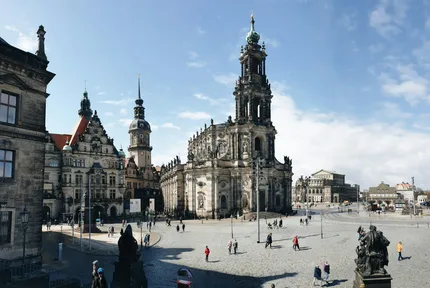
Dresden Castle (Residenzschloss) and Green Vault highlights
Dresden Castle (Residenzschloss) is a restored Renaissance and Baroque palace complex in the historic center, housing several museums. Key highlights include the Historic Green Vault (Historisches Grünes Gewölbe) with its original treasury rooms and the New Green Vault (Neues Grünes Gewölbe) displaying jeweled objects. Visitors also see the Turkish Chamber and the castle courtyard.
12:45
Lunch near Schlossplatz
Schlossplatz sits beside Dresden’s Residenzschloss and near the Zwinger and Semperoper, making it a convenient area for lunch between sightseeing stops. Nearby options typically include Saxon and German restaurants, cafés, and casual spots around the Altstadt. Many places are walkable from major landmarks and offer indoor seating, terraces in warmer months, and quick lunch menus.
14:00
Ride to Pillnitz Palace and Park (Elbe-side gardens)
Pillnitz Palace and Park lie on the Elbe’s right bank, about 12–15 km east of central Dresden, and are reachable by bike via the Elbe Cycle Route. The former royal summer residence includes Baroque buildings and extensive landscaped grounds with notable botanical collections. Cyclists can combine the ride with riverside views and nearby ferry crossings.
16:30
Return to the city and coffee break
17:30
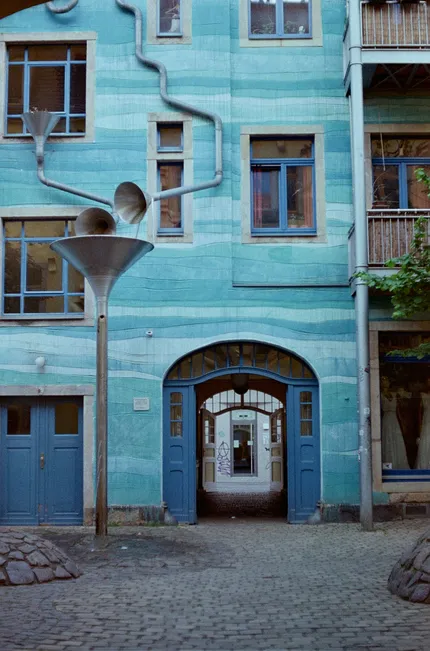
Explore Kunsthofpassage and Neustadt street art courtyards
Kunsthofpassage is a set of interconnected courtyards in Dresden’s Neustadt district, known for creative façades, including the “Singing Drainpipes” courtyard where rainwater runs through tuned pipes. The surrounding Neustadt area features murals, paste-ups, and small gallery spaces in side streets. Visit on foot, especially in daylight, and combine with nearby cafés and independent shops.
19:00
Dinner in the Neustadt (trendy restaurants and pubs)
Dresden’s Neustadt (Äußere Neustadt) is known for its dense mix of casual eateries, international restaurants, and pubs, especially around Alaunstraße, Görlitzer Straße, and the Alaunpark area. It’s a popular evening district with many small venues and outdoor seating in warmer months. Expect a lively, walkable nightlife scene and varied price points.
20:30
Evening drinks or live music in Neustadt
Dresden’s Neustadt is the city’s main nightlife area, known for dense clusters of bars, pubs, and small live-music venues around Alaunstraße, Görlitzer Straße, and the Kunsthofpassage courtyards. Evenings range from craft beer and cocktails to jazz, indie, and DJ sets. Many places are walk-in; check venue schedules for concerts and late-night events.