
City break inCape Town
Cape Town is one of the most visually striking cities in the world, positioned between the iconic Table Mountain and the Atlantic Ocean. As South Africa's legislative capital and oldest city, it carries a complex and layered history that spans colonial settlement, the apartheid era, and a hard-won democratic transition. The city's diverse neighborhoods each have a distinct character: the colorful Bo-Kaap quarter reflects Cape Malay heritage, the V&A Waterfront offers restaurants and museums in a working harbor setting, and the winelands of Stellenbosch and Franschhoek sit less than an hour away.
Cape Town also serves as a gateway to the Cape Peninsula, where dramatic coastal roads lead to the Cape of Good Hope and pristine beaches. The city has a well-developed food and coffee scene, a growing contemporary arts presence, and a range of outdoor activities tied directly to its extraordinary natural surroundings. Despite persistent social inequality that visitors should be aware of, Cape Town remains a deeply compelling destination with few rivals for sheer scenic variety.

Table Mountain
One of the world's most iconic landmarks, Table Mountain offers breathtaking 360-degree views over Cape Town, the Atlantic Ocean, and the Cape Peninsula. Take the rotating aerial cableway to the top or hike one of several well-marked trails. The mountain is part of a UNESCO World Heritage Site and hosts an extraordinary range of unique fynbos plant species.
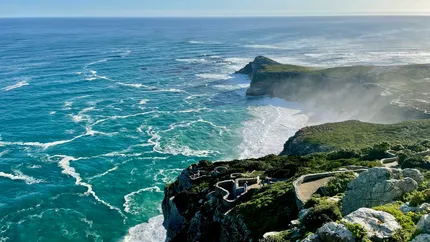
Cape of Good Hope
Located at the southwestern tip of the Cape Peninsula, this dramatic rocky headland is a must-visit. Part of Table Mountain National Park, it offers stunning coastal scenery, hiking trails, and wildlife including baboons and ostriches. The nearby Cape Point lighthouse provides sweeping ocean views. The site carries enormous historical significance as a landmark on the historic spice trade route.
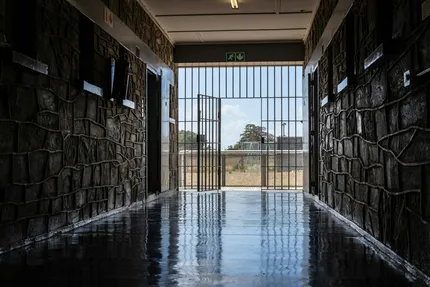
Robben Island
Robben Island, a UNESCO World Heritage Site, lies 11km off Cape Town's coast in Table Bay. The island served as a political prison during apartheid, most famously housing Nelson Mandela for 18 of his 27 imprisoned years. Guided tours, often led by former political prisoners, include a visit to Mandela's cell. Ferries depart from the V&A Waterfront throughout the day.
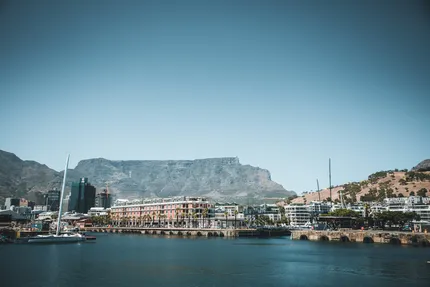
V&A Waterfront
Cape Town's most visited destination combines a working harbor with world-class shopping, restaurants, and entertainment. The area offers stunning views of Table Mountain and is the departure point for Robben Island ferries. Street performers, craft markets, and a variety of museums make it a lively hub suitable for all types of visitors throughout the day and evening.
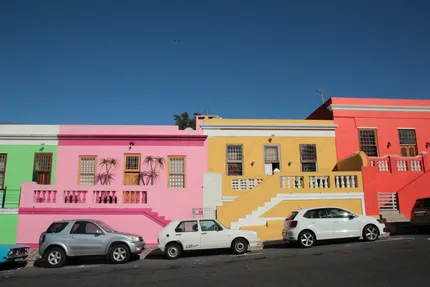
Bo-Kaap
Bo-Kaap is a vibrant neighborhood on the slopes of Signal Hill, known for its brightly colored houses and rich Cape Malay heritage. Once home to freed slaves, it remains a living cultural landmark. Visitors can explore its cobblestone streets, visit the Bo-Kaap Museum to learn about its history, and sample traditional Cape Malay cuisine at local restaurants. It is one of Cape Town's most photographed areas.
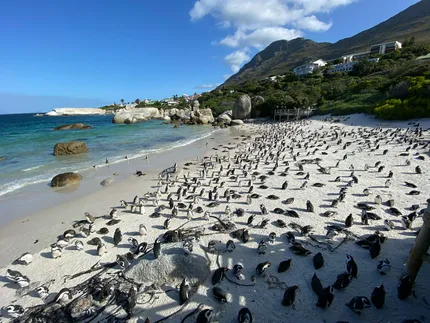
Boulders Beach
Located near Simon's Town on the False Bay coastline, Boulders Beach is home to a large colony of African penguins. Boardwalks allow visitors to observe these charismatic birds up close without disturbing them. The sheltered coves between granite boulders also make for excellent swimming. The penguin colony has grown significantly since the 1980s when the first pair arrived.
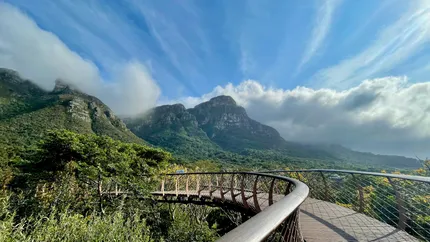
Kirstenbosch National Botanical Garden
Nestled against the eastern slopes of Table Mountain, Kirstenbosch is widely regarded as one of the greatest botanical gardens in the world. It showcases South Africa's remarkable plant diversity, with particular focus on fynbos. The Boomslang canopy walkway offers a treetop perspective of the garden. Summer sunset concerts on the lawns are a beloved Cape Town tradition.
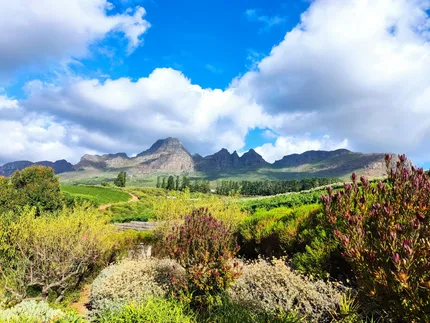
Cape Winelands
A short drive from the city center, the Stellenbosch, Franschhoek, and Paarl wine regions offer outstanding wine tasting, gourmet dining, and beautiful Cape Dutch architecture. Franschhoek is particularly celebrated for its food culture. Cycling between estates is a popular option in Stellenbosch. The mountain-framed valleys produce world-class wines and make for an excellent full-day excursion.
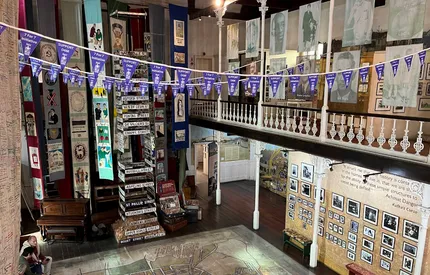
District Six Museum
This deeply moving museum documents the forced removal of over 60,000 residents from the District Six neighborhood under apartheid laws. Through photographs, personal testimonies, and artifacts, it tells the story of a vibrant community that was deliberately destroyed. Located in the former district, the museum plays an important role in Cape Town's ongoing process of memory and reconciliation.
Who should visit Cape Town
Cape Town is an excellent fit for outdoor enthusiasts who want a city base without sacrificing access to nature. Hikers will find routes ranging from the straightforward Table Mountain cable car ascent to multi-hour ridge walks with sweeping ocean views. Cyclists and trail runners are well catered to, particularly along the Atlantic Seaboard and on the Cape Peninsula. The city is also a strong choice for food and wine lovers. The Cape Winelands are easily accessible for day trips, and Cape Town itself has a serious restaurant scene with a clear focus on locally sourced ingredients and regional cuisine.
History and culture travelers will find the District Six Museum, Robben Island, and the Bo-Kaap genuinely rewarding, offering direct insight into South Africa's apartheid past and Cape Malay heritage. Surf travelers will appreciate the consistent waves at spots like Muizenberg, which is also one of the more beginner-friendly surf beaches in the region. Cape Town is less suited to travelers seeking pure urban nightlife or those on very tight budgets, as it can be an expensive city by regional standards. Families with children can manage well here given the variety of accessible outdoor and waterfront activities.

Best time to visit Cape Town
The best time to visit Cape Town is during the Southern Hemisphere summer, from November to March. This period brings warm, dry, and sunny weather ideal for beaches, hiking Table Mountain, and exploring the peninsula. December and January are peak season, so expect higher prices and more crowds. If you prefer quieter conditions, shoulder months like November or late February offer a good balance. Avoid the winter months of June through August, when persistent rain and strong winds can limit outdoor activities significantly, though prices drop considerably during this period.
Three top reasons for a city trip to Cape Town
- Table Mountain offers iconic cable car rides and hiking trails with panoramic views over the city, Atlantic Ocean, and Cape Peninsula, making it one of the world's most recognizable natural landmarks.
- The Cape Winelands, including Stellenbosch and Franschhoek, are just an hour away, offering world-class wines, historic Cape Dutch architecture, and outstanding restaurants in stunning vineyard settings.
- Boulders Beach near Simon's Town hosts a large colony of African penguins you can observe up close, while the nearby Cape of Good Hope marks the dramatic southwestern tip of the African continent.
Cape Town is a sprawling city where having a car or using ride-hailing services like Uber is generally the most practical way to get around. The MyCiTi Bus Rapid Transit system covers key routes including the Atlantic Seaboard, City Bowl, and routes to the airport, offering an affordable and reliable option for some journeys. The Golden Arrow bus network and minibus taxis are widely used by locals but can be harder to navigate for visitors. Cycling infrastructure is improving, with some dedicated lanes in the city center and along the Sea Point promenade, but cycling is not yet a fully reliable way to get around the wider metro. Walking is enjoyable in neighborhoods like the City Bowl, De Waterkant, and along the waterfront, but distances between attractions can be significant, making it impractical to rely solely on foot.
This content was created with AI assistance and may contain inaccuracies.