
2 days in Cairo
EgyptDay #1
Explore ancient wonders and iconic Cairo landmarks
07:00
Breakfast at hotel or local café with Egyptian ful and ta'meya
Start your day with a traditional Egyptian breakfast, either at your hotel or a local café. Ful medames, slow-cooked fava beans seasoned with lemon, garlic, and cumin, is a staple dish. Ta'meya, the Egyptian version of falafel made from fava beans rather than chickpeas, is crispy outside and tender within. Both are typically served with flatbread, fresh vegetables, and pickles.
08:30
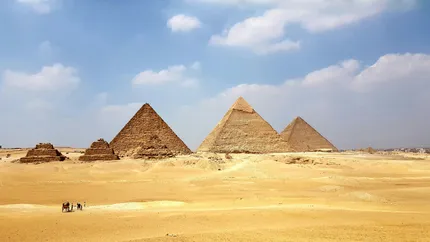
Visit the Great Pyramids of Giza
The Great Pyramids of Giza, located on the outskirts of Cairo, are among the world's most iconic ancient monuments. Built as tombs for pharaohs Khufu, Khafre, and Menkaure around 2500 BCE, they remain the only surviving wonder of the ancient world. The nearby Great Sphinx adds to the site's grandeur. Visitors can explore the pyramids' exteriors and enter some chambers for an additional fee.
10:30
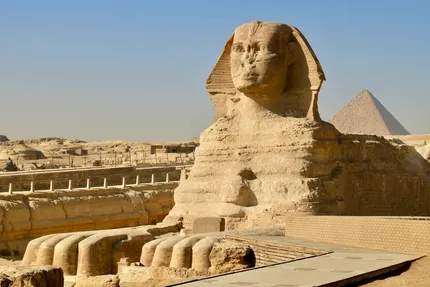
Explore the Sphinx and surrounding temple complex
The Great Sphinx of Giza stands beside the Pyramid of Khafre on the Giza Plateau, just outside Cairo. Carved from a single limestone ridge, it is one of the largest and oldest statues in the world. The surrounding temple complex includes the Valley Temple and Sphinx Temple, where ancient funerary rituals were performed. The site is best visited in the morning to avoid crowds and heat.
12:00
Lunch at Koshary Abou Tarek for authentic Egyptian koshary
Koshary Abou Tarek is one of Cairo's most iconic eateries, famous for serving koshary, Egypt's beloved national dish. The restaurant, located in downtown Cairo, has been operating since 1950. Koshary is a hearty mix of rice, lentils, pasta, and chickpeas topped with spiced tomato sauce, crispy fried onions, and a dash of vinegar. It is filling, affordable, and entirely vegetarian.
13:30
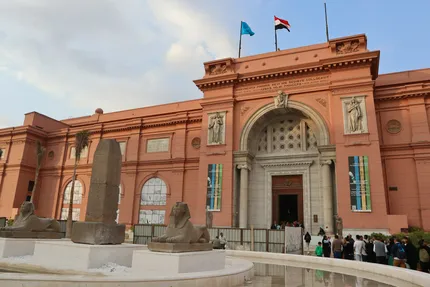
Visit the Egyptian Museum in Tahrir Square
The Egyptian Museum in Tahrir Square houses one of the world's most important collections of ancient Egyptian artifacts, with over 120,000 objects spanning thousands of years. Highlights include the treasures of Tutankhamun, royal mummies, and monumental statues. Built in 1902, the museum offers an unmatched window into pharaonic civilization. Guided tours are recommended to navigate the vast and historically rich collections effectively.
15:30
Explore Tahrir Square and surroundings
Tahrir Square is Cairo's iconic central plaza, best known as the epicenter of the 2011 Egyptian revolution. The square is surrounded by key landmarks including the Egyptian Museum, which houses an unparalleled collection of ancient artifacts including Tutankhamun's treasures. The area is a bustling hub of city life, offering a vivid glimpse into modern Cairo alongside its rich historical and political significance.
16:30
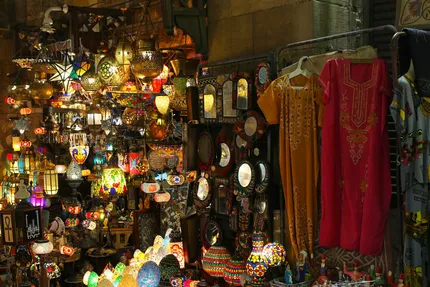
Stroll through Khan el-Khalili Bazaar and shop for souvenirs
Khan el-Khalili is one of the oldest and most famous bazaars in the Middle East, dating back to the 14th century. Located in Islamic Cairo, it offers a labyrinth of narrow alleyways filled with shops selling spices, jewelry, perfumes, textiles, and traditional handicrafts. Haggling is expected and part of the experience. Several historic cafes nearby, including the famous El Fishawy, offer a place to rest.
18:00
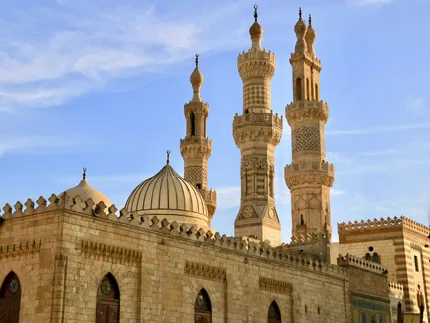
Visit Al-Hussein Mosque and Islamic Cairo area
Al-Hussein Mosque, one of Cairo's most sacred Islamic sites, is believed to house relics of the Prophet Muhammad's grandson. Located in the heart of Islamic Cairo, the surrounding area is a dense concentration of medieval mosques, madrasas, and mausoleums. The nearby Khan el-Khalili bazaar adds to the atmosphere. Exploring these streets offers a vivid sense of Cairo's thousand-year Islamic architectural and cultural heritage.
19:30
Dinner at Naguib Mahfouz Restaurant in Khan el-Khalili
Located in the heart of Khan el-Khalili bazaar, the Naguib Mahfouz Restaurant offers Egyptian and Middle Eastern cuisine in a setting that reflects the character of old Cairo. Named after Egypt's Nobel Prize-winning author, the restaurant serves dishes such as kofta, grilled meats, and mezze. It provides a comfortable retreat from the busy market outside, making it a reliable choice for experiencing traditional Egyptian food.
21:00
Evening walk along the Nile Corniche
The Nile Corniche is a riverside promenade stretching along the western bank of the Nile through central Cairo. In the evening, locals and visitors gather here to enjoy cooler temperatures, river breezes, and views of illuminated bridges and feluccas drifting on the water. The atmosphere is relaxed and social, with vendors, cafes, and benches lining the route between Tahrir Square and Garden City.
Day #2
Discover Islamic Cairo, Coptic history and sunset cruise
07:00
Breakfast at a local café with Egyptian pastries and tea
Cairo's local cafés offer a traditional Egyptian breakfast featuring staples like feteer meshaltet, a flaky layered pastry served with honey or cheese, alongside freshly baked bread and ful medames. Pair these with a glass of sweet mint tea or karkadeh, a hibiscus infusion. Neighborhood spots like those in Zamalek or downtown Cairo provide an authentic, unhurried start to the day.
08:30
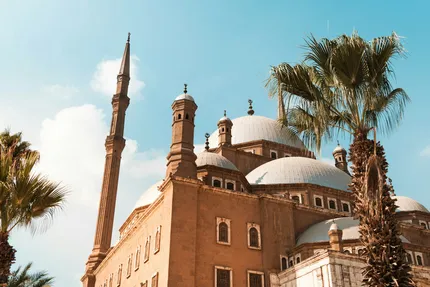
Visit the Citadel of Saladin and Muhammad Ali Mosque
The Citadel of Saladin is a medieval Islamic fortification built in the 12th century, offering panoramic views over Cairo. Within its walls stands the Muhammad Ali Mosque, completed in 1848, featuring an Ottoman-style design with a grand domed interior and twin minarets. Together they form one of Cairo's most iconic landmarks, reflecting centuries of Egyptian history and Islamic architecture.
10:30
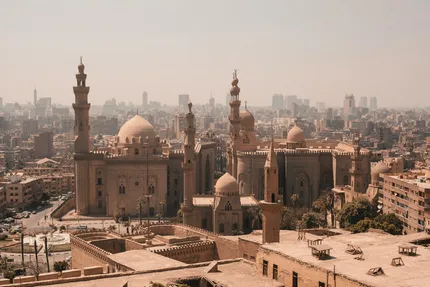
Explore the Sultan Hassan Mosque and Al-Rifa'i Mosque
Located in Islamic Cairo, these two grand mosques stand opposite each other near the Citadel. The Sultan Hassan Mosque, built in the 14th century, is considered a masterpiece of Mamluk architecture, featuring enormous iwans and intricate stonework. The neighboring Al-Rifa'i Mosque, completed in 1912, serves as the burial site of Egyptian royalty and the last Shah of Iran. Together they offer a compelling study in Islamic design across centuries.
12:00
Lunch at a local restaurant in Islamic Cairo
Islamic Cairo is packed with traditional eateries serving authentic Egyptian cuisine. Look for spots near Al-Azhar or Khan el-Khalili serving koshari, ful medames, grilled meats, and freshly baked bread. Local restaurants in this area tend to be unpretentious, affordable, and frequented by residents rather than tourists, offering a genuine taste of Egyptian home cooking in a historic, atmospheric setting.
13:30
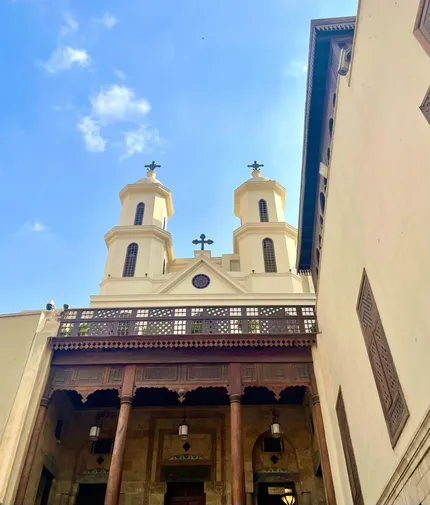
Visit Coptic Cairo and the Hanging Church
Coptic Cairo is one of the oldest parts of the city, home to a cluster of ancient churches, synagogues, and a Roman fortress. The Hanging Church, known as Al-Moallaqa, dates to the 3rd century and is built atop the gatehouse of the old Roman fortress. Its distinctive wooden roof, beautiful icons, and ivory-inlaid screen make it one of Egypt's most significant Christian landmarks.
15:00
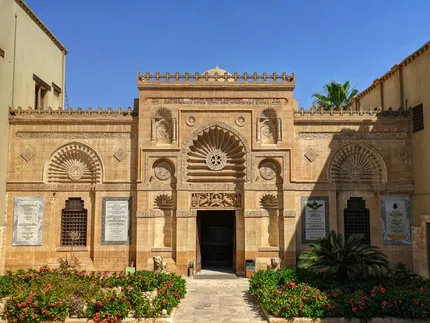
Explore the Coptic Museum and Ben Ezra Synagogue
Located in Old Cairo (Coptic Cairo), the Coptic Museum houses the world's largest collection of Coptic Christian artifacts, including textiles, manuscripts, and icons. Nearby, the Ben Ezra Synagogue is one of Egypt's oldest synagogues, believed to mark where Moses was found in the bulrushes. Together, these sites offer a fascinating glimpse into Cairo's rich Jewish and Christian heritage predating the Islamic era.
16:30
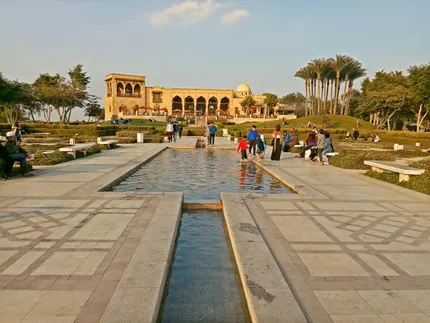
Visit Al-Azhar Park for panoramic views of Cairo
Al-Azhar Park is a beautifully landscaped green space in the heart of Cairo, built on what was once a centuries-old rubbish heap. Opened in 2005, the park offers sweeping panoramic views of Islamic Cairo, including the historic Citadel and numerous mosque minarets. Visitors can stroll through gardens, relax in open spaces, and dine at on-site restaurants, making it a welcome retreat from the city's bustling streets.
18:00
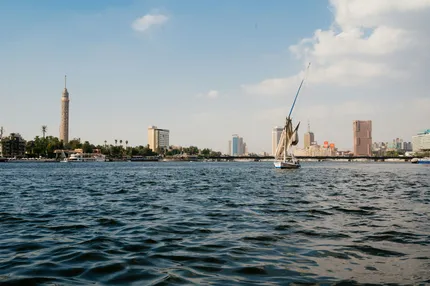
Felucca ride on the Nile at sunset
A felucca is a traditional wooden sailboat that has been used on the Nile for centuries. Taking a sunset ride offers a peaceful contrast to Cairo's busy streets, with views of the riverbanks, bridges, and city skyline as the light fades. Boats depart from various points along the Corniche. Trips typically last one to two hours and can be arranged directly with local captains.
19:30
Dinner at Sequoia restaurant overlooking the Nile
Sequoia is a popular open-air restaurant situated at the northern tip of Zamalek on the Nile's edge. It offers relaxed waterfront dining with panoramic river views, making it a favored spot for both locals and visitors. The menu features a broad selection of Mediterranean and international dishes. The atmosphere is particularly pleasant in the evening, with gentle breezes and views of passing feluccas and the illuminated Cairo skyline.
21:30
Optional: Enjoy a traditional Tanoura dance show
The Tanoura is a traditional Egyptian folk dance performed by Sufi dancers, characterized by colorful spinning skirts that fan out during hypnotic, continuous rotation. Shows are commonly held at cultural venues such as Wekalet El Ghouri in Islamic Cairo. The performance blends music, rhythm, and spiritual expression rooted in Sufi traditions. It offers visitors an authentic glimpse into Egypt's rich cultural and religious heritage.
Search for hotels:
This content was created with AI assistance and may contain inaccuracies.