3 days in Budapest
HungaryDay #1
Explore the historic Buda Castle and riverside
08:00
Breakfast at a traditional Hungarian café
09:30
Visit Buda Castle and the Royal Palace
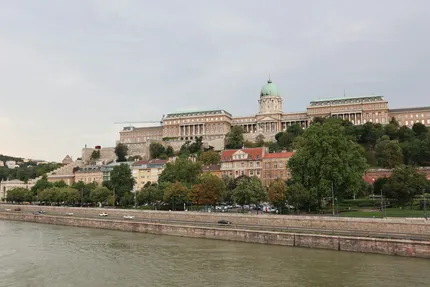
Buda Castle and the Royal Palace sit atop Castle Hill on the west bank of the Danube, offering panoramic views over the city. The complex dates to the 13th century and has been rebuilt multiple times throughout history. Today it houses the Hungarian National Gallery and the Budapest History Museum. The surrounding castle district features cobblestone streets, baroque architecture, and medieval remains worth exploring.
11:00
Explore Matthias Church and Fisherman's Bastion
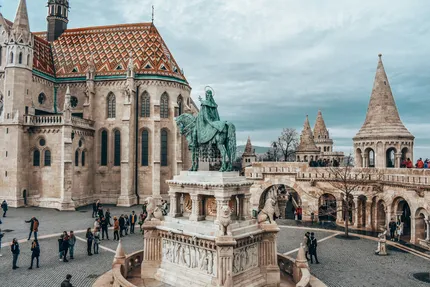
Matthias Church, a stunning Gothic structure in the Buda Castle district, has served as a coronation site for Hungarian kings. Adjacent to it, Fisherman's Bastion offers some of Budapest's most spectacular panoramic views over the Danube and Pest. Built in the early 1900s, its neo-Romanesque towers and terraces make it one of the city's most photographed landmarks. Together they form a must-visit historic complex.
13:00
Lunch at a restaurant in the Castle District
14:30
Walk across the iconic Chain Bridge
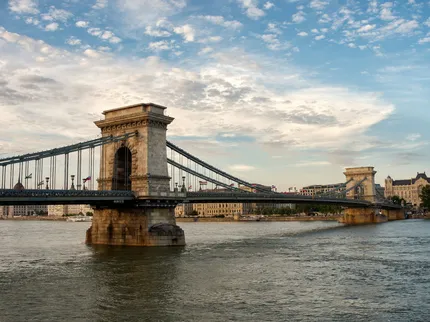
The Chain Bridge, completed in 1849, was the first permanent bridge connecting Buda and Pest across the Danube River. Walking across offers panoramic views of the Hungarian Parliament, Buda Castle, and the river. The bridge is flanked by stone lion sculptures at each end. It stretches approximately 375 meters and is especially striking when illuminated at night.
15:30
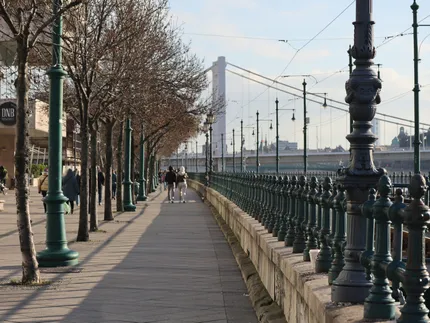
Stroll along the Danube Promenade
The Danube Promenade, or Duna-korzó, runs along the Pest side of the river between the Chain Bridge and Elizabeth Bridge. It offers outstanding views of Buda Castle, the royal palace, and the Gellért Hill. The pedestrian walkway is lined with hotels, cafes, and statues, including the famous Little Princess sculpture. It is particularly scenic at sunset and after dark when the historic buildings are illuminated.
17:00
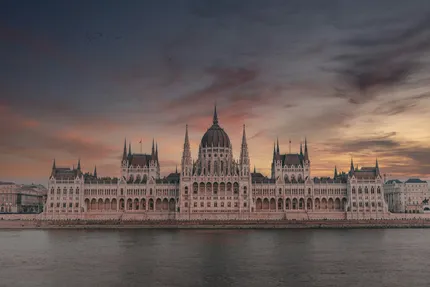
Visit the Hungarian Parliament Building exterior
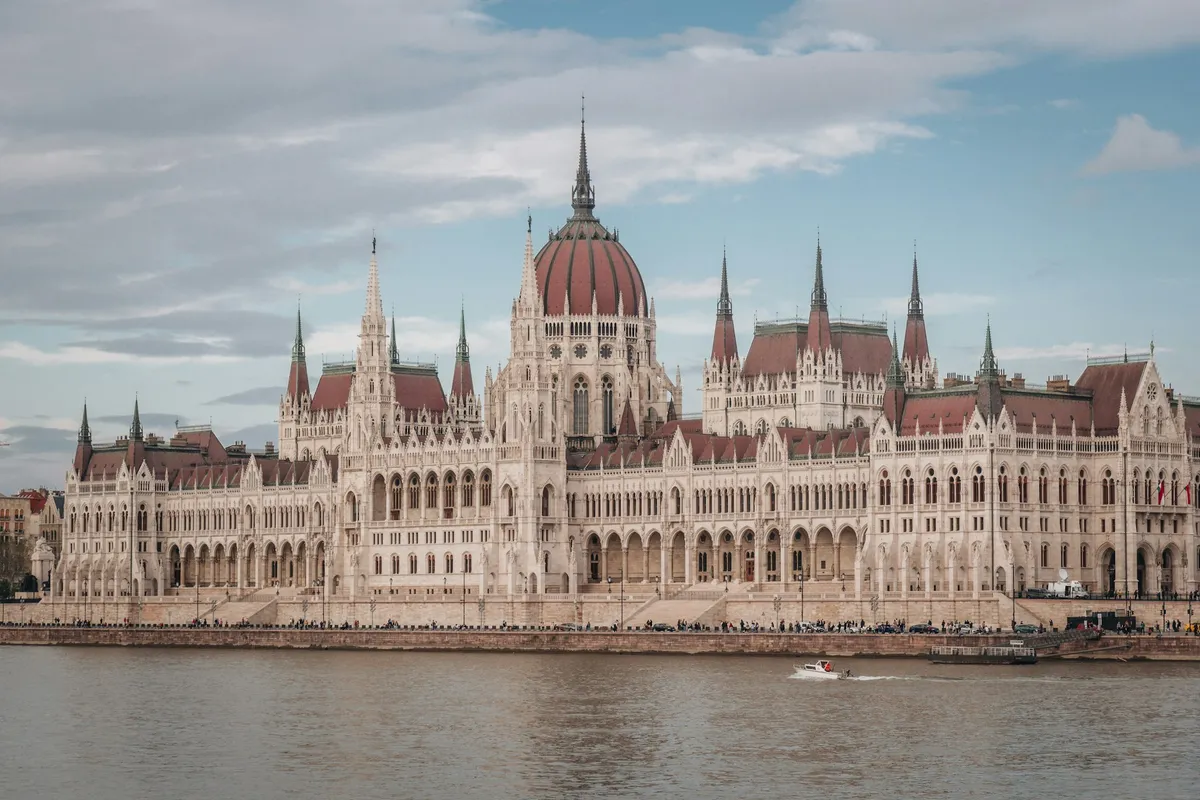
The Hungarian Parliament Building is one of Europe's largest parliament buildings, situated along the Danube riverbank in Budapest. Built in neo-Gothic style and completed in 1904, its design was inspired by the British Houses of Parliament. The building's ornate facade, pointed spires, and central dome are best appreciated from across the river in Buda, particularly at dusk when it is beautifully illuminated.
18:30
Sunset view from Gellért Hill and Citadella
Gellért Hill rises 235 metres above the Danube, offering panoramic views over Budapest. At its summit sits the Citadella, a 19th-century fortress built by the Habsburgs. Sunset from this vantage point is particularly rewarding, with the Hungarian Parliament, Chain Bridge, and both Buda and Pest districts bathed in warm light. The hill is accessible on foot via several marked trails from the surrounding neighbourhoods.
20:00
Dinner at a traditional Hungarian restaurant in Pest
Pest offers numerous traditional Hungarian restaurants where you can sample classic dishes like goulash, chicken paprikash, and lángos. Many establishments along the Great Boulevard and in the Jewish Quarter preserve authentic recipes and folk-inspired interiors. Pair your meal with a glass of Tokaji wine or Unicum, a local herbal liqueur. Reservations are recommended at popular spots, especially during peak tourist season.
Day #2
Museums, thermal baths, and vibrant ruin bars
08:00
Breakfast at a local bakery
09:30
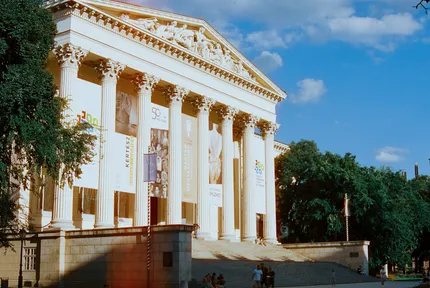
Visit the Hungarian National Museum
The Hungarian National Museum, founded in 1802, is the largest museum in Hungary dedicated to the country's history and culture. Located in a neoclassical building in central Budapest, it houses permanent exhibitions covering Hungarian history from prehistoric times to the 20th century. Key artifacts include the Hungarian coronation regalia and items tied to the 1848 revolution. Admission is affordable and the building itself is architecturally impressive.
11:30
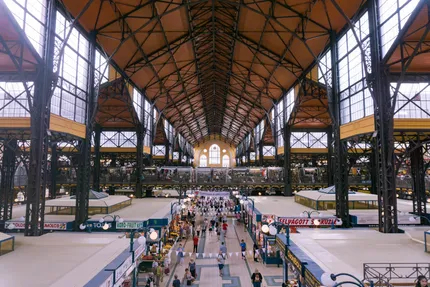
Explore the Great Market Hall and shop for souvenirs
The Great Market Hall, or Nagyvásárcsarnok, is Budapest's largest and oldest indoor market, built in 1897. Located at the end of Váci Street, its striking neo-Gothic exterior conceals three floors of stalls selling fresh produce, Hungarian salami, paprika, Tokaj wines, and traditional embroidered goods. The upper floor offers ready-made food stalls and souvenir vendors, making it a practical stop for both groceries and gifts.
13:00
Lunch at the Great Market Hall food stalls
The Great Market Hall, Budapest's largest and oldest indoor market, offers a bustling lunch scene on its upper floor. Food stalls serve traditional Hungarian dishes including langos (deep-fried flatbread with toppings), goulash, stuffed cabbage, and sausages. It is an affordable and authentic way to experience local cuisine. The ground floor also sells fresh produce, meats, and Hungarian specialties worth browsing before or after eating.
14:30
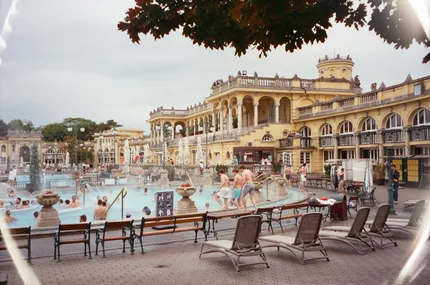
Relax and soak at Széchenyi Thermal Bath
The Széchenyi Thermal Bath is one of Budapest's most iconic landmarks, built in 1913 in a grand Neo-Baroque style. Fed by natural thermal springs, its outdoor and indoor pools maintain temperatures between 27 and 38 degrees Celsius. Visitors can soak in the mineral-rich waters, use steam rooms and saunas, or enjoy various massage treatments. It operates year-round and remains popular with both locals and tourists.
17:00
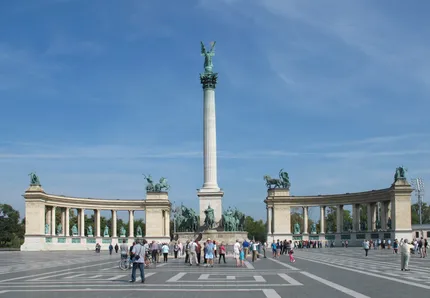
Visit Heroes' Square and Millennium Monument
Heroes' Square (Hősök tere) is one of Budapest's most iconic landmarks, located at the end of Andrássy Avenue. The Millennium Monument, built to commemorate Hungary's 1000th anniversary in 1896, features the tall Archangel Gabriel column and two sweeping colonnades displaying statues of Hungarian kings and national leaders. The square also flanks two major museums and serves as a popular gathering point for locals and visitors.
18:00
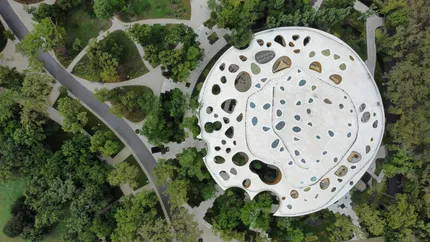
Stroll through City Park and see Vajdahunyad Castle
City Park (Városliget) is one of Budapest's largest public parks, offering green space, a boating lake, and various cultural attractions. Within the park stands Vajdahunyad Castle, a striking complex built in 1896 to celebrate Hungary's millennium. Its architecture blends Romanesque, Gothic, and Baroque styles, representing different periods of Hungarian history. The castle now houses the Museum of Hungarian Agriculture and is a popular landmark year-round.
19:30
Dinner at a modern Hungarian bistro
Budapest has a thriving modern bistro scene where chefs reinterpret traditional Hungarian cuisine using local, seasonal ingredients. Expect contemporary takes on classics like goulash, chicken paprikash, and lángos, paired with Hungarian wines from regions such as Tokaj or Eger. Many bistros occupy beautifully renovated historic buildings in districts like the Jewish Quarter or Belváros, offering a relaxed yet refined dining atmosphere at reasonable prices.
21:30
Evening drinks at Szimpla Kert ruin bar
Szimpla Kert is Budapest's most famous ruin bar, set in a deliberately dilapidated building in the Jewish Quarter. Opened in 2002, it pioneered the city's unique ruin bar culture. The sprawling interior features mismatched furniture, quirky installations, and multiple rooms and courtyard spaces. It gets busy in the evenings with locals and tourists alike, offering affordable drinks and a genuinely eclectic atmosphere unlike anywhere else in Europe.
Day #3
Jewish Quarter, art, and farewell evening cruise
08:00
Breakfast at a café in the Jewish Quarter
09:30
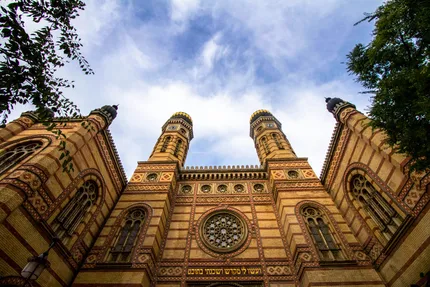
Visit the Dohány Street Synagogue
The Dohány Street Synagogue is the largest synagogue in Europe and the second largest in the world, with a capacity for over 3,000 people. Built in 1859 in Moorish Revival style, it serves as an active place of worship and houses the Hungarian Jewish Museum. The adjacent memorial garden contains a weeping willow sculpture honoring victims of the Holocaust.
11:00
Explore the Hungarian Jewish Museum
The Hungarian Jewish Museum, located adjacent to the Great Synagogue on Dohány Street, documents the history and culture of Hungarian Jews. The collection includes religious artifacts, historical documents, and artwork spanning centuries. A memorial room commemorates Holocaust victims, and the adjoining Jewish cemetery contains graves of those who died during the 1944-45 Budapest ghetto period. The museum offers meaningful insight into one of Europe's most significant Jewish communities.
12:30
Lunch at a kosher or local restaurant nearby
14:00
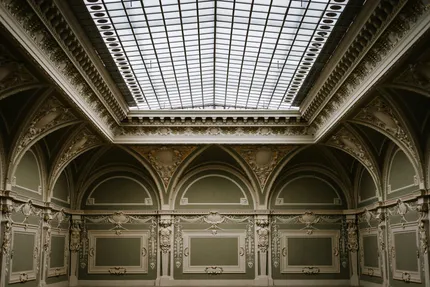
Visit the Museum of Fine Arts
The Museum of Fine Arts in Budapest, located on Heroes' Square, houses one of Central Europe's most significant collections of international art. Its holdings include Egyptian artifacts, Greek and Roman antiquities, and an extensive European painting collection spanning the 13th to 20th centuries. Works by El Greco, Raphael, Goya, and Rembrandt are among the highlights. The building itself, opened in 1906, is an impressive neoclassical structure worth admiring.
15:30
Walk through Andrássy Avenue
Andrássy Avenue is a grand UNESCO-listed boulevard stretching from central Budapest to Heroes' Square. Built in the late 19th century, it features elegant neo-Renaissance buildings, upscale boutiques, restaurants, and cultural institutions including the Hungarian State Opera House. The avenue reflects Budapest's golden age architecture and offers a pleasant walking route past some of the city's most important landmarks and historical facades.
17:00
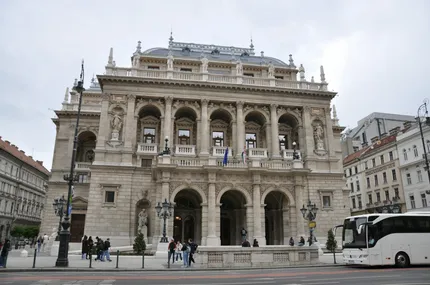
Visit the Hungarian State Opera House exterior
The Hungarian State Opera House on Andrássy Avenue is one of Budapest's finest examples of neo-Renaissance architecture, completed in 1884. Designed by Miklós Ybl, its ornate facade features decorative sculptures, arched windows, and intricate stonework. Even without attending a performance, the exterior is worth admiring. The building sits on a lively stretch of the UNESCO-listed boulevard, surrounded by elegant architecture and nearby cafes.
18:00
Relax with coffee and cake at Gerbeaud Café on Vörösmarty Square
Gerbeaud is one of Budapest's most iconic cafes, located on Vörösmarty Square in the heart of the city. Founded in 1858, it has been serving traditional Hungarian pastries, cakes, and coffee for over 160 years. The elegant interior features ornate furnishings and chandeliers. It is a perfect spot to enjoy a slice of Dobos torte or Esterházy cake while soaking in the historic atmosphere of central Budapest.
19:30
Dinner at a riverside restaurant
Budapest's riverside restaurants offer memorable dining experiences along the Danube, with views of the illuminated Chain Bridge, Buda Castle, and the Hungarian Parliament building. Several established restaurants line both the Buda and Pest embankments, serving traditional Hungarian dishes such as goulash, fish soup, and chimney cake. Evenings are particularly atmospheric, as the city's landmarks reflect dramatically on the river's surface.
21:00
Evening Danube River cruise with panoramic city views
A cruise along the Danube at dusk offers some of Budapest's most iconic views. From the water, you see the illuminated Hungarian Parliament Building, Buda Castle, the Chain Bridge, and Matthias Church. Most cruises last around one to two hours and depart from central embankments. Some include dinner, drinks, or live music. It is a relaxed and memorable way to experience the city's architecture and atmosphere.