
Few cities in the world have produced so much great writing relative to their size. And fewer still wear that legacy so unselfconsciously. Dublin doesn't treat its literary history as a museum piece. It lives inside it.
Why Dublin?
The numbers alone are remarkable. A city of barely 1.4 million people has produced four Nobel Laureates in Literature: George Bernard Shaw, W.B. Yeats, Samuel Beckett, and Seamus Heaney. It is the birthplace of Oscar Wilde, Jonathan Swift, Bram Stoker, and James Joyce - arguably the most influential novelist of the twentieth century. It gave the world Dracula, Gulliver's Travels, The Picture of Dorian Gray, and Waiting for Godot.
In 2010, UNESCO designated Dublin a City of Literature, one of only a handful of cities in the world to hold the title. The designation wasn't honorary. It reflected something that was already true: that writing here is not a historical fact but an ongoing practice, visible in the bookshops, theatres, pubs, and literary festivals that pulse through the city year-round.
For the literary traveller, Dublin is not a pilgrimage to a past. It's a conversation with a place that never stopped talking.
The Grand Tour: Key Literary Sites
Trinity College Library
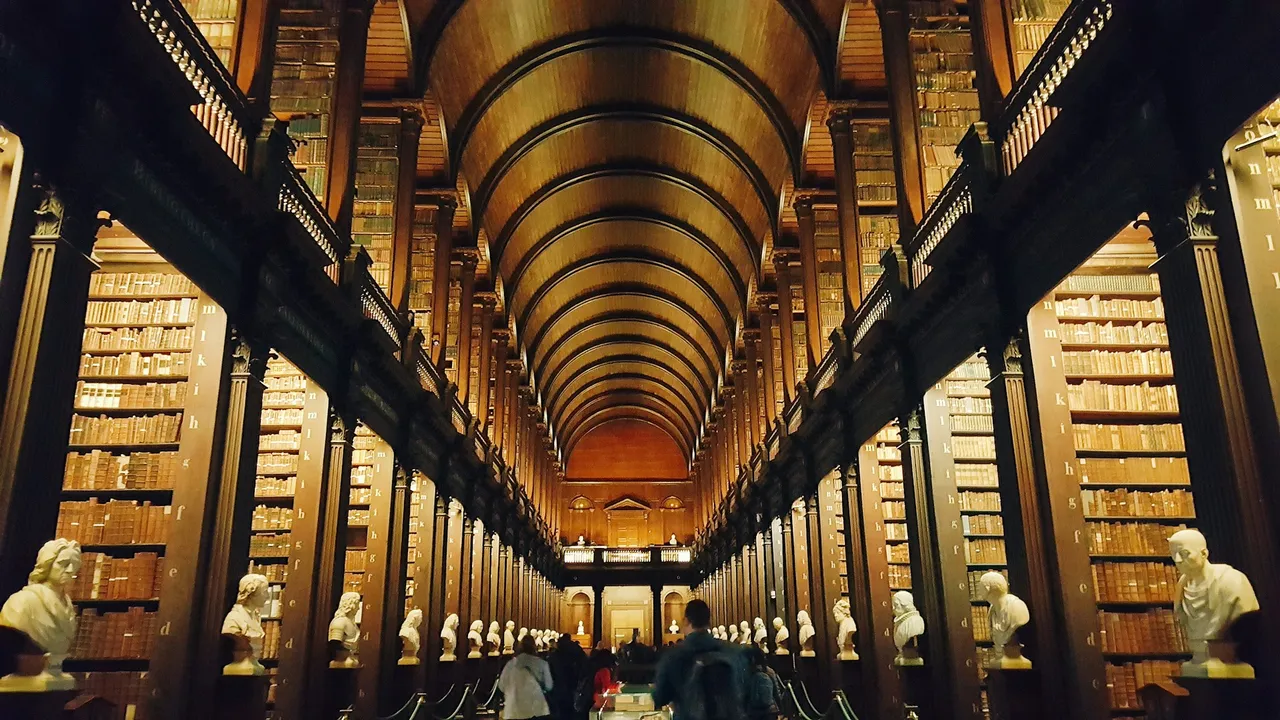
Start here. The Long Room of Trinity College Library is one of the great rooms of the world - 65 metres of dark oak, two storeys of books stacked floor to ceiling, the smell of old paper thick in the air. It houses around 200,000 of the library's oldest volumes and, most famously, the Book of Kells: a breathtaking illuminated manuscript of the four Gospels, created by Celtic monks around 800 AD. Even if you have no particular interest in medieval manuscripts, standing before it is an experience that quietly recalibrates your sense of what human patience and devotion can produce.
Trinity's campus itself rewards a slow wander. The cobblestoned squares and Georgian facades have changed little since the days when Samuel Beckett studied here, or when Oscar Wilde walked these grounds in the 1870s, already developing the wit that would make him both adored and destroyed.
The Dublin Writers Museum
On Parnell Square, in a beautifully restored Georgian townhouse, the Dublin Writers Museum traces the city's literary story from Swift to Beckett and beyond. The collection includes rare editions, personal letters, and portraits - Swift's writing table, Brendan Behan's typewriter, a lock of W.B. Yeats's hair. It is perhaps more reverential than thrilling, but for anyone who cares deeply about these writers, the intimacy of the objects is genuinely moving.
Don't skip the garden at the back, especially on a grey Dublin afternoon. Something about a Georgian garden in the rain feels entirely appropriate to the city.
Sweny's Pharmacy
This is the one that gets under your skin. Sweny's, on Lincoln Place just south of Trinity, is a Victorian pharmacy preserved almost exactly as it appears in the "Lotus Eaters" episode of Ulysses, where Leopold Bloom stops to pick up a prescription and buys a bar of lemon soap. The pharmacy closed in 2009 but was rescued by volunteers who run it today as a Joyce community space. They sell the soap. They hold daily readings. It costs nothing to enter.
There is no better single place in Dublin to feel the peculiar intimacy between this city and its greatest novel. Ulysses is set on a single day - 16 June 1904 - and so many of the places Bloom visits still exist, changed but recognisable. Sweny's is the most vivid of them.
Merrion Square and the Georgian Quarter
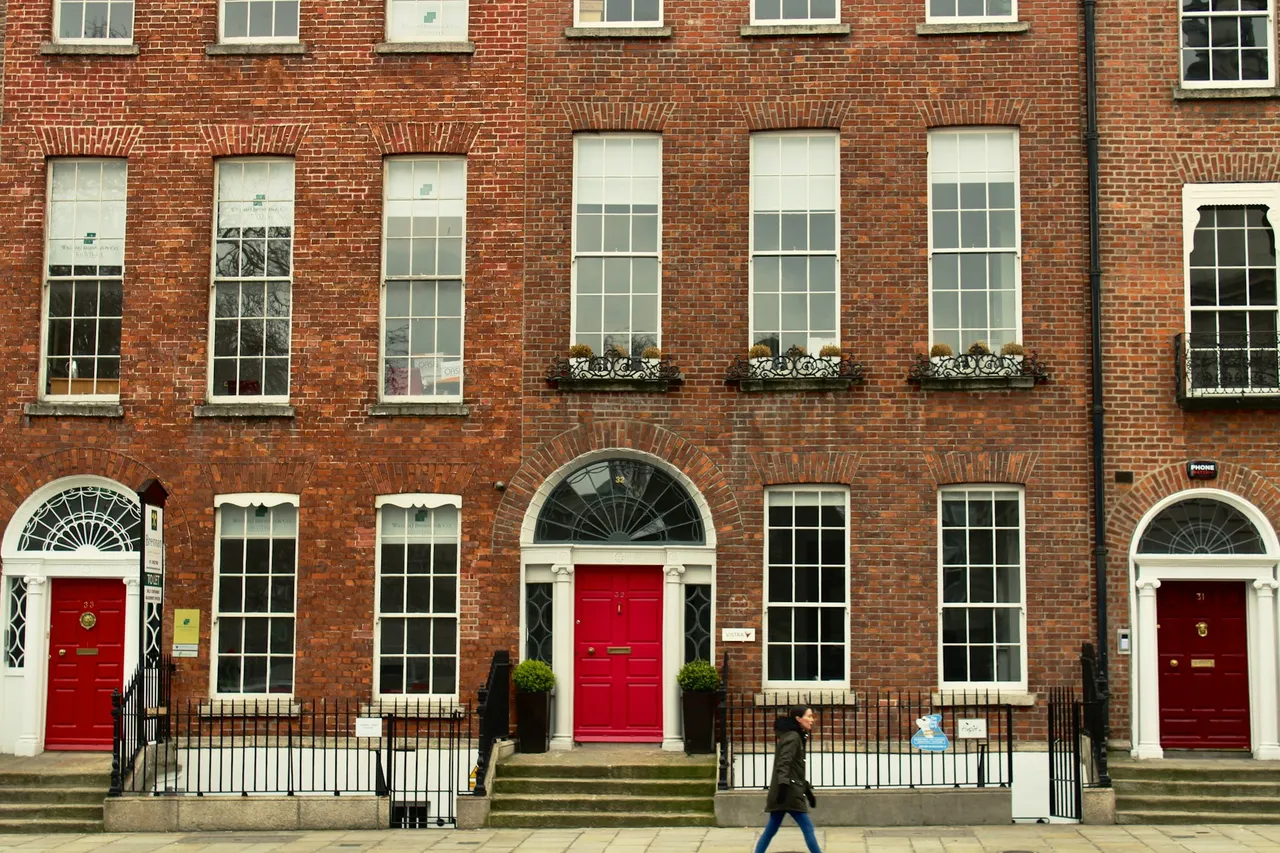
Oscar Wilde lived at No. 1 Merrion Square as a child, and the park opposite contains a famous reclining statue of him: louche, colourful, one eyebrow raised, dressed in a frock coat. It's one of the few public statues in any city that actually captures something true about its subject. Wilde looks like he's about to say something devastating and funny.
The square itself is one of Dublin's finest - Georgian townhouses with brightly painted doors, small plaques marking where the writers, doctors, and revolutionaries lived. W.B. Yeats spent time at No. 82. The National Gallery is on the southern side. This is the most handsome neighbourhood in the city for an unhurried walk.
The Abbey Theatre
Founded in 1904 by W.B. Yeats and Lady Augusta Gregory, the Abbey is the national theatre of Ireland and one of the most historically significant theatres in the English-speaking world. It was here that the Irish Literary Revival found its stage - and its controversies. The 1907 premiere of J.M. Synge's The Playboy of the Western World caused riots in the stalls; the audience took the playwright's portrait of Irish rural life as an insult. Yeats walked onto the stage to berate them. The Abbey has never been boring.
Today it continues to produce new Irish writing alongside the classics. Check what's on during your visit. Seeing a play at the Abbey, even a contemporary one, is a way of participating in a tradition that runs deep.
The National Library of Ireland
Free to enter and often overlooked by visitors, the National Library on Kildare Street holds an extraordinary collection of manuscripts, letters, and documents. The permanent exhibition on W.B. Yeats - covering his life, his poetry, his occult obsessions, his complicated loves - is one of the finest literary exhibitions in Europe. The reading rooms, with their ornate Victorian architecture, are also open to the public. Sit in one of the leather chairs and read for an hour. You'll feel like a Victorian scholar.
Walking in Their Footsteps
The Bloomsday Route
James Joyce's Ulysses maps a single day - 16 June 1904 - across a Dublin that is still, in large part, walkable today. The full Bloomsday route is long, but a condensed version hitting the key locations takes around three to four hours on foot.
Begin at the Martello Tower in Sandymount (now the James Joyce Museum), where the novel opens. Take the DART train back into the city centre and pick up Bloom's path through the streets: the National Library, where Stephen Dedalus holds court in the "Scylla and Charybdis" episode; Davy Byrne's pub on Duke Street, where Bloom has his famous lunch of gorgonzola and burgundy; Sweny's Pharmacy; Eccles Street (now demolished, but marked) where Bloom lives. Finish, if you have the stamina, at Barney Kiernan's pub (now a different business on Little Britain Street), where the "Cyclops" episode's blustering nationalist holds court.
You don't need to have read Ulysses to enjoy this walk. But if you have, the experience of moving through the streets Joyce described with such obsessive precision is something close to uncanny.
The Wilde and Shaw Trail
For a different mood entirely, the Georgian southside offers a pleasant half-day walk through the world of Dublin's great Victorian wits. Start at Oscar Wilde's birthplace at 21 Westland Row, move through Merrion Square, pass the National Gallery (Shaw left his entire estate to it), and continue south through Fitzwilliam Square and Leeson Street. The architecture is beautiful. The pace is leisurely. It requires no particular literary preparation beyond a fondness for epigrams.
Literary Pubs and the Living Culture
Dublin's pub culture and its literary culture are not separable. The pubs were offices, salons, and refuges. They still are.
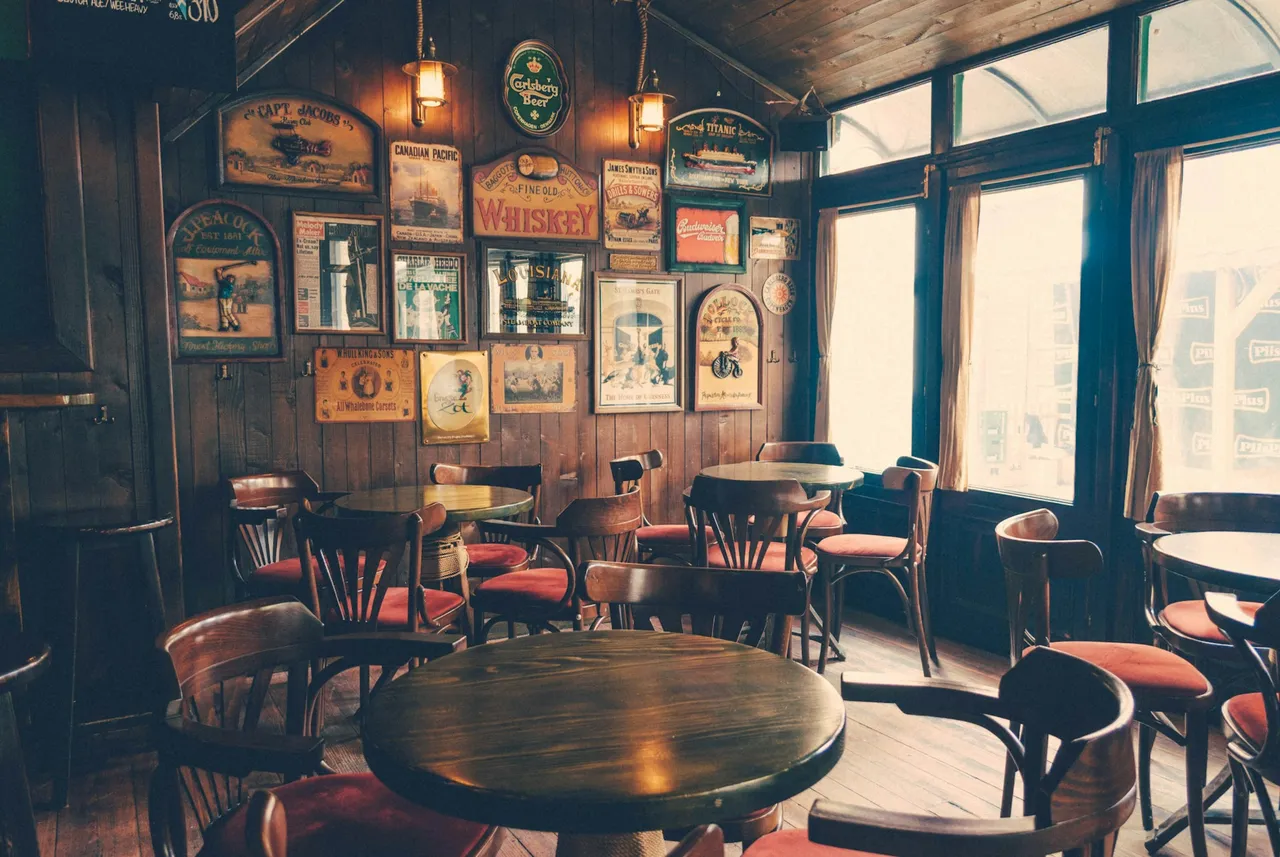
Davy Byrne's on Duke Street is the most famous of the literary pubs, immortalised in Ulysses. It's a little more tourist-conscious than it once was, but still a fine spot for a glass of wine and a sandwich - order the gorgonzola and mustard if it's on the menu.
Mulligan's on Poolbeg Street has been open since 1782 and has changed very little. John Huston drank here. James Joyce is said to have had his characters drink here. The Guinness is excellent. The atmosphere is the real thing.
The Palace Bar on Fleet Street was the haunt of Patrick Kavanagh, Flann O'Brien, and the literary editors of the old Irish Times. Framed photos of dead writers line the walls. The bar staff are not sentimental about this, which is as it should be.
Beyond the pubs, Dublin has a living literary culture worth seeking out. Books Upstairs on D'Olier Street is an independent bookshop with a particularly good Irish fiction section and a programme of evening readings and launches. The Irish Writers Centre on Parnell Square runs workshops, residencies, and public events. The Dublin Festival of History and the Mountains to Sea book festival in Dún Laoghaire (just south of the city on the DART line) are both worth checking for dates.
Bloomsday: When the City Performs Itself
If you have any flexibility in when to visit, consider 16 June: Bloomsday. On the anniversary of the single day depicted in Ulysses, Dublin performs a peculiar and joyful ritual. People dress in Edwardian clothing - straw boaters, waistcoats, long skirts. Actors read from the novel at key locations across the city. Sweny's Pharmacy holds readings all day. Davy Byrne's serves period-appropriate food. The James Joyce Centre on North Great George's Street runs the most extensive programme of events.
Bloomsday divides opinion among serious Joyce scholars, some of whom find it carnivalesque and reductive. They may have a point. But there is something genuinely moving about a city choosing, once a year, to act out its most difficult and demanding book — not to simplify it, but to inhabit it. Dublin earns the day.
Practical Tips
When to visit: Dublin is a year-round destination, but May to September offers the best weather and the most events. June 16th for Bloomsday is an obvious target. The city is busiest in July and August; if you prefer quieter streets, late May or early September is ideal.
How long to stay: Two full days gives you time for the major sites and a couple of pub evenings. Three days lets you breathe - add a half-day trip to the Martello Tower in Sandycove or the nearby village of Dalkey, which has its own literary associations (it was home to Maeve Binchy, Hugh Leonard, and briefly Samuel Beckett).
Where to stay: The Georgian southside - around St Stephen's Green, Merrion Square, or Fitzwilliam Square - puts you within walking distance of most of the literary landmarks. The area around Parnell Square is also well-placed, closer to the Writers Museum and Abbey Theatre, and slightly more affordable.
Getting around: Dublin's city centre is walkable. The DART coastal rail line is useful for reaching Sandycove (Martello Tower) and Dún Laoghaire. Avoid driving in the city if you can.
Read before you go: You don't need to have read Ulysses, but a little preparation helps. For a manageable introduction to Joyce, Dubliners is the place to start - a collection of short stories set in the city, precise and devastating. For Wilde, The Importance of Being Earnest takes an hour to read and will make you smile all the way through Merrion Square. For the contemporary city, Kevin Barry's Night Boat to Tangier or Colm Tóibín's Nora Webster offer different but equally vivid portraits.
Still Being Written
Late on your last evening, find a stool at the bar at Mulligan's or the Palace. Order a Guinness. Let the conversation wash over you - the easy Irish facility with language, the instinct for the perfectly shaped anecdote, the way a story gets told here as if telling it well is the whole point.
What makes Dublin different from other literary cities - from Paris, from London, from Prague - is not the quantity of its great writers, impressive as that is. It's that the relationship between the city and its literature feels alive rather than commemorated. The plaques and museums are there, yes. But so is the impulse that produced all those books: the need to say something true, and to say it beautifully, and preferably over a drink.
In Dublin, you're never just a tourist moving through a literary landscape. You're a character in a story that the city is still, very much, in the middle of writing.