
2 days in Kyoto
JapanDay #1
Historic temples, Geisha district, and Gion evening stroll
08:00
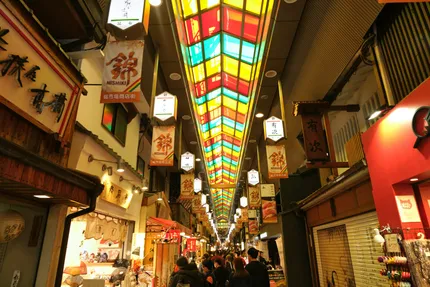
Breakfast at Nishiki Market – try local street food
Nishiki Market is a narrow, covered shopping street in central Kyoto, lined with around 100 vendors and shops. Known as 'Kyoto's Kitchen,' it has served locals for centuries. In the morning, stalls offer traditional street foods including fresh tofu, tamagoyaki, pickled vegetables, skewered seafood, and mochi. It is an ideal introduction to Kyoto's food culture before the crowds arrive later in the day.
09:30
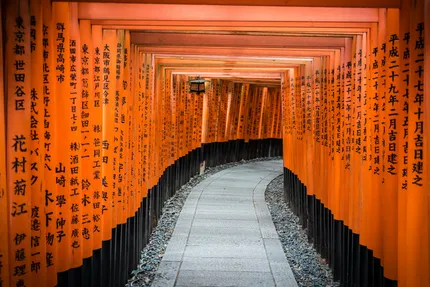
Visit Fushimi Inari Taisha – walk through the iconic torii gates
Fushimi Inari Taisha is one of Japan's most recognizable Shinto shrines, dedicated to Inari, the god of rice and prosperity. It is famous for its thousands of vermillion torii gates that wind up the forested Mount Inari. The full trail takes around two to three hours to complete. The shrine is free to enter and accessible at any hour, making early morning visits ideal to avoid crowds.
12:00
Lunch at a local ramen shop near Fushimi
13:30
Explore Tofuku-ji Temple and its famous Zen garden
Tofuku-ji is one of Kyoto's most important Zen Buddhist temples, founded in 1236. It is particularly renowned for its Hojo garden, designed by Mirei Shigemori in 1939, which blends modernist and traditional Zen aesthetics across four distinct sections. The temple complex also features a historic sanmon gate and forested grounds that attract large crowds in autumn when the maple trees display vivid seasonal colors.
15:00
Visit Sanjusangen-do – hall of 1,001 golden statues
Sanjusangen-do is a Buddhist temple hall in Higashiyama district, housing 1,001 golden statues of Kannon, the goddess of mercy. The central large seated figure is flanked by 500 smaller statues on each side, all carved from Japanese cypress and covered in gold leaf. Dating from 1164, the 120-meter-long hall is one of Kyoto's most striking and atmospheric religious sites.
16:30
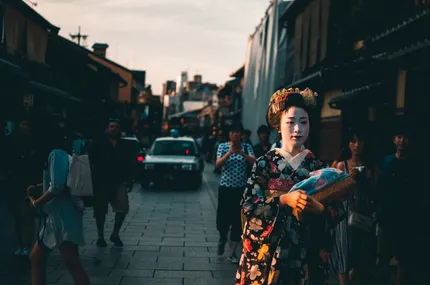
Stroll through the Gion district – spot maiko and geisha
Gion is Kyoto's most famous geisha district, centered around Hanamikoji Street. In the early morning or evening, visitors may spot maiko (apprentice geisha) and geisha in traditional kimono hurrying between appointments. The district's preserved wooden machiya townhouses, ochaya teahouses, and stone-paved lanes create an atmosphere largely unchanged since the Edo period. Respectful observation is encouraged, as residents go about their daily lives here.
18:00
Dinner at a traditional kaiseki restaurant in Gion
Gion, Kyoto's historic geisha district, is home to some of Japan's finest kaiseki restaurants. Kaiseki is a multi-course meal rooted in Zen Buddhist traditions, featuring meticulously prepared seasonal ingredients presented in a precise sequence of small dishes. Meals typically include appetizers, sashimi, grilled, simmered and steamed courses, followed by rice and dessert. Many restaurants occupy beautifully preserved machiya townhouses, enhancing the cultural experience.
20:00
Evening walk along Hanamikoji Street in Gion
Hanamikoji Street is the heart of Gion, Kyoto's most famous geisha district. This narrow, lantern-lit lane is lined with traditional machiya townhouses, ochaya teahouses, and upscale restaurants. Evening is the best time to visit, when maiko and geiko can occasionally be spotted traveling between appointments. The preserved wooden architecture creates an atmospheric setting that offers a genuine glimpse into old Kyoto's traditional culture.
Day #2
Arashiyama bamboo, golden pavilion, and zen gardens
07:30
Early breakfast at hotel or local café
08:30
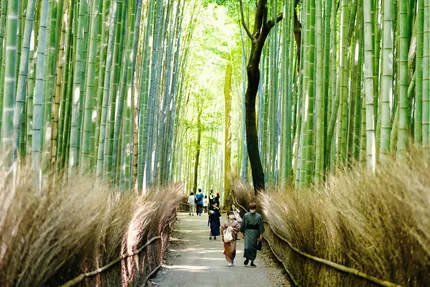
Visit Arashiyama Bamboo Grove – best before crowds arrive
The Arashiyama Bamboo Grove is one of Kyoto's most iconic sights, featuring towering bamboo stalks that create a natural tunnel along a winding path. The grove is most atmospheric in the early morning before tour groups arrive. Located in the Arashiyama district on the city's western outskirts, it sits close to Tenryu-ji Temple and the Oi River, making it easy to combine with nearby attractions.
09:30
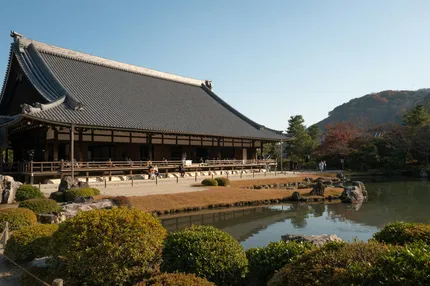
Explore Tenryu-ji Temple and its stunning garden
Tenryu-ji is a UNESCO World Heritage Site in Arashiyama, built in 1339 by shogun Ashikaga Takauji. It is the highest-ranking Zen temple in Kyoto and head of the Tenryu-ji branch of Rinzai Zen Buddhism. Its highlight is the Sogenchi garden, designed by Muso Soseki, featuring a central pond framed by borrowed scenery of the Arashiyama mountains. The temple complex also connects to a scenic bamboo grove.
11:00
Stroll along the Oi River and Togetsukyo Bridge
The Togetsukyo Bridge spans the Oi River in Arashiyama, one of Kyoto's most scenic districts. The bridge, whose name means 'Moon Crossing Bridge,' offers views of forested mountains that change dramatically with the seasons. A walk along the riverbank reveals traditional boat rentals, cormorant fishing displays in summer, and a relaxed atmosphere that contrasts with central Kyoto's busier temple districts.
12:30
Lunch at a tofu cuisine restaurant in Arashiyama
14:00
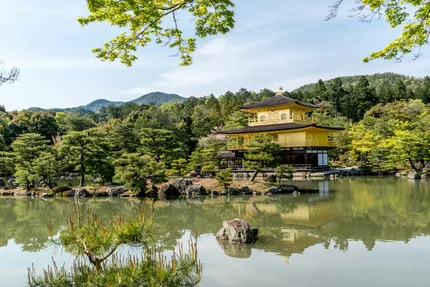
Visit Kinkaku-ji – the famous Golden Pavilion
Kinkaku-ji, or the Golden Pavilion, is one of Kyoto's most iconic landmarks. This three-story Zen Buddhist temple is covered in gold leaf and reflects beautifully on the surrounding pond. Originally built in 1397 as a retirement villa for shogun Ashikaga Yoshimitsu, it was converted into a temple after his death. The current structure is a 1955 reconstruction after the original was destroyed by fire.
15:30
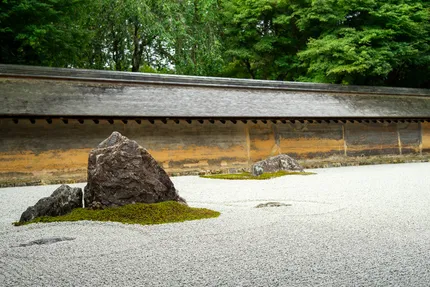
Explore Ryoan-ji Temple and its iconic rock garden
Ryoan-ji Temple, a UNESCO World Heritage Site in northwest Kyoto, is home to Japan's most famous Zen rock garden. Fifteen carefully placed stones sit within a rectangular bed of raked white gravel, designed so that all stones cannot be viewed simultaneously from any angle. The meaning remains deliberately open to interpretation. The surrounding temple grounds feature a tranquil pond and traditional landscaped gardens worth exploring.
17:00
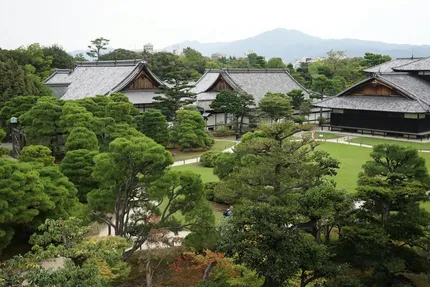
Visit Nijo Castle and its nightingale floors
Nijo Castle, built in 1603 as the Kyoto residence of Tokugawa Ieyasu, is a UNESCO World Heritage Site. Its Ninomaru Palace is famous for its "nightingale floors," wooden corridors engineered to squeak with each step, alerting inhabitants to intruders. The castle grounds feature traditional Japanese gardens and impressive defensive architecture, offering a compelling window into feudal-era power and craftsmanship.
18:30
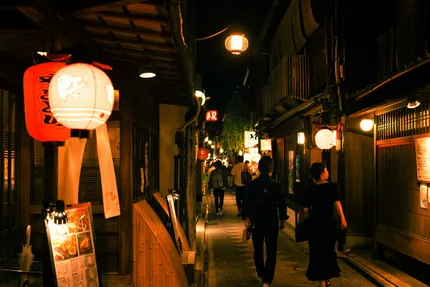
Dinner at Pontocho Alley – choose from many cozy restaurants
Pontocho Alley is a narrow, lantern-lit pedestrian lane running parallel to the Kamo River, packed with traditional restaurants offering everything from kaiseki cuisine to yakitori and ramen. The intimate atmosphere, wooden facades, and ambient lighting make it one of Kyoto's most atmospheric dining districts. Many restaurants feature small terraces overlooking the river, especially popular during summer. Reservations are recommended for the more established establishments.
20:30
Relaxing evening stroll along the Kamo River
The Kamo River runs through central Kyoto and is a beloved spot for locals and visitors alike. The wide, flat riverbanks offer a pleasant walking path where people gather to sit, chat, and unwind, particularly at dusk. Cherry trees line sections of the river, and the gentle sound of flowing water creates a calming atmosphere. The stretch between Sanjo and Shijo bridges is especially popular in the evenings.